🧗🏼
The Emoji
Person Climbing: Medium-light Skin Tone
U+1F9D7 U+1F3FC · :person_climbing_mediumlight_skin_tone:
Trend 55
Meaning layers
- interpretation
- Used to symbolize grinding through hard times, leveling up, or 'climbing' out of a difficult situation. Also used to flex personal growth, ambition, or the hustle mentality. Sometimes ironic when used about minor inconveniences.
- tiktok usage
- Appears in motivational montages, 'glow-up' videos, and gym/fitness content. Also used ironically in 'climbing out of my situationship' or 'climbing out of my anxiety era' captions.
- irony level
- 5 / 10
Platform meanings
- meaning
- Represents personal growth, physical fitness, or climbing out of a difficult phase. Used both sincerely in motivational content and ironically in humor about everyday struggles.
- trend usage
- Common in 'era' transition videos, gym transformation content, and outdoor adventure clips. Also appears in therapy-speak humor about emotional labor.
- hashtags
- #climbinglife#levelup#growthjourney#rockclimbing#selfimprovement
- virality score
- 58 / 100
Cultural meanings
🇺🇸
Western / Gen-Z
Widely used both sincerely for fitness/adventure content and ironically in meme formats about emotional or social 'climbing.' Medium-light skin tone is embraced naturally without specific commentary.
🇵🇰
Pakistan & India
Used in motivational contexts related to career ambitions, academic grind, and personal resilience. Rock climbing as a sport is niche, so metaphorical use dominates.
🌍
Middle East
Primarily understood in its literal athletic sense or as a symbol of ambition. The specific skin tone adds a layer of personal relatability for lighter-complexioned users in the region.
🌐
Global Neutral
Universally read as representing physical effort, climbing, and ambition. The sport association is clear across cultures even without deep meme context.
🇧🇩
Bangladesh
Mostly used in motivational posts about hard work and perseverance. Outdoor sport climbing is uncommon so the metaphorical meaning of 'rising up' is more culturally resonant.
🇱🇰
Sri Lanka
Used in aspirational content, especially among youth discussing career goals and overcoming hardship. Literal climbing context is rare.
🇨🇳
China
Appears in content about hard work (努力) and 'climbing the ladder' of success. Social media users connect it with the '内卷' (involution/intense competition) discourse ironically.
🇯🇵
Japan
Associated with the popular sport of climbing following its Olympic debut. Also used in contexts of 努力 (effort) culture and overcoming personal challenges with quiet determination.
🇰🇷
South Korea
Climbing is a popular urban sport in South Korea, so literal usage is common. Also fits into '자기계발' (self-development) culture and hustle content popular among younger Koreans.
🇹🇼
Taiwan
Used for outdoor adventure content and motivational posts. Taiwan's active hiking culture means the emoji often appears in literal outdoor context alongside metaphorical use.
🇭🇰
Hong Kong
Associated with the growing urban climbing gym culture and outdoor hiking which is extremely popular. Both literal and metaphorical uses are prevalent.
🇵🇭
Philippines
Used mainly in motivational and aspirational content. The 'climbing out of hardship' metaphor resonates strongly given cultural narratives around perseverance (diskarte).
🇮🇩
Indonesia
Connected to motivational hustle content and increasingly to outdoor adventure tourism promotion. Skin tone variants are used by users for personal expression.
🇹🇭
Thailand
Used in fitness, travel, and motivational content. Climbing gyms have grown in popularity in Bangkok, adding more literal usage alongside metaphorical ambition posts.
🇻🇳
Vietnam
Primarily used in contexts of hard work, ambition, and overcoming obstacles. Resonates with younger Vietnamese users navigating competitive academic and career environments.
🇲🇾
Malaysia
Common in outdoor adventure and fitness content. Also used metaphorically for career and personal growth in the context of Malaysia's hustle-oriented youth culture.
🇸🇦
Saudi Arabia
Used mainly in sports and fitness contexts as physical activity culture grows, especially among younger Saudis. Metaphorical use for ambition is also emerging.
🇦🇪
UAE
Common among the fitness-oriented expat and local population in Dubai and Abu Dhabi. Literal climbing gym culture is strong; metaphorical use reflects the ambitious entrepreneurial culture of the region.
🇪🇬
Egypt
Used primarily in motivational and inspirational content. Rock climbing as a sport is niche, so the emoji functions almost entirely as a symbol of resilience and upward striving.
🇹🇷
Turkey
Appears in outdoor sports content — Turkey has active climbing communities. Also used motivationally among youth in the context of economic and personal challenges.
🇮🇷
Iran
Used in aspirational and motivational content, especially by young Iranians discussing self-improvement and navigating life challenges. Outdoor climbing communities use it literally.
🇳🇬
Nigeria
Strongly associated with the hustle mentality and 'climbing to the top' narrative. The Afrobeats and entrepreneurial youth culture amplifies its metaphorical resonance.
🇿🇦
South Africa
Used in both literal outdoor adventure contexts (South Africa has strong rock climbing culture) and motivationally to represent overcoming systemic and personal obstacles.
🇬🇧
UK & Ireland
Used across fitness, outdoor adventure, and motivational content. British dry humor means it often appears in ironic contexts about minor struggles being treated dramatically.
🇫🇷
France
Connected to climbing culture — France is a global powerhouse in sport climbing. Both literal athletic usage and metaphorical ambition references are common.
🇩🇪
Germany
Used in sports, fitness, and productivity content. German directness means it is more often used literally, though career advancement metaphors are also present.
🇪🇸
Spain & Italy
Common in outdoor adventure and fitness content across both countries. Also used in expressive, passionate posts about pushing through difficulties.
🇧🇷
Brazil
Used in fitness culture content and motivational posts. Climbing is growing as a sport in Brazil; metaphorical uses about social and economic 'climbing' are also culturally loaded.
🇲🇽
Mexico
Used in motivational and fitness content. The 'chamba' (hustle) culture makes the climbing metaphor resonate strongly with younger Mexican internet users.
🌎
Latin America
Broadly used across Latin America for ambition, hustle, and resilience narratives. Literal climbing sport usage is niche but growing in urban youth communities.
🇦🇺
Australia & NZ
Very common in outdoor adventure and fitness content given the strong climbing and hiking cultures. Used both literally and as a laid-back symbol of taking on challenges.
How its meaning shifted
- 2010
The emoji did not exist yet. Rock climbing activities were represented by text or generic sport emojis. No cultural meme usage applicable.
- 2015
Still pre-release. The concept of skin tone modifier emojis was being introduced by Unicode but this specific emoji had not yet been added.
- 2020
Gained traction following Sport Climbing's inclusion in the Tokyo Olympics announcement. Motivational content and fitness communities began adopting it widely. Early 'climbing out of ___' meme format emerging.
- 2026
Established dual use as both a literal sport emoji and an ironic meme staple. Medium-light skin tone used casually without comment. Integrated into wellness, self-improvement, and Gen Z 'era' transition content ecosystems.
See it on every platform
Adjacent emojis
- Often confused with
- person swimmingperson lifting weightsman cartwheeling
- Can replace
- mountainflexed bicepsrocket
Share & embed
Frequently asked
01What does the 🧗🏼 Person Climbing: Medium-light Skin Tone emoji mean?
A person climbing a rock face or wall, depicted with medium-light skin tone. The figure is shown ascending a vertical surface using hands and feet.
02What does 🧗🏼 mean on TikTok?
Represents personal growth, physical fitness, or climbing out of a difficult phase. Used both sincerely in motivational content and ironically in humor about everyday struggles.
03What does 🧗🏼 mean on WhatsApp?
Signals that someone is working hard, pushing through, or making progress on a goal. Informally used as 'I'm grinding.'
04What does 🧗🏼 mean in Gen-Z slang?
Used to symbolize grinding through hard times, leveling up, or 'climbing' out of a difficult situation. Also used to flex personal growth, ambition, or the hustle mentality. Sometimes ironic when used about minor inconveniences.
05Is the 🧗🏼 emoji safe to use?
Represents rock climbing, physical fitness, personal ambition, and overcoming challenges. Entirely positive and safe in virtually all contexts.
06What does 🧗🏼 mean in texting?
The upward movement of climbing is deeply tied to human metaphors of progress and overcoming adversity. Psychologically it evokes goal-directed behavior and intrinsic motivation, often used by people processing personal growth narratives.
07What is the shortcode for 🧗🏼?
The shortcode for Person Climbing: Medium-light Skin Tone is :person_climbing_mediumlight_skin_tone:
08What does 🧗🏼 mean in dating?
Occasionally used to imply someone is 'climbing their way' into a person's heart, or as a playful flex of being fit and active. Can signal an outdoorsy, adventurous personality as a subtle attraction cue.
Safety & usage
- Safe meaning
- Represents rock climbing, physical fitness, personal ambition, and overcoming challenges. Entirely positive and safe in virtually all contexts.
- Caution
- In rare cases could be used to mock someone's social climbing behavior or ambition in a condescending way. Extremely low risk of misuse.
No significant toxic usage patterns identified. The skin tone modifier is simply a personalization tool and carries no controversial connotation in this context.
How it looks across platforms
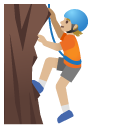


Appearance varies by platform and device. Google Noto, Twemoji, and OpenMoji are open-source.