🧑🏿🦲
The Emoji
Person: Dark Skin Tone, Bald
U+1F9D1 U+1F3FF U+200D U+1F9B2 · :person_dark_skin_tone_bald:
Trend 45
Meaning layers
- interpretation
- Used to represent baldness pride, relatability for those who shave their heads, or humorously to describe someone who is intimidatingly cool or unbothered. Also used in 'no-hair, don't care' energy memes.
- tiktok usage
- Appears in videos about hair loss journeys, head-shaving transformations, or as a reaction to someone being completely unbothered by drama.
- irony level
- 4 / 10
Platform meanings
- meaning
- Represents bald transformation videos, hair-loss acceptance journeys, or the 'I'm built different' aesthetic.
- trend usage
- Used in head-shaving reveal videos, chemo survivor stories, alopecia awareness content, and bald confidence challenges.
- hashtags
- #BaldAndBeautiful#BaldIsBeautiful#HeadShave#BaldPride#HairLossJourney
- virality score
- 52 / 100
Cultural meanings
🇺🇸
Western / Gen-Z
Seen as a badge of confidence and boldness; frequently used in the context of 'villain arc' memes or celebrating someone who shaved their head as an act of liberation.
🇵🇰
Pakistan & India
May represent someone who has shaved their head for religious reasons (like after hajj or a temple visit) or used humorously to describe a strict elder or no-nonsense figure.
🌍
Middle East
Associated with post-Hajj or Umrah head shaving traditions, or used to describe someone commanding respect and authority.
🌐
Global Neutral
Universally understood as representing a bald dark-skinned person; generally read as neutral or positive in the context of diversity and representation.
🇧🇩
Bangladesh
May be used to represent religious hair shaving practices or to describe a strict or disciplined person in a humorous tone.
🇱🇰
Sri Lanka
Can reference Buddhist monk imagery (though monks are typically depicted differently) or simply describe someone who is bald in casual conversation.
🇨🇳
China
Baldness is sometimes associated with wisdom or age; the dark skin tone adds a layer of cultural specificity that may be referenced in discussions of diversity.
🇯🇵
Japan
Bald figures are associated with strength (e.g., sumo wrestlers) or spirituality (monks); this emoji may evoke those archetypes in casual contexts.
🇰🇷
South Korea
Less commonly used due to beauty standards favoring full hair; may appear in discussions about individuality or in reaction to K-drama villain characters.
🇹🇼
Taiwan
Used in casual conversation about appearance or to reference a bold style choice; sometimes linked to intimidating or powerful character tropes.
🇭🇰
Hong Kong
Used to describe someone with a shaved head or in humorous contexts about stress causing hair loss; cultural openness to diverse representation.
🇵🇭
Philippines
Used humorously to describe a strict figure or someone who is completely unbothered; may also appear in discussions about chemotherapy support.
🇮🇩
Indonesia
May reference post-religious ceremony head shaving or used humorously in group chats to describe a no-nonsense friend.
🇹🇭
Thailand
Associated with monk imagery and spiritual practices involving head shaving; used respectfully or humorously depending on context.
🇻🇳
Vietnam
Used casually to describe someone who is bald or has shaved their head; may carry connotations of toughness or seniority.
🇲🇾
Malaysia
Used to represent someone who shaved their head for religious or personal reasons; also appears in humor about stress-induced hair loss.
🇸🇦
Saudi Arabia
Strongly associated with post-Hajj head shaving traditions; considered a respectful and spiritually significant representation.
🇦🇪
UAE
Used in diverse, multicultural chat contexts; may represent expats or locals and is generally received neutrally or positively.
🇪🇬
Egypt
May reference traditional religious practices or be used humorously to describe a tough, authoritative figure.
🇹🇷
Turkey
Used casually to describe someone bald or in meme contexts; baldness is sometimes associated with toughness or humor in Turkish internet culture.
🇮🇷
Iran
Used to represent bald individuals; may carry humor around hair loss or reference religious practices involving head shaving.
🇳🇬
Nigeria
Embraced positively as representation of dark-skinned individuals; baldness is common and celebrated in many communities, making this emoji highly relatable.
🇿🇦
South Africa
Used to represent the diverse bald population; fits naturally into conversations about grooming, identity, and confidence.
🇬🇧
UK & Ireland
Used in humor about going bald due to stress, in representation conversations, or to reference bald cultural icons in British pop culture.
🇫🇷
France
Used in discussions about diversity and representation; baldness is sometimes associated with artistic or intellectual identity in French culture.
🇩🇪
Germany
Appears in practical conversations about appearance or in representation discussions; may also be used in meme contexts about determination and focus.
🇪🇸
Spain & Italy
Used humorously or in discussions about grooming and style; bald aesthetics are increasingly celebrated in Southern European beauty culture.
🇧🇷
Brazil
Used in celebration of diverse Black Brazilian identity; baldness is common and often seen as stylish or confident in Brazilian culture.
🇲🇽
Mexico
Used casually to describe someone who is bald or has shaved their head; may appear in humor about aging or in representation conversations.
🌎
Latin America
Broadly used to represent bald individuals across the region; increasingly tied to body-positive and self-love movements in Latin American online spaces.
🇦🇺
Australia & NZ
Used in casual humor about baldness or in inclusivity discussions; fits into the laid-back Australian digital communication style.
How its meaning shifted
- 2010
This emoji did not exist yet; bald and diverse skin tone emojis had not been introduced to the Unicode standard.
- 2015
Still pre-release; basic emoji skin tone modifiers were being introduced but bald-specific person emojis were not yet available.
- 2020
Introduced with Unicode 11 (2018) and gained traction; used primarily for literal representation of bald individuals and in early diversity-positive content.
- 2026
Widely used in confidence and self-expression content, alopecia awareness campaigns, bald pride communities, and villain arc meme culture across all major platforms.
See it on every platform
Compare with
Adjacent emojis
Share & embed
Frequently asked
01What does the 🧑🏿🦲 Person: Dark Skin Tone, Bald emoji mean?
A gender-neutral person with dark skin tone and a bald head, introduced as part of the inclusive emoji set to represent people of various skin tones and hair (or lack of hair) presentations.
02What does 🧑🏿🦲 mean on TikTok?
Represents bald transformation videos, hair-loss acceptance journeys, or the 'I'm built different' aesthetic.
03What does 🧑🏿🦲 mean on WhatsApp?
Used to represent oneself or someone they know who is bald, or as a joke about stress causing hair loss.
04What does 🧑🏿🦲 mean in Gen-Z slang?
Used to represent baldness pride, relatability for those who shave their heads, or humorously to describe someone who is intimidatingly cool or unbothered. Also used in 'no-hair, don't care' energy memes.
05Is the 🧑🏿🦲 emoji safe to use?
Represents a gender-neutral bald person with dark skin tone; used for identity expression, diversity, and representation in positive, inclusive contexts.
06What does 🧑🏿🦲 mean in texting?
Baldness can carry emotional weight around identity and self-image. This emoji is often used to reclaim confidence and challenge beauty norms, reflecting themes of self-acceptance and resilience.
07What is the shortcode for 🧑🏿🦲?
The shortcode for Person: Dark Skin Tone, Bald is :person_dark_skin_tone_bald:
08What does 🧑🏿🦲 mean in dating?
Rarely used flirtatiously on its own, but may be sent as a self-deprecating joke or a playful nod to one's own baldness or attraction to bald people.
Safety & usage
- Safe meaning
- Represents a gender-neutral bald person with dark skin tone; used for identity expression, diversity, and representation in positive, inclusive contexts.
- Caution
- Could potentially be used in a derogatory or mocking way targeting someone's baldness or racial appearance, though this is uncommon.
As with all skin-tone specific emojis, misuse in racially charged contexts could be offensive. Generally considered safe and positive when used in appropriate representation or humor contexts.
How it looks across platforms
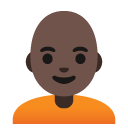


Appearance varies by platform and device. Google Noto, Twemoji, and OpenMoji are open-source.