💇🏼
The Emoji
Person Getting Haircut: Medium-light Skin Tone
U+1F487 U+1F3FC · :person_getting_haircut_mediumlight_skin_tone:
Trend 45
Meaning layers
- interpretation
- Used to signal a glow-up in progress, a self-care day, or the feeling of transformation after getting a fresh cut. Often implies treating yourself or leveling up your appearance.
- tiktok usage
- Appears in 'new me era' content, before/after transformation videos, and self-care day vlogs. Frequently paired with glow-up reveals.
- irony level
- 2 / 10
Platform meanings
- meaning
- Represents a glow-up, salon visit, or self-care transformation. Used in before/after content and 'treating myself' videos.
- trend usage
- Common in glow-up challenge videos, 'day in my life' vlogs, and 'new era' declaration TikToks. Often appears in text overlays during hair reveal moments.
- hashtags
- #GlowUp#NewMe#SalonDay#HairTransformation#SelfCareSunday
- virality score
- 52 / 100
Cultural meanings
🇺🇸
Western / Gen-Z
Strongly associated with the 'new me era' and glow-up culture. Gen Z uses it as a shorthand for self-reinvention, post-breakup pivots, and treating yourself unapologetically.
🇵🇰
Pakistan & India
Commonly used to indicate a visit to the barber or salon in everyday conversations. Also carries social significance before weddings, Eid, or festive occasions.
🌍
Middle East
Signifies a salon or barber visit often tied to social grooming norms before gatherings, celebrations, or religious occasions. Men's grooming culture is particularly strong.
🌐
Global Neutral
Universally understood as a haircut or salon visit across languages and cultures. One of the most internationally consistent emoji interpretations.
🇧🇩
Bangladesh
Used in messaging to indicate a trip to the local salon or barber. Associated with grooming for Eid, weddings, or family events.
🇱🇰
Sri Lanka
Represents a salon or barbershop visit, often shared casually in WhatsApp chats. Pre-event grooming is culturally important, making this emoji relatable before festivities.
🇨🇳
China
Associated with beauty salon culture which is widely popular in urban China. Used in WeChat and lifestyle content to signal self-care or a stylish update.
🇯🇵
Japan
Tied to the meticulous Japanese beauty and grooming culture. Salon visits are taken seriously, and this emoji is used respectfully to indicate a high-quality grooming appointment.
🇰🇷
South Korea
Connected to K-beauty culture where haircare and salon visits are a major lifestyle component. Used frequently in beauty content and lifestyle updates.
🇹🇼
Taiwan
Used casually in social media to indicate salon visits, often tied to beauty trends influenced by K-pop and local celebrity culture.
🇭🇰
Hong Kong
Associated with high-end salon culture in an urban context. Frequently used in lifestyle content alongside beauty and fashion topics.
🇵🇭
Philippines
Commonly used to indicate barber or salon visits, especially before fiestas, family gatherings, or special occasions where looking well-groomed is culturally important.
🇮🇩
Indonesia
Used to indicate a salon or barbershop appointment. Tied to grooming culture ahead of Lebaran, weddings, or formal events.
🇹🇭
Thailand
Represents salon visits in a culture that places high value on personal presentation. Beauty salons are ubiquitous, making this emoji very relatable in everyday Thai chat.
🇻🇳
Vietnam
Used in messaging to indicate a haircut or salon day. Vietnamese beauty culture is vibrant, and this emoji fits neatly into lifestyle and self-care conversations.
🇲🇾
Malaysia
Casually used across Malay, Chinese, and Indian Malaysian communities to indicate a trip to the salon or barber, often ahead of cultural celebrations.
🇸🇦
Saudi Arabia
Grooming is highly valued in Saudi culture, especially for men. This emoji is used to indicate a barbershop visit, often ahead of social gatherings or religious occasions.
🇦🇪
UAE
Associated with the UAE's thriving luxury salon and barbershop culture. Used in lifestyle content and casual chats to signal grooming and self-care.
🇪🇬
Egypt
Represents a salon or barber visit, common in everyday Egyptian WhatsApp culture. Grooming before social visits and celebrations is a deeply ingrained custom.
🇹🇷
Turkey
Turkey's strong barbershop culture makes this emoji widely relatable. It is used to signal a visit to the berber (barber) and is associated with social grooming rituals.
🇮🇷
Iran
Used to indicate a salon or barber visit. Beauty salons are culturally significant spaces in Iran, and this emoji resonates with personal care routines.
🇳🇬
Nigeria
Associated with visits to the barber or salon ahead of events. Hair and grooming culture is vibrant in Nigeria, making this a relatable and commonly understood emoji.
🇿🇦
South Africa
Used across diverse South African communities to signal a salon or barber visit. Grooming culture is important across all demographics for social occasions.
🇬🇧
UK & Ireland
Used casually to announce a haircut appointment or a trip to the hairdresser. Also appears in self-care content popular across British and Irish social media.
🇫🇷
France
Associated with the French emphasis on effortless style and personal care. Used to indicate a coiffeur visit with an undertone of chic self-maintenance.
🇩🇪
Germany
Straightforwardly used to indicate a haircut or Friseur visit. Germans tend to use emojis more literally, so this is primarily a grooming appointment signal.
🇪🇸
Spain & Italy
Connected to the Mediterranean culture of personal presentation and style. Used to signal a salon visit ahead of social outings, family events, or simply for self-care.
🇧🇷
Brazil
Brazil's enormous beauty industry makes this emoji very relatable. Used frequently to indicate salon visits, which are a significant part of Brazilian social and beauty culture.
🇲🇽
Mexico
Used to signal a visit to the peluquería or salon. Grooming is tied to social and family occasions, making this a common emoji ahead of celebrations or events.
🌎
Latin America
Widely understood across Latin America as indicating a salon or barber visit. Self-presentation is highly valued across the region, especially before gatherings and festivities.
🇦🇺
Australia & NZ
Used casually to announce a haircut or salon visit. Fits into the laid-back self-care content culture common on Australian and New Zealand social media.
How its meaning shifted
- 2010
Emoji was not yet widely available or used. Early smartphone emoji sets had limited skin tone diversity and grooming emojis were rarely used in casual digital communication.
- 2015
After Unicode's introduction of skin tone modifiers, the medium-light variant became available. Usage was straightforward — primarily to indicate a literal haircut or salon appointment.
- 2020
Gained new cultural layers during the self-care movement accelerated by the pandemic. Used heavily in 'treating myself' content, glow-up culture, and new-era declarations.
- 2026
Deeply embedded in self-care, transformation, and wellness discourse. Frequently used in AI-generated glow-up content, mental health adjacent self-care posts, and new identity era declarations across all major platforms.
See it on every platform
Adjacent emojis
- Often confused with
- barber polehaircut womanperson getting massage
- Can replace
- scissorssparklesnail polish
Share & embed
Frequently asked
01What does the 💇🏼 Person Getting Haircut: Medium-light Skin Tone emoji mean?
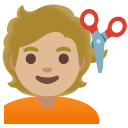
A person sitting in a salon chair receiving a haircut, shown with medium-light skin tone. The figure is typically depicted with scissors near their head and a salon cape.
02What does 💇🏼 mean on TikTok?
Represents a glow-up, salon visit, or self-care transformation. Used in before/after content and 'treating myself' videos.
03What does 💇🏼 mean on WhatsApp?
Casually tells friends or family you are at or going to the salon. A quick shorthand for 'getting a haircut today.'
04What does 💇🏼 mean in Gen-Z slang?
Used to signal a glow-up in progress, a self-care day, or the feeling of transformation after getting a fresh cut. Often implies treating yourself or leveling up your appearance.
05Is the 💇🏼 emoji safe to use?
Represents a person getting a haircut or visiting a salon — a completely benign self-care activity with no harmful associations.
06What does 💇🏼 mean in texting?
Getting a haircut is psychologically linked to transformation and control over one's identity. Using this emoji can signal a desire for change, self-investment, or a fresh start, which resonates with emotional reset behavior.
07What is the shortcode for 💇🏼?
The shortcode for Person Getting Haircut: Medium-light Skin Tone is :person_getting_haircut_mediumlight_skin_tone:
08What does 💇🏼 mean in dating?
Rarely used as a flirt tool directly, but can be sent to a partner to hint at getting ready or looking good for them — a subtle 'getting cute for you' signal.
Safety & usage
- Safe meaning
- Represents a person getting a haircut or visiting a salon — a completely benign self-care activity with no harmful associations.
- Caution
- Extremely rare, but could theoretically be used in toxic contexts as coded language for 'cutting someone off' or post-breakup behavior, though this is uncommon.
No significant safety concerns. The emoji is universally safe for all audiences and contexts. The skin tone modifier does not carry any known appropriation concerns.
How it looks across platforms


Appearance varies by platform and device. Google Noto, Twemoji, and OpenMoji are open-source.