💇🏽
The Emoji
Person Getting Haircut: Medium Skin Tone
U+1F487 U+1F3FD · :person_getting_haircut_medium_skin_tone:
Trend 52
Meaning layers
- interpretation
- Used to signal a glow-up moment, self-care day, or a fresh start. Often posted before or after a significant haircut as part of a transformation narrative.
- tiktok usage
- Appears in 'new me' transformation videos, 'soft life' content, and self-care vlogs. Often paired with before/after reveals.
- irony level
- 2 / 10
Platform meanings
- meaning
- Signals a salon visit, haircut reveal, or self-care day. Common in transformation and glow-up content.
- trend usage
- Used in 'new me' trend videos, 'it's giving fresh cut' audio trends, and soft life aesthetic vlogs.
- hashtags
- #glowup#selfcare#freshcut#hairtransformation#newme
- virality score
- 58 / 100
Cultural meanings
🇺🇸
Western / Gen-Z
Strongly associated with the 'soft life' and self-care aesthetic. Frequently used on TikTok and Instagram as part of glow-up and transformation culture.
🇵🇰
Pakistan & India
Used to share salon visits on social media, particularly significant in beauty and bridal prep contexts. Salons are social spaces, so this emoji carries a community and celebratory undertone.
🌍
Middle East
Represents salon culture which is deeply embedded in social life, especially for women. Often used in contexts of preparation for events or family gatherings.
🌐
Global Neutral
Universally recognized as representing a haircut or salon visit. Carries straightforward self-care connotations across cultures.
🇧🇩
Bangladesh
Associated with personal grooming and salon visits, often used by urban youth on social media to signal self-care or event preparation.
🇱🇰
Sri Lanka
Used in personal grooming contexts, particularly around festive occasions and weddings where haircuts are part of preparation rituals.
🇨🇳
China
Represents hair salon culture, which is very active in China. Used in lifestyle content and WeChat moments to signal grooming appointments.
🇯🇵
Japan
Associated with meticulous grooming culture and professional barbershop/salon aesthetics. Used in self-care and beauty content.
🇰🇷
South Korea
Strongly tied to K-beauty and grooming culture. Used extensively in beauty content, hair transformation posts, and idol makeover discussions.
🇹🇼
Taiwan
Used in lifestyle and beauty content, reflecting Taiwan's active salon culture and growing self-care aesthetic movement.
🇭🇰
Hong Kong
Represents the city's busy salon culture. Used casually to indicate grooming appointments and self-care in fast-paced urban life.
🇵🇭
Philippines
Used to signal salon visits, which are affordable and frequent for many Filipinos. Tied to social beauty culture and event preparation.
🇮🇩
Indonesia
Associated with salon culture and personal grooming. Used in self-care and lifestyle content, particularly among young urban Indonesians.
🇹🇭
Thailand
Reflects Thailand's strong beauty and grooming culture. Used in lifestyle content and preparation for social events.
🇻🇳
Vietnam
Represents barbershop and salon culture which is highly social in Vietnam. Used in casual grooming updates and self-care content.
🇲🇾
Malaysia
Used in self-care and grooming contexts across multicultural communities. Salon culture is active and social, so the emoji carries casual community undertones.
🇸🇦
Saudi Arabia
Represents salon culture that is significant for both men and women, though in distinct spaces. Used for grooming updates and event preparation.
🇦🇪
UAE
Associated with the UAE's luxury salon and grooming culture. Used in lifestyle and beauty content, often tied to high-end self-care.
🇪🇬
Egypt
Represents salon visits which are a regular social activity. Used in casual self-care updates and event preparation contexts.
🇹🇷
Turkey
Tied to Turkey's strong barbershop culture, particularly for men. Used in grooming updates and lifestyle content.
🇮🇷
Iran
Used in personal grooming and salon visit contexts. Women's salon culture is vibrant and private, making this emoji a discreet self-care signal.
🇳🇬
Nigeria
Associated with barbershop culture which is deeply social and community-oriented. Used in grooming updates and transformation content.
🇿🇦
South Africa
Represents both salon and barbershop culture. Used in self-care and grooming content, particularly in urban youth communities.
🇬🇧
UK & Ireland
Used casually to signal a trip to the hairdresser or barber. Associated with the British self-deprecating humor of 'finally getting a haircut'.
🇫🇷
France
Tied to French beauty and grooming culture. Used in lifestyle content with an understated elegance connotation.
🇩🇪
Germany
Used practically to indicate grooming appointments. German social media usage tends toward literal interpretation.
🇪🇸
Spain & Italy
Represents vibrant salon culture tied to appearance and social presentation. Used in lifestyle and beauty content with positive energy.
🇧🇷
Brazil
Strongly tied to Brazil's beauty-obsessed culture. Used extensively in salon, barber, and self-care content with high energy.
🇲🇽
Mexico
Represents barbershop and salon culture which is socially significant. Used in grooming updates and transformation content.
🌎
Latin America
Generally associated with active salon culture across Latin America. Used in self-care, grooming, and beauty transformation content.
🇦🇺
Australia & NZ
Used casually to signal a haircut appointment or fresh cut. Fits within laid-back self-care culture common in both countries.
How its meaning shifted
- 2010
Emoji did not yet exist in this form; general hair-related emojis were limited and skin tone modifiers had not been introduced.
- 2015
Introduced with skin tone modifiers as part of Unicode 8.0 diversity update. Primarily used literally to indicate salon or barbershop visits.
- 2020
Gained traction in self-care culture during the COVID-19 pandemic when haircuts became rare and culturally significant. Transformation and 'new me' usage grew.
- 2026
Embedded in glow-up culture, soft life aesthetics, and self-care content. Regularly used in transformation narratives, beauty industry content, and ironic 'self-care solves everything' humor.
See it on every platform
Adjacent emojis
- Often confused with
- barber poleblack scissorsbust in silhouette
- Can replace
- scissorssparklesnail polish
Share & embed
Frequently asked
01What does the 💇🏽 Person Getting Haircut: Medium Skin Tone emoji mean?
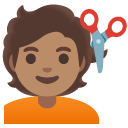
A person receiving a haircut from a stylist, shown with scissors at the head, rendered with medium skin tone modifier (Fitzpatrick scale type 4).
02What does 💇🏽 mean on TikTok?
Signals a salon visit, haircut reveal, or self-care day. Common in transformation and glow-up content.
03What does 💇🏽 mean on WhatsApp?
Letting someone know you're at the salon or barber, or that you just got a haircut.
04What does 💇🏽 mean in Gen-Z slang?
Used to signal a glow-up moment, self-care day, or a fresh start. Often posted before or after a significant haircut as part of a transformation narrative.
05Is the 💇🏽 emoji safe to use?
Represents a person getting a haircut; a grooming and self-care activity. Completely benign and positive in standard usage.
06What does 💇🏽 mean in texting?
Haircuts are culturally tied to transformation and emotional reset. This emoji taps into the psychological link between physical appearance changes and internal renewal or mood elevation.
07What is the shortcode for 💇🏽?
The shortcode for Person Getting Haircut: Medium Skin Tone is :person_getting_haircut_medium_skin_tone:
08What does 💇🏽 mean in dating?
Rarely used flirtatiously directly, but can signal 'freshening up' before a date — implying effort and self-presentation.
Safety & usage
- Safe meaning
- Represents a person getting a haircut; a grooming and self-care activity. Completely benign and positive in standard usage.
- Caution
- Extremely rare misuse. Could theoretically be used sarcastically to insult someone's appearance, but this is uncommon.
No significant safety concerns. The emoji is non-controversial and broadly positive. No documented toxic or coded misuse.
How it looks across platforms


Appearance varies by platform and device. Google Noto, Twemoji, and OpenMoji are open-source.