💆🏿
The Emoji
Person Getting Massage: Dark Skin Tone
U+1F486 U+1F3FF · :person_getting_massage_dark_skin_tone:
Trend 55
Meaning layers
- interpretation
- Used to express needing a break, self-care days, total exhaustion requiring recovery, or flexing a spa/wellness lifestyle. Also used ironically to say 'I deserve to be pampered.'
- tiktok usage
- Appears in self-care routines, 'treat yourself' content, wellness vlogs, and burnout commentary. Often paired with 'the way I needed this' captions.
- irony level
- 4 / 10
Platform meanings
- meaning
- Symbol of self-care, spa culture, decompression, and treating yourself after chaos or hard work.
- trend usage
- Used in 'day in my life' spa vlogs, burnout recovery content, wellness routines, and 'soft life' aesthetic videos.
- hashtags
- #selfcare#spaday#softlife#treatyourself#relaxationmode
- virality score
- 58 / 100
Cultural meanings
🇺🇸
Western / Gen-Z
Core symbol of self-care culture, the 'soft life,' and treating exhaustion with luxury rest. Deeply embedded in burnout and wellness discourse online.
🇵🇰
Pakistan & India
Used mostly literally to refer to massage or spa services; also common in wellness-focused groups. The dark skin tone variant may be self-selected for representation by South Asian users.
🌍
Middle East
Associated with hammam (traditional bath) culture and luxury spa experiences; used in wellness and beauty content. Skin tone diversity in emoji is increasingly valued in the region.
🌐
Global Neutral
Universally understood as rest, relaxation, and receiving care. Functions cross-culturally as a signal for needing or enjoying a break.
🇧🇩
Bangladesh
Used primarily in literal spa or beauty service contexts; increasingly adopted by younger users in self-care social content. Less common than in Western contexts.
🇱🇰
Sri Lanka
Found in beauty salon and wellness service promotions; used by younger demographics in self-care posts influenced by global social media trends.
🇨🇳
China
Used on platforms like WeChat and Weibo to represent massage parlor culture, which is socially common and normalized. Associated with health and physical recovery rather than luxury.
🇯🇵
Japan
Closely tied to the widespread culture of professional massage (massaji) and relaxation services. Seen as practical wellness rather than indulgence, and used in related service promotions.
🇰🇷
South Korea
Connected to Korea's strong beauty and wellness industry; used in spa day content, skincare routines, and self-care culture popular among Korean youth.
🇹🇼
Taiwan
Used in wellness and spa contexts; Taiwan's health-conscious culture means it appears in health retreat and relaxation content frequently.
🇭🇰
Hong Kong
Associated with professional massage and recovery culture in Hong Kong's high-stress urban environment; used both literally and to signal needing relief from work pressure.
🇵🇭
Philippines
Used in self-care and beauty content; reflects a growing wellness culture among Filipino youth. Spa and massage services are affordable and popular, making it relatable.
🇮🇩
Indonesia
Tied to Indonesia's traditional massage (pijat) culture; used in spa promotions and wellness posts. The emoji is seen as both cultural and modern simultaneously.
🇹🇭
Thailand
Strongly associated with Thailand's world-famous massage culture; used in tourism, wellness, and spa service content both domestically and internationally.
🇻🇳
Vietnam
Used in beauty and wellness service contexts; also appears in self-care content among younger Vietnamese social media users following global trends.
🇲🇾
Malaysia
Found in spa and massage promotion content; younger Malaysians also use it in burnout and self-care posts influenced by K-beauty and Western wellness culture.
🇸🇦
Saudi Arabia
Used in women's wellness and spa content, which is a growing industry in Saudi Arabia. Signals luxury self-care within gender-segregated spa environments.
🇦🇪
UAE
Associated with the UAE's thriving luxury spa and wellness industry; used by residents and influencers in high-end self-care content across all demographics.
🇪🇬
Egypt
Connected to hammam traditions and modern spa culture; used in wellness content and increasingly in burnout-related posts by Egyptian youth online.
🇹🇷
Turkey
Deeply tied to the famous Turkish hammam (bath) tradition; used in spa, tourism, and wellness content as a culturally resonant symbol of communal relaxation.
🇮🇷
Iran
Used in beauty and wellness contexts; private spa culture is significant among Iranian women and the emoji appears in related social content.
🇳🇬
Nigeria
Strong resonance with the growing 'soft life' movement in Nigerian social media culture; used to signal luxury, rest, and self-investment especially among young Nigerians. The dark skin tone feels representationally significant.
🇿🇦
South Africa
Used in wellness and self-care content; the dark skin tone version is particularly embraced in South African Black wellness communities as a representational choice.
🇬🇧
UK & Ireland
Used in self-care and spa content; often appears in 'girls' trip' or 'pamper day' messaging. Brits also use it sarcastically after stressful situations.
🇫🇷
France
Associated with French beauty and wellness culture; used in spa day content and also ironically in posts about needing relief from urban stress.
🇩🇪
Germany
Used practically in wellness and health-related content; Germany's strong spa (Spa/Wellness) culture makes this emoji relevant in health and recovery contexts.
🇪🇸
Spain & Italy
Associated with relaxation and mediterranean wellness culture; used in vacation, beach spa, and self-care posts. Also used humorously when describing siesta or downtime needs.
🇧🇷
Brazil
Used in beauty and self-care content; Brazil's strong wellness and beauty industry makes this very relatable. Also used in humor and burnout content by Brazilian youth.
🇲🇽
Mexico
Used in spa and beauty contexts; increasingly popular in self-care content among Mexican millennials and Gen Z following global wellness trends.
🌎
Latin America
Broadly used across Latin America in wellness, beauty, and self-care content. The 'soft life' and self-investment messaging resonates strongly with younger demographics.
🇦🇺
Australia & NZ
Used in spa, beach wellness, and self-care content; also appears humorously in burnout posts. Australians often use it in casual 'treating myself' messaging.
How its meaning shifted
- 2010
Emoji did not exist yet; massage and spa concepts were represented by text or basic spa symbols if at all.
- 2015
Base massage emoji existed but without skin tone modifiers; used mainly literally for spa appointments or massage therapy.
- 2020
Skin tone variants widely adopted; usage exploded during COVID-19 pandemic as people expressed desire for spa experiences they couldn't access and documented at-home self-care rituals.
- 2026
Firmly embedded in self-care, 'soft life,' and wellness culture especially in Black and POC digital communities; used both literally and figuratively for burnout, rest, and treating oneself.
See it on every platform
Adjacent emojis
- Often confused with
- person getting haircutperson bowingface with head bandage
- Can replace
- nail polishsparklesperson in steamy room
Share & embed
Frequently asked
01What does the 💆🏿 Person Getting Massage: Dark Skin Tone emoji mean?
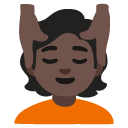
A person receiving a head or neck massage, shown from a top-down view with hands on their head, with a dark skin tone modifier applied.
02What does 💆🏿 mean on TikTok?
Symbol of self-care, spa culture, decompression, and treating yourself after chaos or hard work.
03What does 💆🏿 mean on WhatsApp?
Telling a friend you're exhausted and need rest, or that you just had or are going for a massage.
04What does 💆🏿 mean in Gen-Z slang?
Used to express needing a break, self-care days, total exhaustion requiring recovery, or flexing a spa/wellness lifestyle. Also used ironically to say 'I deserve to be pampered.'
05Is the 💆🏿 emoji safe to use?
Relaxation, self-care, spa services, massage therapy, wellness culture, and treating oneself to rest.
06What does 💆🏿 mean in texting?
Signals a psychological need for rest and restoration. The act of receiving a massage implies surrendering control and allowing care from others, which is psychologically significant for high-stress individuals.
07What is the shortcode for 💆🏿?
The shortcode for Person Getting Massage: Dark Skin Tone is :person_getting_massage_dark_skin_tone:
08What does 💆🏿 mean in dating?
Can be used flirtatiously to suggest offering or wanting a massage, which carries obvious intimate undertones. 'You look tense 💆🏿' is a classic low-key flirt opener.
Safety & usage
- Safe meaning
- Relaxation, self-care, spa services, massage therapy, wellness culture, and treating oneself to rest.
- Caution
- Rarely used toxically; occasionally weaponized as sarcasm implying someone is 'too soft' or being pampered while avoiding responsibilities.
The skin tone modifier carries representational weight — using a skin tone that differs significantly from one's own in certain contexts could be seen as inappropriate appropriation. Generally considered safe and positive.
How it looks across platforms


Appearance varies by platform and device. Google Noto, Twemoji, and OpenMoji are open-source.