💆🏻
The Emoji
Person Getting Massage: Light Skin Tone
U+1F486 U+1F3FB · :person_getting_massage_light_skin_tone:
Trend 52
Meaning layers
- interpretation
- Used to express needing a mental break, being stressed out, or treating yourself to something relaxing. Also used ironically when 'healing' from everyday drama or when someone just needs to decompress.
- tiktok usage
- Appears in self-care content, 'soft life' aesthetics, and ironically after someone describes a chaotic situation as if a massage could fix it.
- irony level
- 5 / 10
Platform meanings
- meaning
- Signals self-care mode, soft life content, or ironic coping with stress
- trend usage
- Featured in 'Sunday reset' routines, 'that girl' aesthetic videos, and ironic 'I'm fine' content
- hashtags
- #selfcare#softlife#thatgirl#sundayreset#relaxvibes
- virality score
- 58 / 100
Cultural meanings
🇺🇸
Western / Gen-Z
Widely used to signal self-care culture, the 'soft life' aesthetic, and ironic stress coping; fits naturally into wellness TikTok and Instagram content.
🇵🇰
Pakistan & India
Used to indicate a trip to a parlor or salon for a head massage, which is a culturally common and normalized relaxation practice; also used to express needing a break from family or work pressure.
🌍
Middle East
Associated with hammam culture and luxury spa days; commonly used among women sharing wellness routines or planning group spa outings.
🌐
Global Neutral
Universally understood as representing massage or relaxation; safe to use across cultures without ambiguity.
🇧🇩
Bangladesh
Commonly linked to parlor visits and beauty treatments; used to express stress relief or a day of pampering in a culturally familiar context.
🇱🇰
Sri Lanka
Used to represent Ayurvedic treatments and traditional head oil massages, which are culturally practiced for wellness and stress relief.
🇨🇳
China
Associated with traditional massage culture (按摩, ānmó) which is a common, everyday wellness activity; used to indicate visiting a massage parlor or needing relaxation.
🇯🇵
Japan
Connected to the concept of 'relaxation salons' and head spa treatments that are extremely popular; also tied to the cultural value of stress relief and mental restoration.
🇰🇷
South Korea
Strongly linked to the booming Korean skincare and beauty wellness industry; used in content about scalp care, facial treatments, and luxury self-care routines.
🇹🇼
Taiwan
Used in the context of popular foot massage and traditional Chinese massage culture; signals a common leisure activity and stress relief practice.
🇭🇰
Hong Kong
Represents a treat-yourself moment in the fast-paced Hong Kong lifestyle; linked to wellness center visits and high-end spa culture.
🇵🇭
Philippines
Used to indicate a hilot (traditional massage) or a regular salon head massage visit, which are affordable and common wellness practices.
🇮🇩
Indonesia
Associated with traditional Javanese massage (pijat) culture; used to signal relaxation, family care rituals, or a visit to a wellness center.
🇹🇭
Thailand
Strongly associated with Thailand's globally famous traditional massage culture; used to represent either giving or receiving a Thai massage.
🇻🇳
Vietnam
Linked to affordable and widely available massage parlors; used to express relaxation after a long day or week of hard work.
🇲🇾
Malaysia
Used to indicate a massage session or spa visit, common across cultures in Malaysia; also appears in beauty and wellness influencer content.
🇸🇦
Saudi Arabia
Associated with luxury spa experiences in high-end hotels; used among women in private social media contexts to share wellness and beauty routines.
🇦🇪
UAE
Connected to the thriving luxury spa and wellness industry in Dubai and Abu Dhabi; frequently used in lifestyle influencer content representing high-end self-care.
🇪🇬
Egypt
Used to represent hammam culture and traditional beauty treatments; signals a relaxing day out or a spa visit with friends or family.
🇹🇷
Turkey
Strongly associated with the iconic Turkish bath (hamam) experience; used to signal a traditional wellness ritual that is deeply embedded in Turkish culture.
🇮🇷
Iran
Linked to hammam and traditional beauty treatments popular among women; used in private social media to share wellness activities and self-care moments.
🇳🇬
Nigeria
Used to represent a treat-yourself day at a salon or massage center; increasingly popular among urban Nigerians in wellness and glow-up content.
🇿🇦
South Africa
Used to signal luxury spa days and wellness culture, often in the context of township or urban self-care content; carries aspirational lifestyle connotations.
🇬🇧
UK & Ireland
Used to express needing a break or treating yourself, often sarcastically after a tough week; associated with spa weekends and wellness culture.
🇫🇷
France
Linked to the French wellness and beauty philosophy of taking care of oneself; used in content about thalassotherapy, facial treatments, and self-care rituals.
🇩🇪
Germany
Associated with the German Wellness (Wellness-Oase) spa culture and sauna tradition; used to signal a planned or needed relaxation day.
🇪🇸
Spain & Italy
Connected to Mediterranean beauty and relaxation culture; used to express enjoying a slow, restful day at a spa or beauty center with friends or family.
🇧🇷
Brazil
Linked to Brazil's vibrant beauty industry and the cultural emphasis on body care; used in content about massages, beauty salon visits, and self-care routines.
🇲🇽
Mexico
Used to represent spa days, traditional temascal experiences, or a visit to a massage therapist; signals relaxation and self-reward after hard work.
🌎
Latin America
Broadly used across Latin America to indicate a beauty treatment, relaxation session, or self-care moment; fits into the growing wellness influencer culture in the region.
🇦🇺
Australia & NZ
Used to signal a spa day, a wellness treat, or ironically after a stressful week; fits into laid-back Australian self-care and health culture.
How its meaning shifted
- 2010
Rarely used; emoji culture was in early stages and this was primarily a literal representation of getting a head massage with minimal cultural layering.
- 2015
Gained traction as emoji usage expanded; primarily used literally to indicate spa visits or massage appointments, sometimes in wellness-related social media posts.
- 2020
Surged during the COVID-19 pandemic as people referenced the loss of spa access and the desire for relaxation; began being used ironically to cope with collective stress and anxiety.
- 2026
Firmly embedded in self-care, soft life, and wellness aesthetics online; used both sincerely in wellness content and ironically in stress memes, with the light skin tone modifier being commonly chosen for personalization.
See it on every platform
Adjacent emojis
- Often confused with
- person bowingperson getting haircutsleeping face
Share & embed
Frequently asked
01What does the 💆🏻 Person Getting Massage: Light Skin Tone emoji mean?
A person receiving a head or facial massage, shown from the side with hands pressing on their head, displayed with a light skin tone modifier.
02What does 💆🏻 mean on TikTok?
Signals self-care mode, soft life content, or ironic coping with stress
03What does 💆🏻 mean on WhatsApp?
Expressing that you need or are enjoying a relaxing moment, often sent after complaining about a stressful day
04What does 💆🏻 mean in Gen-Z slang?
Used to express needing a mental break, being stressed out, or treating yourself to something relaxing. Also used ironically when 'healing' from everyday drama or when someone just needs to decompress.
05Is the 💆🏻 emoji safe to use?
Relaxation, spa visits, self-care, wellness, massage therapy, and stress relief
06What does 💆🏻 mean in texting?
The emoji taps into aspirational wellness culture — people use it both to express genuine rest and to signal the desire for relief from overwhelming situations, making it a dual stress-and-comfort indicator.
07What is the shortcode for 💆🏻?
The shortcode for Person Getting Massage: Light Skin Tone is :person_getting_massage_light_skin_tone:
08What does 💆🏻 mean in dating?
Can be used flirtatiously to hint at giving or receiving a massage, implying physical closeness or pampering a partner.
Safety & usage
- Safe meaning
- Relaxation, spa visits, self-care, wellness, massage therapy, and stress relief
- Caution
- In rare contexts could be used to hint at inappropriate massage services, though this is uncommon and context-dependent
Generally safe for all audiences; minimal risk of misinterpretation in mainstream contexts. Extremely rare misuse potential in suggestive private messages.
How it looks across platforms
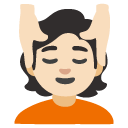


Appearance varies by platform and device. Google Noto, Twemoji, and OpenMoji are open-source.