💆🏽
The Emoji
Person Getting Massage: Medium Skin Tone
U+1F486 U+1F3FD · :person_getting_massage_medium_skin_tone:
Trend 58
Meaning layers
- interpretation
- Shorthand for 'I need a break,' 'I'm exhausted and deserve pampering,' or 'self-care mode activated.' Often used ironically when someone is stressed rather than actually getting a massage.
- tiktok usage
- Appears in self-care content, 'treat yourself' videos, and burnout commentary. Used in captions like 'me after surviving the week 💆🏽'
- irony level
- 6 / 10
Platform meanings
- meaning
- Symbol of self-care, exhaustion recovery, and deserved rest. Used in 'soft life' trend videos, spa routines, and 'treating myself' content.
- trend usage
- Featured in #SelfCareSunday recaps, burnout storytelling POVs, and 'girl dinner turned girl spa night' videos.
- hashtags
- #selfcare#softlife#spaday#treatyourself#relaxmode
- virality score
- 54 / 100
Cultural meanings
🇺🇸
Western / Gen-Z
Ubiquitous self-care shorthand. Carries strong ironic energy — used most often when life is anything but relaxing. Core to 'soft life' and wellness aesthetic identity.
🇵🇰
Pakistan & India
Used primarily among urban, English-fluent young people to signal exhaustion or a spa/parlour visit. Also used in 'chai aur sukoon' (tea and peace) posts.
🌍
Middle East
Associated with hammam culture and traditional wellness practices. Used by Gulf youth on social media to signal luxury self-care or wellness center visits.
🌐
Global Neutral
Universally readable as relaxation and rest. One of the most straightforward wellness emojis with minimal ambiguity across cultures.
🇧🇩
Bangladesh
Used among city youth to signal exhaustion relief or beauty parlour visits. Less common than in neighboring India but growing with wellness content.
🇱🇰
Sri Lanka
Connected to Ayurvedic and traditional oil massage culture. Used in spa and wellness tourism content as well as personal self-care posts.
🇨🇳
China
Associated with traditional Chinese massage (tuina) culture and wellness clinics. Popular on WeChat and Weibo in health and spa content.
🇯🇵
Japan
Linked to shiatsu massage and onsen (hot spring) culture. Used in lifestyle content signaling authentic relaxation and stress relief rituals.
🇰🇷
South Korea
Tied to K-beauty self-care culture and jjimjilbang (bathhouse) rituals. Heavily used in skincare and wellness content on Korean platforms.
🇹🇼
Taiwan
Connected to foot massage culture widely popular on the island. Used in wellness and self-care content, especially after long workdays.
🇭🇰
Hong Kong
Associated with high-stress work culture relief. Often used sarcastically — 'surviving HK corporate life needs this daily 💆🏽'
🇵🇭
Philippines
Used in lifestyle content around hilot (traditional Filipino massage) and spa visits. Signals deserved rest after hard work.
🇮🇩
Indonesia
Tied to traditional Javanese massage culture. Used in wellness tourism and beauty content on Instagram and TikTok.
🇹🇭
Thailand
Deeply resonant given Thailand's global reputation for traditional Thai massage. Used authentically in both tourism and local wellness content.
🇻🇳
Vietnam
Connected to traditional Vietnamese massage and wellness practices. Used in self-care content and after demanding workdays in urban centers.
🇲🇾
Malaysia
Used in lifestyle and wellness content, often with references to spa promotions and beauty treatments. Signals deserved downtime.
🇸🇦
Saudi Arabia
Used in women's wellness content and private spa culture. Increasingly seen in female empowerment and self-care content post-reform.
🇦🇪
UAE
Luxury spa culture is prominent. Used in aspirational lifestyle content in Dubai and Abu Dhabi circles, often paired with high-end wellness brands.
🇪🇬
Egypt
Associated with hammam and beauty salon culture. Used in self-care posts, especially among young urban Egyptian women online.
🇹🇷
Turkey
Tied to traditional Turkish bath (hamam) culture. Used in tourism content, local spa recommendations, and self-care posts.
🇮🇷
Iran
Used in personal self-care content, often in private social media contexts. Associated with beauty salon visits and women's wellness routines.
🇳🇬
Nigeria
Popular in Naija lifestyle content around self-care, 'soft life' culture, and spa days. Signals financial wellness and deserved luxury.
🇿🇦
South Africa
Used in wellness and lifestyle content across racial communities. Tied to both township self-care traditions and urban spa culture.
🇬🇧
UK & Ireland
Used sarcastically and genuinely. NHS stress culture means it often appears ironically — 'waiting 6 months for an NHS appointment, need this 💆🏽'
🇫🇷
France
Associated with joie de vivre and self-indulgence. Used in lifestyle and bien-être (wellness) content without much irony.
🇩🇪
Germany
Used in wellness and Kur (spa treatment) culture content. Germans use it straightforwardly — less ironic, more literal.
🇪🇸
Spain & Italy
Linked to Mediterranean self-care and dolce far niente culture. Used in lifestyle content celebrating leisure and bodily pleasure.
🇧🇷
Brazil
Tied to beauty salon culture and corpo wellness rituals. Used heavily in self-care content and after stressful news cycles.
🇲🇽
Mexico
Used in spa and wellness content but also in meme culture to express 'I need a break from all this chaos.' Humor-forward usage.
🌎
Latin America
Broadly used across Latin America for self-care signaling and deserved rest after hard work. Also appears in beauty and wellness marketing.
🇦🇺
Australia & NZ
Used in wellness and 'Sunday reset' content. Appears in beach + spa lifestyle aesthetics and straightforward self-care signaling.
How its meaning shifted
- 2010
Barely used. Emoji was new and largely unknown outside Japan. No skin tone variant existed yet; usage was novelty-driven and literal.
- 2015
Skin tone variants introduced. Usage grew with the spa and wellness app boom. Primarily literal — people shared it when actually at spas or salons.
- 2020
Exploded with pandemic self-care culture and mental health awareness. Became shorthand for burnout recovery and home spa days. Ironic use began growing.
- 2026
Fully integrated into 'soft life' and wellness aesthetics. Ironic and genuine use coexist. Core emoji in self-care creator content and burnout commentary culture.
See it on every platform
Adjacent emojis
- Often confused with
- person getting haircutraised handsperson bowing
- Can replace
- sparklesseedlingrelieved face
Share & embed
Frequently asked
01What does the 💆🏽 Person Getting Massage: Medium Skin Tone emoji mean?
A person receiving a head or scalp massage, shown in a relaxed position with hands on their head. The medium skin tone modifier applies a Fitzpatrick scale type 4 complexion to the figure.
02What does 💆🏽 mean on TikTok?
Symbol of self-care, exhaustion recovery, and deserved rest. Used in 'soft life' trend videos, spa routines, and 'treating myself' content.
03What does 💆🏽 mean on WhatsApp?
Signals tiredness or need for relaxation in group or personal chats. 'Finally home 💆🏽' communicates immediate decompression.
04What does 💆🏽 mean in Gen-Z slang?
Shorthand for 'I need a break,' 'I'm exhausted and deserve pampering,' or 'self-care mode activated.' Often used ironically when someone is stressed rather than actually getting a massage.
05Is the 💆🏽 emoji safe to use?
Wellness, self-care, relaxation, spa treatments, massage therapy, burnout recovery, and rest.
06What does 💆🏽 mean in texting?
Evokes the psychological concept of earned rest and bodily autonomy. Signals a desire for decompression, physical comfort, and mental recovery from stress or overstimulation.
07What is the shortcode for 💆🏽?
The shortcode for Person Getting Massage: Medium Skin Tone is :person_getting_massage_medium_skin_tone:
08What does 💆🏽 mean in dating?
Can be used flirtatiously to hint at wanting physical touch or suggesting a couples' spa date. 'You give the best shoulder rubs 💆🏽' carries light romantic undertones.
Safety & usage
- Safe meaning
- Wellness, self-care, relaxation, spa treatments, massage therapy, burnout recovery, and rest.
- Caution
- In rare cases used in suggestive contexts hinting at sensual massage, but this is uncommon and context-dependent.
Generally safe for all audiences. Minimal risk of misinterpretation in professional contexts if used in wellness or self-care framing. Very low NSFW risk.
How it looks across platforms
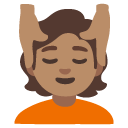


Appearance varies by platform and device. Google Noto, Twemoji, and OpenMoji are open-source.