🏌️
The Emoji
Person Golfing
U+1F3CC U+FE0F · :person_golfing:
Trend 38
Meaning layers
- interpretation
- Used ironically to represent rich dad energy, corporate networking pretending to be fun, or someone doing suspiciously well financially. Also used for 'taking a swing' at something metaphorically.
- tiktok usage
- Appears in videos mocking corporate culture, privilege, and 'old money' aesthetics. Sometimes paired with 'not like other sports' humor or financial bro content.
- irony level
- 7 / 10
Platform meanings
- meaning
- Represents rich energy, corporate culture satire, or someone living their best leisurely life. Often ironic.
- trend usage
- Used in 'old money aesthetic' trends, corporate bro parody videos, and 'things dads do' humor. Also in finance bro content.
- hashtags
- #golflife#oldmoney#corporatehumor#golfswing#richkidvibes
- virality score
- 42 / 100
Cultural meanings
🇺🇸
Western / Gen-Z
Deeply ironic symbol of boomer wealth, corporate nepotism, and disconnected privilege. Rarely used earnestly — usually deployed to mock or satirize the 1% lifestyle.
🇵🇰
Pakistan & India
Golf is an elite sport in South Asia, associated with high society, army officers, and business elites. Using this emoji signals wealth, aspiration, or access to exclusive spaces.
🌍
Middle East
Golf is popular among the Gulf elite and is tied to luxury resort culture. The emoji carries strong aspirational and status connotations in general Middle Eastern digital culture.
🌐
Global Neutral
Universally understood as representing golf as a sport. Carries mild associations with leisure, wealth, and outdoor recreation across most global contexts.
🇧🇩
Bangladesh
Golf is extremely niche in Bangladesh, associated almost exclusively with the ultra-wealthy and expatriate communities. The emoji reads as a strong status symbol.
🇱🇰
Sri Lanka
Golf is played by a small, wealthy elite in Sri Lanka. The emoji is used by that community but is largely unfamiliar to most general users.
🇨🇳
China
Golf has a complex history in China — courses were once seen as symbols of corruption and were restricted. The emoji may carry subtle political undertones alongside its status symbolism.
🇯🇵
Japan
Golf is a mainstream recreational sport in Japan, especially among salarymen and corporate culture. The emoji is used earnestly and widely, particularly in business networking contexts.
🇰🇷
South Korea
Golf is hugely popular in South Korea across age groups and is tied to aspirational middle-class culture as much as elite status. The emoji is used genuinely and enthusiastically.
🇹🇼
Taiwan
Golf is a leisure sport enjoyed by Taiwan's business class. The emoji is used to signal weekend relaxation, corporate culture, and aspirational living.
🇭🇰
Hong Kong
Associated with business networking and the expat elite. The emoji signals financial success and the fast-paced, deal-making social culture of Hong Kong.
🇵🇭
Philippines
Golf is a status sport in the Philippines, popular among politicians, celebrities, and business figures. The emoji carries strong aspirational and high-society connotations.
🇮🇩
Indonesia
Golf is associated with the wealthy elite and political figures. The emoji is used in aspirational contexts or sometimes ironically in political satire.
🇹🇭
Thailand
Popular among Thai businessmen and tourists at luxury resorts. The emoji is used to signal leisure, wealth, and access to premium lifestyle experiences.
🇻🇳
Vietnam
Golf is a growing sport in Vietnam, heavily associated with foreign investment, business deals, and new wealth. The emoji signals modernity and financial success.
🇲🇾
Malaysia
Golf is popular among Malaysia's business elite and is tied to corporate culture and Chinese-Malaysian business communities. The emoji is used earnestly in professional and social contexts.
🇸🇦
Saudi Arabia
Golf has grown significantly in Saudi Arabia as part of Vision 2030 lifestyle reforms. The emoji is used to signal modern, leisure-oriented wealthy lifestyle.
🇦🇪
UAE
Golf is extremely popular in the UAE, with world-class courses tied to luxury tourism. The emoji is used enthusiastically and genuinely, especially in Dubai-centric culture.
🇪🇬
Egypt
Golf is a niche, elite sport in Egypt associated with Cairene upper class and resort tourism. The emoji signals exclusivity and access to premium spaces.
🇹🇷
Turkey
Golf is a growing but still elite sport in Turkey. The emoji is used by the upper class and those in tourism-adjacent industries to signal leisure and affluence.
🇮🇷
Iran
Golf is extremely niche in Iran, largely restricted to a small elite. The emoji would carry very strong connotations of wealth and foreign influence.
🇳🇬
Nigeria
Golf is associated with the Nigerian elite — politicians, business moguls, and the old-money Lagos crowd. The emoji signals serious wealth and social status.
🇿🇦
South Africa
Golf is relatively popular across class lines due to the country's strong golfing heritage and courses. Used more broadly to represent weekend sport, not exclusively by elites.
🇬🇧
UK & Ireland
Golf is a mainstream British and Irish sport with both working-class (public course) and elite (private club) dimensions. The emoji is used both earnestly and in class satire.
🇫🇷
France
Golf is seen as a bourgeois leisure sport in France. The emoji carries strong class connotations and is often used ironically or to denote out-of-touch wealth.
🇩🇪
Germany
Golf is a sport associated with upper-middle-class professionals in Germany. The emoji is used genuinely by enthusiasts and occasionally in corporate culture references.
🇪🇸
Spain & Italy
Golf is popular in Spain's tourist regions and among Italy's wealthy classes. The emoji is used for leisure signaling, resort culture, and aspirational lifestyle content.
🇧🇷
Brazil
Golf is extremely elite in Brazil, associated with the São Paulo and Rio upper crust. The emoji carries heavy class signaling and is used ironically in socially-conscious contexts.
🇲🇽
Mexico
Golf is popular among Mexico's business elite and in tourist resort areas. The emoji signals affluence, leisure, and access to exclusive social circles.
🌎
Latin America
Across Latin America, golf is a strong marker of elite status. The emoji is generally used to signal wealth, corporate culture, or aspirational luxury.
🇦🇺
Australia & NZ
Golf is a widely accessible and popular sport in Australia and New Zealand, played across class lines. The emoji is used genuinely and enthusiastically without heavy class irony.
How its meaning shifted
- 2010
Used almost exclusively as a literal sport reference. Digital communication was straightforward and emoji were used face-value — this one meant golf, sports plans, or outdoor activity.
- 2015
Still mostly literal but beginning to appear in posts about corporate networking and weekend leisure flexing as emoji culture expanded into lifestyle signaling.
- 2020
Started gaining ironic usage as wealth inequality discussions surged online. Became a shorthand for tone-deaf executive behavior, especially during COVID-19 when images of leaders golfing during crises circulated widely.
- 2026
Solidified as a dual-purpose emoji — genuine for golf enthusiasts and sports communities, deeply ironic and satirical in Gen Z and millennial online discourse about privilege, corporate culture, and old money aesthetics.
See it on every platform
Emoji combinations
Adjacent emojis
Share & embed
Frequently asked
01What does the 🏌️ Person Golfing emoji mean?
A person swinging a golf club, depicted mid-swing on a golf course. Represents the sport of golf, leisure activities, and outdoor recreation.
02What does 🏌️ mean on TikTok?
Represents rich energy, corporate culture satire, or someone living their best leisurely life. Often ironic.
03What does 🏌️ mean on WhatsApp?
Telling someone you're going golfing, or referencing a golf outing or sports event.
04What does 🏌️ mean in Gen-Z slang?
Used ironically to represent rich dad energy, corporate networking pretending to be fun, or someone doing suspiciously well financially. Also used for 'taking a swing' at something metaphorically.
05Is the 🏌️ emoji safe to use?
Represents golf as a sport, leisure activity, weekend outing, or country club culture. Completely benign in literal usage.
06What does 🏌️ mean in texting?
Golf is culturally coded as a calm, calculated, and status-oriented activity. Using this emoji often projects a controlled, unhurried confidence — or ironic detachment from hustle culture.
07What is the shortcode for 🏌️?
The shortcode for Person Golfing is :person_golfing:
08What does 🏌️ mean in dating?
Rarely used flirtatiously; sometimes sent to suggest a casual, no-pressure date idea ('let's go mini golfing 🏌️') or to project a laid-back, financially stable image.
Safety & usage
- Safe meaning
- Represents golf as a sport, leisure activity, weekend outing, or country club culture. Completely benign in literal usage.
- Caution
- Can be weaponized as a classist symbol or used to mock and belittle people perceived as out-of-touch, privileged, or elitist. In some political contexts used as a targeted jab at specific public figures.
No NSFW concerns. Mild risk of use in class-based harassment or political pile-ons targeting specific individuals photographed golfing at inappropriate times.
How it looks across platforms
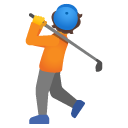


Appearance varies by platform and device. Google Noto, Twemoji, and OpenMoji are open-source.