🧑🦽➡️
The Emoji
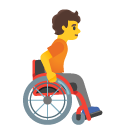
Person In Manual Wheelchair Facing Right
U+1F9D1 U+200D U+1F9BD U+200D U+27A1 U+FE0F · :person_in_manual_wheelchair_facing_right:
Trend 22
Meaning layers
- interpretation
- Used to represent moving forward, pushing through obstacles, or literally referencing wheelchair users navigating life. Can also symbolize 'rolling out' or leaving a situation.
- tiktok usage
- Appears in disability advocacy content, accessibility awareness videos, and occasionally as a metaphor for pushing forward despite challenges.
- irony level
- 2 / 10
Platform meanings
- meaning
- Represents disability pride, accessibility awareness, or the act of moving forward physically and metaphorically.
- trend usage
- Appears in #DisabilityTok, wheelchair athlete content, and accessibility challenge videos. Also used in 'leaving that behind' trend formats.
- hashtags
- #DisabilityTok#WheelchairLife#AccessibilityMatters#DisabilityPride#RollingForward
- virality score
- 28 / 100
Cultural meanings
🇺🇸
Western / Gen-Z
Seen as a positive representation of disability identity and mobility independence; used by disability advocates and allies in empowerment contexts.
🇵🇰
Pakistan & India
Primarily interpreted literally as representing a person with a mobility disability; used in healthcare and accessibility awareness contexts rather than metaphorically.
🌍
Middle East
Used in formal disability awareness campaigns and healthcare contexts; directional symbolism is secondary to the literal representation.
🌐
Global Neutral
Universally recognized as a wheelchair user in motion; the rightward direction is broadly understood as forward movement or progress.
🇧🇩
Bangladesh
Interpreted straightforwardly as a disabled person on the move; used in disability advocacy and NGO communications.
🇱🇰
Sri Lanka
Used in accessibility awareness content and disability rights discussions; not commonly used in casual digital communication.
🇨🇳
China
Understood as representing a wheelchair user; used in Paralympic content, disability policy discussions, and healthcare communications.
🇯🇵
Japan
Associated with accessibility and social welfare; used in disability advocacy contexts and barrier-free initiative communications.
🇰🇷
South Korea
Featured in disability awareness campaigns and accessible design discussions; growing use in inclusive content creation.
🇹🇼
Taiwan
Used in disability rights and accessibility advocacy; the directional variant is appreciated for its specificity in representing active mobility.
🇭🇰
Hong Kong
Appears in accessibility policy discussions and disability support content; used by NGOs and social welfare organizations.
🇵🇭
Philippines
Used in disability awareness posts and accessibility advocacy; also appears in content about adaptive sports and community support.
🇮🇩
Indonesia
Interpreted as a symbol of mobility and independence; used in disability community content and social welfare messaging.
🇹🇭
Thailand
Featured in disability awareness campaigns and healthcare content; the directional variant is noted for depicting active movement.
🇻🇳
Vietnam
Used in disability support and social welfare communications; interpreted as representing independence and movement for disabled individuals.
🇲🇾
Malaysia
Appears in inclusive community content and disability advocacy; used by NGOs and health organizations.
🇸🇦
Saudi Arabia
Used primarily in formal disability awareness and accessibility contexts; limited casual use in digital communication.
🇦🇪
UAE
Featured in inclusive design and accessibility initiatives aligned with Vision 2030 goals; used in corporate DEI and smart city content.
🇪🇬
Egypt
Used in disability awareness and healthcare communications; literal interpretation is predominant over metaphorical usage.
🇹🇷
Turkey
Appears in disability rights discussions and accessibility advocacy content; used by social welfare organizations and activists.
🇮🇷
Iran
Used in disability awareness and healthcare contexts; primarily interpreted literally with limited metaphorical or meme usage.
🇳🇬
Nigeria
Featured in disability advocacy and NGO content; growing use in discussions about inclusive infrastructure and accessibility.
🇿🇦
South Africa
Used in disability rights campaigns and accessibility awareness; aligned with constitutional rights discussions around disability inclusion.
🇬🇧
UK & Ireland
Used in disability advocacy, accessibility campaigns, and progressive social media content; also appears in humorous 'rolling away' meme contexts.
🇫🇷
France
Featured in disability rights and accessibility awareness content; used by organizations promoting inclusion and barrier-free environments.
🇩🇪
Germany
Associated with precision accessibility advocacy and social welfare discussions; used in professional and civic disability rights contexts.
🇪🇸
Spain & Italy
Used in disability awareness campaigns and inclusive design discussions; also appears in casual content as a 'moving forward' symbol.
🇧🇷
Brazil
Featured in disability advocacy and Paralympic content; used in inclusive community discussions and social welfare communications.
🇲🇽
Mexico
Used in disability rights content and accessibility discussions; appears in community support and inclusive design posts.
🌎
Latin America
Broadly used across Latin America in disability advocacy and accessibility awareness; the directional aspect is appreciated in content about progress and movement.
🇦🇺
Australia & NZ
Used in disability advocacy, accessibility policy discussions, and inclusive design content; also appears in casual contexts to represent moving forward or exiting a situation.
How its meaning shifted
- 2010
This specific emoji did not exist in 2010; wheelchair emojis were not yet part of Unicode and disability representation in emoji was virtually nonexistent.
- 2015
Still predating this emoji's existence; the standard wheelchair symbol ♿ was the primary accessibility emoji available, used mainly for location or facility marking.
- 2020
The directional wheelchair emoji sequences were introduced around this period; initial use was primarily in disability advocacy and representation discussions.
- 2026
Established as a meaningful disability representation emoji used in advocacy, accessibility content, and increasingly in casual contexts as an exit or forward-movement symbol.
See it on every platform
Compare with
Adjacent emojis
Share & embed
Frequently asked
01What does the 🧑🦽➡️ Person In Manual Wheelchair Facing Right emoji mean?
A person seated in a manual wheelchair, facing to the right, indicating directional movement or progress. Part of the ZWJ sequence combining 🧑, ♿, and ➡️.
02What does 🧑🦽➡️ mean on TikTok?
Represents disability pride, accessibility awareness, or the act of moving forward physically and metaphorically.
03What does 🧑🦽➡️ mean on WhatsApp?
Used to represent a wheelchair user or to indicate someone is on the move, leaving, or heading somewhere.
04What does 🧑🦽➡️ mean in Gen-Z slang?
Used to represent moving forward, pushing through obstacles, or literally referencing wheelchair users navigating life. Can also symbolize 'rolling out' or leaving a situation.
05Is the 🧑🦽➡️ emoji safe to use?
A neutral and positive representation of a wheelchair user moving forward; widely used in disability advocacy, accessibility awareness, and inclusive content.
06What does 🧑🦽➡️ mean in texting?
Evokes feelings of independence and determination. The rightward direction is psychologically associated with progress and moving toward goals, adding a layer of optimism to the representation.
07What is the shortcode for 🧑🦽➡️?
The shortcode for Person In Manual Wheelchair Facing Right is :person_in_manual_wheelchair_facing_right:
08What does 🧑🦽➡️ mean in dating?
Rarely used in flirting contexts; when used, it might signal authenticity and openness about disability in dating profiles.
Safety & usage
- Safe meaning
- A neutral and positive representation of a wheelchair user moving forward; widely used in disability advocacy, accessibility awareness, and inclusive content.
- Caution
- Extremely rarely misused; in very edge cases could be used mockingly toward disabled individuals, which would be considered ableist and harmful.
Generally a safe emoji with minimal risk of misuse. Care should be taken not to use it in mocking or diminishing contexts related to disability. When used as a generic 'exit' meme, ensure the humor is not at the expense of disabled people.
How it looks across platforms
Appearance varies by platform and device. Google Noto, Twemoji, and OpenMoji are open-source.