🧎🏿➡️
The Emoji
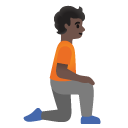
Person Kneeling Facing Right: Dark Skin Tone
U+1F9CE U+1F3FF U+200D U+27A1 U+FE0F · :person_kneeling_facing_right_dark_skin_tone:
Trend 48
Meaning layers
- interpretation
- Used to signal submission, begging, worship, or dramatic pleading toward something or someone. Also used humorously to represent 'kneeling before' a person, trend, or pop culture moment as a sign of ultimate respect or defeat.
- tiktok usage
- Appears in videos where creators are 'bowing down' to a viral moment, celebrity, or skill they find undeniably impressive. Also used in meme edits showing surrender or extreme admiration.
- irony level
- 6 / 10
Platform meanings
- meaning
- Symbolizes complete surrender, worship, or humbling oneself before something great. Used in comment sections under jaw-dropping performances or skill demonstrations.
- trend usage
- Frequently used in duet or stitch videos where a creator reacts to something incredible, effectively 'kneeling' in tribute. Also used in POV memes and 'you vs. the person she told you not to worry about' formats.
- hashtags
- #bowingdown#kneeling#respect#humbled#youwin
- virality score
- 52 / 100
Cultural meanings
🇺🇸
Western / Gen-Z
Primarily used humorously to signal worship, defeat, or extreme admiration — a staple of ironic internet culture where kneeling signals you've encountered undeniable greatness.
🇵🇰
Pakistan & India
May be associated with religious prostration or showing respect to elders and authority, but younger users also use it in the global internet meme context of bowing to greatness.
🌍
Middle East
Can carry connotations of Islamic prayer positions or general reverence, though younger Arabic-speaking users are equally familiar with its meme usage in admiration or submission contexts.
🌐
Global Neutral
Universally understood as a gesture of submission, respect, or pleading — its exact meaning shifts based on surrounding context and platform culture.
🇧🇩
Bangladesh
Likely interpreted through a lens of religious humility or deference to authority, though urban youth may recognize the meme usage of bowing before something impressive.
🇱🇰
Sri Lanka
May evoke Buddhist or Hindu devotional imagery in more traditional contexts, while younger users engage with it through global meme culture.
🇨🇳
China
In Chinese internet culture, may be associated with the concept of '跪了' (guì le — 'I kneel'), a popular slang for being completely overwhelmed or defeated by something impressive.
🇯🇵
Japan
Kneeling carries deep cultural significance in Japan, associated with seiza posture, formal apology (dogeza), and humility — the emoji may carry more weight and sincerity than in Western contexts.
🇰🇷
South Korea
Korean internet users may use it in the context of fan culture (kneeling before an idol or artist) or in humorous self-deprecation about being defeated by life or a situation.
🇹🇼
Taiwan
Similar to Chinese usage — '跪了' culture is prevalent, and the emoji is used to signal being completely overwhelmed or humbled by someone's talent or achievement.
🇭🇰
Hong Kong
Used in both the Cantonese internet humor context and the broader Chinese '跪' (kneel) meme tradition, signaling submission to something undeniably impressive.
🇵🇭
Philippines
In Filipino digital culture, used to express extreme admiration for celebrities, athletes, or content creators — especially in fan communities (stans) reacting to idol moments.
🇮🇩
Indonesia
May carry religious undertones in some contexts given Indonesia's Muslim majority, but younger users primarily engage with it as a meme of admiration or defeat.
🇹🇭
Thailand
In Thai culture, kneeling carries respectful connotations, potentially evoking gestures of respect to royalty or monks — meme usage is secondary but growing among youth.
🇻🇳
Vietnam
Younger Vietnamese users engage with this as part of global meme culture, using it to react to impressive content, while older generations may read it as a gesture of deference.
🇲🇾
Malaysia
Used similarly to Indonesian contexts — dual meaning of religious/cultural reverence and internet meme admiration, with skin tone adding cultural representation awareness.
🇸🇦
Saudi Arabia
Kneeling is strongly associated with Islamic prayer (sujood/ruku positions) — the emoji may be received more literally in religious contexts, though youth are aware of its meme usage.
🇦🇪
UAE
In cosmopolitan UAE digital culture, users recognize both the religious undertone and the global meme meaning, code-switching based on conversation context.
🇪🇬
Egypt
Egyptian internet culture uses it both in meme contexts (bowing to greatness) and occasionally in discussions of humility or religious devotion.
🇹🇷
Turkey
Turkish social media users primarily engage with this in the global meme sense — kneeling before something impressive — while some may note its resemblance to religious prostration.
🇮🇷
Iran
Young Iranian internet users engage with this as part of global meme culture, using it to signal being floored by someone's talent or an unexpected event.
🇳🇬
Nigeria
In Nigerian digital culture, used in fan spaces and social media to signal deep respect or admiration, particularly in music, sports, and celebrity contexts.
🇿🇦
South Africa
Used in South African social media similarly to Western Gen Z usage — bowing to greatness, with the dark skin tone being particularly valued for representation.
🇬🇧
UK & Ireland
British and Irish users deploy this primarily in ironic or humorous contexts — kneeling before a devastating burn, an incredible achievement, or a particularly good cup of tea joke.
🇫🇷
France
French users engage with this in internet meme culture, using it to signal being intellectually or artistically humbled, consistent with France's culturally rich discourse on excellence.
🇩🇪
Germany
Used in German digital culture to signal respect or admiration, though typically in less exaggerated ways than in Anglo-American meme culture — more sincere reverence than irony.
🇪🇸
Spain & Italy
Southern European users use it expressively in fan culture, sports reactions, and admiration of artistry — particularly common in football (soccer) community reactions.
🇧🇷
Brazil
Brazilian internet culture embraces this emoji enthusiastically — used to signal total submission to greatness in music (especially pagode, funk, and gospel), sports, and celebrity culture.
🇲🇽
Mexico
Mexican users use it in fan communities and meme contexts to signal being completely overtaken by admiration, humor, or defeat — often paired with fire or crown emojis.
🌎
Latin America
Across Latin America, this emoji signals deep respect, admiration, or theatrical defeat — common in football fan reactions, music stan communities, and viral meme formats.
🇦🇺
Australia & NZ
Aussie and Kiwi users primarily deploy this in ironic, self-deprecating humor or to react to something genuinely impressive — with a characteristically understated twist.
How its meaning shifted
- 2010
This specific emoji did not exist in 2010 — directional person emojis with skin tone modifiers were not yet part of Unicode, and kneeling figures were not part of the standard emoji set.
- 2015
Still predates this emoji's existence — though kneeling as a concept was represented through creative text combinations or existing prayer/meditation emojis in early smartphone culture.
- 2020
Directional emoji updates were introduced around this period — the kneeling emoji gained cultural significance partly in the context of social justice movements and the prominence of 'taking a knee' as a symbol.
- 2026
Firmly embedded in Gen Z meme vocabulary as a symbol of theatrical admiration, submission, or defeat — widely used across TikTok, X, and Discord with the dark skin tone version valued for representation.
See it on every platform
Adjacent emojis
Share & embed
Frequently asked
01What does the 🧎🏿➡️ Person Kneeling Facing Right: Dark Skin Tone emoji mean?
A person kneeling and facing right, displayed with dark skin tone. The figure is shown in a kneeling position oriented toward the right side of the screen.
02What does 🧎🏿➡️ mean on TikTok?
Symbolizes complete surrender, worship, or humbling oneself before something great. Used in comment sections under jaw-dropping performances or skill demonstrations.
03What does 🧎🏿➡️ mean on WhatsApp?
Sent to express extreme pleading, begging for a favor, or theatrically bowing before a friend who has done something impressive.
04What does 🧎🏿➡️ mean in Gen-Z slang?
Used to signal submission, begging, worship, or dramatic pleading toward something or someone. Also used humorously to represent 'kneeling before' a person, trend, or pop culture moment as a sign of ultimate respect or defeat.
05Is the 🧎🏿➡️ emoji safe to use?
A person kneeling and facing right with dark skin tone — used to express reverence, admiration, submission, pleading, or theatrical defeat in online contexts.
06What does 🧎🏿➡️ mean in texting?
Kneeling is a deeply embedded human gesture of submission or reverence across cultures and history. The directional facing right adds a sense of purposeful movement or intentional deference, psychologically suggesting active rather than passive submission.
07What is the shortcode for 🧎🏿➡️?
The shortcode for Person Kneeling Facing Right: Dark Skin Tone is :person_kneeling_facing_right_dark_skin_tone:
08What does 🧎🏿➡️ mean in dating?
Rarely used directly in flirting, but can be sent humorously to say 'I am completely at your mercy' or 'I would do anything for you,' functioning as an over-the-top romantic gesture in playful conversations.
Safety & usage
- Safe meaning
- A person kneeling and facing right with dark skin tone — used to express reverence, admiration, submission, pleading, or theatrical defeat in online contexts.
- Caution
- Could potentially be used in degrading contexts to imply someone should be subservient or subordinate, though this is not common usage. In some political contexts, it may be weaponized to mock individuals associated with protest movements.
Generally safe. Rare misuse potential in contexts of mockery or dominance-submission dynamics. The dark skin tone modifier means it may occasionally be deployed in racially insensitive contexts by bad actors — use judgment based on surrounding conversation.
How it looks across platforms
Appearance varies by platform and device. Google Noto, Twemoji, and OpenMoji are open-source.