🧎🏽➡️
The Emoji
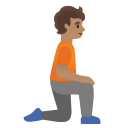
Person Kneeling Facing Right: Medium Skin Tone
U+1F9CE U+1F3FD U+200D U+27A1 U+FE0F · :person_kneeling_facing_right_medium_skin_tone:
Trend 34
Meaning layers
- interpretation
- Used to depict someone bowing out, submitting, or moving on — the rightward direction implies forward momentum even while kneeling, like 'I kneel but I'm still moving.' Can also mean someone is about to propose or is begging while still progressing.
- tiktok usage
- Appears in videos about leaving toxic situations gracefully, or ironically bowing to someone's talent while walking away. Used in 'I kneel but I keep it moving' narrative edits.
- irony level
- 5 / 10
Platform meanings
- meaning
- Represents bowing out gracefully, humble acknowledgment, or comedic groveling while still moving forward
- trend usage
- Used in POV videos, 'main character leaving the scene' trends, and self-deprecating humor about admiring someone's talent despite not wanting to
- hashtags
- #IKneel#HumbleExit#BowingOut#KneelingChallenge#MediumSkinEmoji
- virality score
- 38 / 100
Cultural meanings
🇺🇸
Western / Gen-Z
Used ironically to signal reluctant respect or theatrical submission; 'I kneel to your taste' is a common use in meme culture. The directional variant adds comedic nuance — you're kneeling but still sliding out the door.
🇵🇰
Pakistan & India
Associated with acts of religious devotion, touching elders' feet, or bowing in prayer; the rightward direction may be seen as moving toward a shrine or sacred direction. Can also be used humorously in Desi internet culture for dramatic begging.
🌍
Middle East
Connected to prayer and prostration imagery, though technically distinct from Islamic sujood; used to signal deep respect, reverence, or supplication in online discourse. May also appear in protest solidarity contexts.
🌐
Global Neutral
Universally understood as a kneeling figure with the skin tone indicating inclusive representation; interpreted as submission, prayer, reverence, or sportsmanship depending on context.
🇧🇩
Bangladesh
Carries connotations of religious humility and respect toward elders or teachers; used online to express gratitude or deference, especially in educational and religious community spaces.
🇱🇰
Sri Lanka
Evokes the tradition of kneeling in Buddhist or Hindu temples; used digitally to express deep respect, worship, or ceremonial reverence toward religious figures and deities.
🇨🇳
China
Generally interpreted as a sign of submission or defeat — kneeling carries historical weight in Chinese culture tied to imperial court etiquette; used online mostly in gaming or pop culture to signal being 'beaten.' The medium skin tone may be noted as non-default.
🇯🇵
Japan
Kneeling (seiza) is a formal posture in Japanese culture; this emoji may evoke formal respect, martial arts etiquette, or ceremonial bowing. Online it's used to signal deep admiration or theatrical defeat.
🇰🇷
South Korea
Used in K-pop fan communities to express devotion to idols — 'I literally kneel.' Also appears in gaming contexts to signal respect to a superior player or acknowledge a viral moment.
🇹🇼
Taiwan
Similar to broader East Asian usage; kneeling implies deep respect or submission. Used in gaming communities and fan spaces to express awe or acknowledge someone's dominance.
🇭🇰
Hong Kong
Used with a blend of traditional respect connotations and internet irony; appears in protest-related imagery as a symbol of civil disobedience and taking a knee in solidarity.
🇵🇭
Philippines
Kneeling is deeply tied to Catholic devotion and procession traditions; the emoji is used to signal prayer, religious awe, or seeking forgiveness. Also used humorously in Filipino internet culture to beg friends for favors.
🇮🇩
Indonesia
Carries both Islamic reverence and general humility connotations; used in online discussions about respect for elders, teachers, and religious figures. Also appears in meme culture for dramatic effect.
🇹🇭
Thailand
Associated with the 'grap' (kneeling bow) gesture of deep respect; used to express reverence toward monarchy, elders, and monks in digital communication. Internet culture also uses it humorously.
🇻🇳
Vietnam
Kneeling carries respect for ancestors and elders in Vietnamese culture; the emoji is used in digital spaces to signal deep gratitude, reverence, or apology, especially during traditional holiday contexts.
🇲🇾
Malaysia
Used across multicultural Malaysian contexts to signal prayer (Islamic prostration adjacent), respect for elders, or dramatic internet humor. The medium skin tone resonates as relatively inclusive across the diverse population.
🇸🇦
Saudi Arabia
While technically distinct from Islamic prayer positions, the kneeling figure evokes themes of submission and devotion; used carefully in religious contexts and more freely in youth internet humor about bowing to impressive content.
🇦🇪
UAE
Used in cosmopolitan UAE internet culture with a mix of reverence and irony; appears in English-Arabic bilingual meme spaces to signal respect or theatrical submission to luxury, talent, or status.
🇪🇬
Egypt
Used to express reverence, submission, or dramatic pleading in Egyptian meme culture; also appears in religious discourse as a proxy for bowing in prayer or supplication.
🇹🇷
Turkey
Used in Turkish internet spaces to signal 'I bow to you' in response to impressive content; also appears in historical roleplay communities evoking Ottoman court imagery of kneeling before authority.
🇮🇷
Iran
Associated with themes of humility and prayer in Farsi-language digital spaces; used both sincerely to express devotion and ironically in meme culture to signal being overwhelmed by something impressive.
🇳🇬
Nigeria
Used in Nigerian internet culture to signal deep respect or 'I hail you' energy; Afrobeats fan communities use it to bow to artists. Also used for comedic begging or submitting to Jollof rice supremacy debates.
🇿🇦
South Africa
Used across South African social media to signal respect — 'I kneel to your talent.' Also appears in protest and social justice contexts evoking the powerful symbolism of taking a knee.
🇬🇧
UK & Ireland
Used with characteristic British/Irish dry humor — 'I kneel, but reluctantly.' Appears in football (soccer) contexts related to taking a knee campaigns and in ironic expressions of admiration.
🇫🇷
France
Used in French digital spaces with intellectual detachment — often ironic, as French internet culture tends to resist overt displays of submission. Appears in discussions about protest and solidarity.
🇩🇪
Germany
Tends to be used literally or in direct meme contexts; German internet culture may apply it to sports moments or gaming, less commonly for ironic reverence. Associated with discipline and formal respect.
🇪🇸
Spain & Italy
Used with emotional expressiveness typical of Mediterranean internet culture — dramatic kneeling to express admiration for food, football heroes, or music. Very theatrical in usage.
🇧🇷
Brazil
Heavy use in Brazilian meme culture as an expression of 'I am in awe' — 'me ajoelho' energy. Frequently appears in football fan communities and K-pop/pop culture spaces where Brazilians express intense devotion.
🇲🇽
Mexico
Used in Mexican internet culture to express theatrical respect or begging; appears in memes about family dynamics (kneeling before your abuela), religion, and lucha libre culture.
🌎
Latin America
Broadly used across Latin American digital spaces to signal devotion, prayer, dramatic admiration, or comedic submission. Religious undertones are present but meme culture has layered ironic meanings on top.
🇦🇺
Australia & NZ
Used casually with dry humor — 'I kneel to your barbie skills mate.' Also appears in Māori and Indigenous contexts where kneeling and physical deference carry cultural weight in ceremonial settings.
How its meaning shifted
- 2010
This specific emoji did not exist in 2010; kneeling and directional emoji variants had not yet been developed. General kneeling sentiment was expressed through text emoticons or prayer hands.
- 2015
Still pre-existence for this specific variant; the broader kneeling emoji was not yet part of Unicode. Related gestures were communicated via 🙏 or bowing emojis.
- 2020
Directional kneeling emojis were introduced around this period; immediately adopted in protest solidarity contexts (taking a knee movements), sports discussions, and religious expression online.
- 2026
Established as a multi-purpose emoji spanning sincere reverence, ironic internet humor, gaming culture, and social commentary; the medium skin tone variant is frequently chosen for general use as a mid-range inclusive default.
See it on every platform
Adjacent emojis
- Often confused with
- folded handsperson bowingperson in lotus position
- Can replace
- folded handsperson bowingperson kneeling
Share & embed
Frequently asked
01What does the 🧎🏽➡️ Person Kneeling Facing Right: Medium Skin Tone emoji mean?
A person kneeling on one knee and facing toward the right, depicted with a medium skin tone. Part of the Unicode 'person kneeling' emoji family with directional and skin tone variants.
02What does 🧎🏽➡️ mean on TikTok?
Represents bowing out gracefully, humble acknowledgment, or comedic groveling while still moving forward
03What does 🧎🏽➡️ mean on WhatsApp?
Expressing genuine or humorous submission — 'I give up, you win' or 'I'm begging you please'
04What does 🧎🏽➡️ mean in Gen-Z slang?
Used to depict someone bowing out, submitting, or moving on — the rightward direction implies forward momentum even while kneeling, like 'I kneel but I'm still moving.' Can also mean someone is about to propose or is begging while still progressing.
05Is the 🧎🏽➡️ emoji safe to use?
Represents humility, prayer, reverence, respect, or someone kneeling as part of a ceremony, sport, or social gesture
06What does 🧎🏽➡️ mean in texting?
The kneeling posture psychologically signals submission or reverence, but the rightward orientation adds a dimension of purposeful movement or transition, suggesting someone who acknowledges a higher power or person but hasn't surrendered their agency entirely.
07What is the shortcode for 🧎🏽➡️?
The shortcode for Person Kneeling Facing Right: Medium Skin Tone is :person_kneeling_facing_right_medium_skin_tone:
08What does 🧎🏽➡️ mean in dating?
Used humorously to indicate getting down on one knee — as in a mock proposal or begging for a date. 'Please go out with me 🧎🏽➡️' energy.
Safety & usage
- Safe meaning
- Represents humility, prayer, reverence, respect, or someone kneeling as part of a ceremony, sport, or social gesture
- Caution
- Could be used in dominance/submission dynamics in inappropriate contexts, or to mock someone for being submissive or weak
Generally safe; the kneeling gesture has been politicized in protest contexts (taking a knee) which may trigger strong reactions in politically polarized communities. Skin tone specificity may occasionally be weaponized in identity-based arguments online.
How it looks across platforms
Appearance varies by platform and device. Google Noto, Twemoji, and OpenMoji are open-source.