🏋🏻
The Emoji
Person Lifting Weights: Light Skin Tone
U+1F3CB U+1F3FB · :person_lifting_weights_light_skin_tone:
Trend 68
Meaning layers
- interpretation
- Used to signal gym grind culture, 'that girl' aesthetic, fitness motivation, or ironically to flex minimal effort as if it were Herculean. Also used self-deprecatingly before complaining about sore muscles.
- tiktok usage
- Appears in gym transformation videos, 'day in my life' fitness content, and ironically in posts about lifting a TV remote or carrying groceries as if it were an Olympic feat.
- irony level
- 6 / 10
Platform meanings
- meaning
- Signals gym content, fitness transformations, or ironic commentary on workout culture.
- trend usage
- Appears in gym POV videos, 'hot girl walk' content, body recomposition journeys, and sarcastic 'I lifted a pen today' humor.
- hashtags
- #gymtok#fitnessmotivation#gains#gymbro#workoutcheck
- virality score
- 72 / 100
Cultural meanings
🇺🇸
Western / Gen-Z
Widely used ironically and sincerely to communicate gym culture, fitness grind, and the 'that girl' or 'sigma male' aesthetic. Extremely common in meme formats celebrating trivial effort.
🇵🇰
Pakistan & India
Used to signal gym-going and physical fitness, especially among young urban men embracing bodybuilding culture. Also used proudly after completing physical labor or sports activities.
🌍
Middle East
Popular among gym-going youth in Gulf states and Levant regions, often paired with Arabic motivational captions. Fitness culture is growing rapidly and this emoji accompanies it.
🌐
Global Neutral
Universally understood as representing physical exercise, strength, and a healthy lifestyle. Rarely misinterpreted across cultures.
🇧🇩
Bangladesh
Used increasingly among urban youth and gym-goers to signal fitness aspirations. Bodybuilding is a growing trend and this emoji reflects that cultural shift.
🇱🇰
Sri Lanka
Primarily used in fitness-related social media posts by younger generations. Represents gym culture and physical health goals in urban communities.
🇨🇳
China
Used on platforms like WeChat and Weibo to signal gym culture and 健身 (jiànshēn) lifestyle. Associated with youthful discipline and modern health trends.
🇯🇵
Japan
Associated with スポーツジム (sports gym) culture and disciplined physical training. Used sincerely to denote workout habits; ironic use is less common.
🇰🇷
South Korea
Heavily tied to 헬스장 (gym) culture and body-conscious K-pop influenced fitness trends. Used in diet and fitness content on KakaoTalk and Instagram.
🇹🇼
Taiwan
Used to signal gym attendance and healthy lifestyle content. Popular among younger Taiwanese influenced by global fitness and K-pop body ideals.
🇭🇰
Hong Kong
Common in fitness and wellness posts reflecting the city's active urban lifestyle. Used in gym check-ins and motivational content on Instagram and Facebook.
🇵🇭
Philippines
Used to flex gym dedication and celebrate physical fitness goals. Popular in Filipino fitness communities on Facebook and TikTok.
🇮🇩
Indonesia
Growing usage among urban youth tied to expanding gym culture. Used in fitness content on Instagram and TikTok, often with motivational Islamic or inspirational captions.
🇹🇭
Thailand
Associated with Muay Thai, gym culture, and general fitness. Used in sports-related posts and by fitness influencers on Thai social media.
🇻🇳
Vietnam
Used in fitness and health-conscious social media posts among younger Vietnamese. Gym culture is rising and this emoji accompanies that trend.
🇲🇾
Malaysia
Common in gym-related posts and fitness challenges on Instagram and TikTok. Reflects growing health consciousness among Malaysian youth.
🇸🇦
Saudi Arabia
Used among young Saudis embracing gym culture, particularly post-Vision 2030 lifestyle shifts. Popular in male fitness communities and increasingly in female fitness spaces.
🇦🇪
UAE
Very common in Dubai and Abu Dhabi's robust gym and wellness culture. Used in premium fitness content, luxury gym check-ins, and personal trainer posts.
🇪🇬
Egypt
Used among Egyptian youth who frequent gyms and share fitness journeys on social media. Associated with body transformation goals and male fitness culture.
🇹🇷
Turkey
Popular in Turkish gym and sports communities. Often used with motivational Turkish captions about strength and discipline.
🇮🇷
Iran
Used among Iranian youth in gym-related posts, especially on Instagram which remains popular despite restrictions. Reflects growing fitness culture among urban Iranians.
🇳🇬
Nigeria
Used to represent gym culture and physical fitness goals. Growing bodybuilding and fitness influencer scenes make this emoji increasingly common in Nigerian social media.
🇿🇦
South Africa
Common in fitness and sports content across South African social media. Reflects the country's strong sporting culture and growing gym community.
🇬🇧
UK & Ireland
Used sincerely in fitness posts and ironically in self-deprecating humor about going to the gym once and never returning. Very common in British meme culture.
🇫🇷
France
Used in fitness content but also ironically, as French internet culture enjoys subverting effort-signaling tropes. Seen in both serious sports posts and comedic contexts.
🇩🇪
Germany
Used straightforwardly in fitness, sports, and wellness content. German social media culture tends toward sincere usage with less irony than Anglo cultures.
🇪🇸
Spain & Italy
Used in gym and sports content, often with passionate motivational captions. Also appears in casual conversations about physical exertion or summer body goals.
🇧🇷
Brazil
Widely used in fitness and bodybuilding content, reflecting Brazil's intense gym and body culture. Often paired with transformation posts and beach-body motivation content.
🇲🇽
Mexico
Used in gym and fitness posts, increasingly among younger Mexicans embracing health and workout culture. Also used humorously to describe physical household tasks.
🌎
Latin America
Broadly used across Latin America to signal gym culture, physical effort, and fitness aspirations. Ironic use is growing among younger social media users.
🇦🇺
Australia & NZ
Used in fitness and outdoor lifestyle content. Australians also use it ironically in beach culture and 'she'll be right' humor contexts about overexertion.
How its meaning shifted
- 2010
Emoji did not exist yet; weightlifting was represented through text-based descriptions or basic gym emoticons in early feature phone culture.
- 2015
Introduced with Unicode 8.0 skin tone modifiers. Used primarily to literally indicate gym activity or weightlifting without significant ironic or cultural layering.
- 2020
Became embedded in gym grind culture, 'gains' meme formats, and pandemic home-workout content. Ironic usage began growing as gym humor proliferated on TikTok.
- 2026
Deeply integrated into fitness influencer aesthetics, sigma grindset memes, 'that girl' content, and hustle-culture satire. Skin tone variant used consciously to represent personal identity in fitness spaces.
See it on every platform
Compare with
Adjacent emojis
- Opposite
- person in bedcouch and lampzzz
- Often confused with
- person bouncing ballperson doing cartwheelmartial arts uniform
- Can replace
- flexed bicepsfireperson running
Share & embed
Frequently asked
01What does the 🏋🏻 Person Lifting Weights: Light Skin Tone emoji mean?
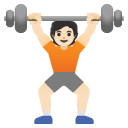
A person with light skin tone performing a weightlifting exercise, lifting a barbell overhead in a clean-and-press or snatch position.
02What does 🏋🏻 mean on TikTok?
Signals gym content, fitness transformations, or ironic commentary on workout culture.
03What does 🏋🏻 mean on WhatsApp?
Telling a friend you went to the gym or are about to work out.
04What does 🏋🏻 mean in Gen-Z slang?
Used to signal gym grind culture, 'that girl' aesthetic, fitness motivation, or ironically to flex minimal effort as if it were Herculean. Also used self-deprecatingly before complaining about sore muscles.
05Is the 🏋🏻 emoji safe to use?
Represents physical fitness, gym activity, strength training, and healthy lifestyle choices.
06What does 🏋🏻 mean in texting?
Evokes a sense of physical mastery and discipline. Psychologically linked to achievement motivation and body-positive identity signaling. Often used to project strength during personal challenges beyond the gym.
07What is the shortcode for 🏋🏻?
The shortcode for Person Lifting Weights: Light Skin Tone is :person_lifting_weights_light_skin_tone:
08What does 🏋🏻 mean in dating?
Used to signal an active, health-conscious lifestyle on dating profiles. Sometimes used flirtatiously to invite a gym date or subtly flex physical form.
Safety & usage
- Safe meaning
- Represents physical fitness, gym activity, strength training, and healthy lifestyle choices.
- Caution
- Occasionally used in body-shaming contexts or toxic gym-bro culture to gatekeep fitness spaces. Rarely used in harassment but can accompany unsolicited fitness advice.
Generally safe. In rare cases, may be used alongside body image commentary that could be harmful. No significant NSFW or coded negative usage documented.
How it looks across platforms


Appearance varies by platform and device. Google Noto, Twemoji, and OpenMoji are open-source.