⛹️
The Emoji
Person Bouncing Ball
U+26F9 U+FE0F · :person_bouncing_ball:
Trend 52
Meaning layers
- interpretation
- Used to signal athletic energy, sports fandom, or 'in my athlete era.' Also used ironically to flex casual competitiveness or hype someone up in a sports context.
- tiktok usage
- Appears in sports highlight videos, gym motivation content, and NBA-related trends. Also used in 'POV: you're the main character' sports edits.
- irony level
- 3 / 10
Platform meanings
- meaning
- Sports hype, basketball culture, athlete identity, workout motivation
- trend usage
- Appears in NBA highlights, gym POV videos, 'athlete for a day' trends, and basketball challenge compilations
- hashtags
- #basketball#NBATwitter#hoops#athletelife#sportsedit
- virality score
- 58 / 100
Cultural meanings
🇺🇸
Western / Gen-Z
Primarily used in NBA and streetball culture contexts; carries cool, athletic connotations tied to Jordan/Nike aesthetics and hip-hop crossover appeal.
🇵🇰
Pakistan & India
Basketball is less dominant than cricket, but used by urban youth familiar with NBA culture via streaming; signals modernity and Western sports influence.
🌍
Middle East
Basketball has a growing following especially in Saudi Arabia and UAE due to NBA expansion; used by youth fans but less culturally dominant than football.
🌐
Global Neutral
Universally understood as representing basketball or general ball sports; carries positive, active, and healthy lifestyle connotations across cultures.
🇧🇩
Bangladesh
Rarely used in mainstream conversation as basketball has limited local following; may appear in urban social media among youth exposed to NBA content.
🇱🇰
Sri Lanka
Basketball has a small but growing following; the emoji is used mainly by urban youth and students familiar with American sports culture.
🇨🇳
China
Basketball is extremely popular partly due to Yao Ming's legacy and NBA expansion efforts; this emoji is widely used in Chinese sports fan communities.
🇯🇵
Japan
Basketball has surged in popularity with anime like Slam Dunk and Kuroko's Basketball influencing youth; the emoji carries both sports and pop culture meaning.
🇰🇷
South Korea
Used heavily among youth influenced by NBA culture and Korean basketball leagues; also connected to K-pop artists who frequently reference basketball aesthetics.
🇹🇼
Taiwan
Basketball is one of the more popular sports; the emoji is commonly used in sports discussions and among youth with strong NBA viewership.
🇭🇰
Hong Kong
Urban youth culture with strong American media influence means this emoji is used in NBA fan discussions and streetwear/basketball aesthetic content.
🇵🇭
Philippines
Basketball is the national sport of the Philippines, making this one of the most culturally resonant sports emojis; widely used across all demographics.
🇮🇩
Indonesia
Basketball has a growing fanbase especially among urban youth; used in social media by NBA fans and local league followers.
🇹🇭
Thailand
Used by Thai youth in NBA fan communities and sports social media; basketball's popularity has grown significantly through streaming access.
🇻🇳
Vietnam
Basketball culture is growing among Vietnamese youth; the emoji appears in sports content and among fans of American basketball culture.
🇲🇾
Malaysia
Used in Malaysian sports communities and among youth who follow NBA; basketball is a popular recreational sport in urban areas.
🇸🇦
Saudi Arabia
Basketball interest has grown with Vision 2030 sports investments and NBA events held in the region; used by younger generations in sports discourse.
🇦🇪
UAE
Dubai and Abu Dhabi have active basketball communities; the emoji is used by both expats and locals in sports contexts and fitness culture posts.
🇪🇬
Egypt
Basketball is played recreationally but football dominates; the emoji is used mainly by younger, globally connected Egyptians familiar with NBA culture.
🇹🇷
Turkey
Turkey has a strong basketball tradition (EuroLeague); this emoji is commonly used in basketball fan discussions and by followers of Turkish clubs like Fenerbahçe.
🇮🇷
Iran
Basketball is played and followed; the emoji appears in sports contexts among youth, though football remains dominant in national sports culture.
🇳🇬
Nigeria
Basketball is growing rapidly in Nigeria fueled by the NBA Africa initiative and Nigerian NBA players; used enthusiastically in sports social media communities.
🇿🇦
South Africa
Basketball has a developing following; used by urban youth exposed to NBA culture through social media and streaming platforms.
🇬🇧
UK & Ireland
Basketball is a minority sport compared to football; used mainly by NBA fans and younger audiences influenced by American pop culture and streetwear.
🇫🇷
France
France has strong basketball culture with many NBA players of French origin like Tony Parker and Rudy Gobert; the emoji is proudly used by French basketball fans.
🇩🇪
Germany
Germany has a solid basketball tradition (Dirk Nowitzki's legacy); used in sports fan communities and among followers of the Basketball Bundesliga.
🇪🇸
Spain & Italy
Both countries have strong basketball cultures with top European leagues; the emoji is actively used by passionate fans of ACB (Spain) and Lega Basket (Italy).
🇧🇷
Brazil
Brazil has a historic basketball tradition and the NBB league; the emoji is used in sports communities though football culturally dominates.
🇲🇽
Mexico
Basketball interest has grown with NBA's Latin outreach; used by younger Mexicans who follow NBA and local LNBP league games on social media.
🌎
Latin America
Across Latin America, basketball is gaining ground among youth influenced by NBA culture; the emoji signals sports enthusiasm and modern athletic identity.
🇦🇺
Australia & NZ
Australia has a strong basketball culture with the NBL and several NBA players; the emoji is used regularly in sports discussions and athletic content.
How its meaning shifted
- 2010
Rarely used as emoji culture was just emerging; when used, it was strictly literal to reference basketball or sports activities.
- 2015
Gained traction with the NBA social media boom and rise of emoji culture; primarily used in sports contexts and athlete social media profiles.
- 2020
Expanded into gym culture, motivational content, and sports meme culture; NBA bubble season created heightened basketball emoji usage across platforms.
- 2026
Embedded in sports lifestyle content, athletic aesthetics, and NBA fan culture; also used metaphorically for 'keeping things moving' or being in your zone.
See it on every platform
Compare with
Adjacent emojis
Share & embed
Frequently asked
01What does the ⛹️ Person Bouncing Ball emoji mean?
A person dribbling or bouncing a basketball, representing the sport of basketball, athletic activity, or sports in general.
02What does ⛹️ mean on TikTok?
Sports hype, basketball culture, athlete identity, workout motivation
03What does ⛹️ mean on WhatsApp?
Asking someone to play basketball or referencing a sports activity
04What does ⛹️ mean in Gen-Z slang?
Used to signal athletic energy, sports fandom, or 'in my athlete era.' Also used ironically to flex casual competitiveness or hype someone up in a sports context.
05Is the ⛹️ emoji safe to use?
Represents basketball, sports, athletic activity, and an active lifestyle; universally safe and positive in standard usage.
06What does ⛹️ mean in texting?
Activates associations with teamwork, physicality, and competitive spirit. Can evoke nostalgia for childhood playground games or aspirational athletic identity.
07What is the shortcode for ⛹️?
The shortcode for Person Bouncing Ball is :person_bouncing_ball:
08What does ⛹️ mean in dating?
Occasionally used as a playful 'I'm sporty and active' signal in bios. 'Wanna shoot some hoops? ⛹️' is a low-key flirtatious invitation.
Safety & usage
- Safe meaning
- Represents basketball, sports, athletic activity, and an active lifestyle; universally safe and positive in standard usage.
- Caution
- Rarely weaponized; occasionally used sarcastically to imply someone is 'playing games' or being evasive, but not inherently toxic.
No significant toxic usage patterns documented. Context-dependent sarcasm about 'playing games' is the only mild negative use case.
How it looks across platforms
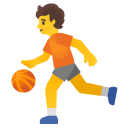


Appearance varies by platform and device. Google Noto, Twemoji, and OpenMoji are open-source.