🏋🏽
The Emoji
Person Lifting Weights: Medium Skin Tone
U+1F3CB U+1F3FD · :person_lifting_weights_medium_skin_tone:
Trend 68
Meaning layers
- interpretation
- Used to signal gym culture, 'gymrat' identity, grind mentality, or self-improvement hustle. Also used ironically to flex (literally or metaphorically) on someone.
- tiktok usage
- Appears in gym transformation videos, 'glow-up' content, and 'day in my life' fitness routines. Often paired with motivation captions or used to hype up someone's progress.
- irony level
- 5 / 10
Platform meanings
- meaning
- Signals gym content, fitness transformation, or hustle/grind lifestyle videos.
- trend usage
- Used in 'What I eat in a day,' 'gym routine,' and 'body transformation' videos. Also used in motivational montage content.
- hashtags
- #gymtok#fitnessmotivation#liftingweights#gymrat#glowup
- virality score
- 72 / 100
Cultural meanings
🇺🇸
Western / Gen-Z
Core signifier of gym culture and self-improvement grindset. Used both sincerely by fitness enthusiasts and ironically in meme contexts mocking hustle culture.
🇵🇰
Pakistan & India
Increasingly popular as gym culture grows among urban youth. Represents the aspirational fitness lifestyle and is commonly used by gym-going young men in motivational captions.
🌍
Middle East
Used heavily in Gulf states where gym culture is very prominent among youth. Represents discipline and masculine fitness, and is common in gym content on Instagram and Snapchat.
🌐
Global Neutral
Universally understood as fitness and weightlifting. The medium skin tone makes it broadly relatable across diverse demographics without strong cultural specificity.
🇧🇩
Bangladesh
Emerging usage as gym culture grows in urban centers like Dhaka. Primarily used by fitness-conscious youth on Facebook and Instagram for workout posts.
🇱🇰
Sri Lanka
Used among fitness-conscious urban youth to signal gym activity. Still niche but growing in Instagram fitness communities.
🇨🇳
China
Associated with fitness culture on platforms like Weibo and Xiaohongshu. The medium skin tone is appreciated for its relative neutrality, though fitness emoji usage is less culturally charged than in the West.
🇯🇵
Japan
Used in fitness-related contexts on Twitter (X) and Instagram. Japanese gym culture is growing, and this emoji is used straightforwardly to represent strength training and physical discipline.
🇰🇷
South Korea
Widely used in fitness content tied to K-pop idol training culture and the body aesthetic standards prevalent in Korean social media. Also used in ironic fitness meme content.
🇹🇼
Taiwan
Used in fitness and health-related social media posts. Associated with the growing gym culture among Taiwanese millennials and Gen Z.
🇭🇰
Hong Kong
Common in gym and fitness content on Instagram and Facebook. Fitness culture is well-established and this emoji is used both seriously and humorously.
🇵🇭
Philippines
Popular among fitness influencers and gym-goers on Facebook and TikTok. Frequently used in motivational posts and workout check-ins within the active Filipino fitness community.
🇮🇩
Indonesia
Used in gym and fitness content on Instagram and TikTok. Growing gym culture especially in Jakarta means this emoji is gaining traction in workout and health posts.
🇹🇭
Thailand
Associated with muay thai training, bodybuilding, and general fitness culture. Used in gym content across Thai Instagram and TikTok.
🇻🇳
Vietnam
Used by the growing young fitness-conscious community on Facebook and TikTok. Represents gym culture and self-improvement among urban Vietnamese youth.
🇲🇾
Malaysia
Popular in fitness community posts on Instagram and Facebook. Reflects the growing gym culture in Malaysian cities, used sincerely in workout and health content.
🇸🇦
Saudi Arabia
Gym culture is extremely prominent in Saudi Arabia, especially post-Vision 2030 lifestyle reforms. This emoji is heavily used in male fitness content on Snapchat and Instagram.
🇦🇪
UAE
Dubai's high-profile fitness culture makes this emoji very common in UAE social media. Used in luxury gym content, personal training promotions, and fitness influencer posts.
🇪🇬
Egypt
Used in Cairo and Alexandria gym communities on Facebook and Instagram. Gym culture is growing among Egyptian youth and this emoji signals fitness dedication.
🇹🇷
Turkey
Common in Turkish fitness content on Instagram and Twitter. Gym culture is well-established in Turkey's urban areas and this emoji is a standard fitness signifier.
🇮🇷
Iran
Used in Persian fitness community content primarily on Instagram. Gym culture is popular among Iranian youth and this emoji is a sincere marker of athletic dedication.
🇳🇬
Nigeria
Associated with the rapidly growing gym and fitness influencer culture in Lagos and Abuja. Used across Instagram and TikTok in workout motivation and body transformation content.
🇿🇦
South Africa
Common in South African fitness community posts on Instagram. Used both in serious fitness content and humorously in meme culture around gym stereotypes.
🇬🇧
UK & Ireland
Used in British and Irish gym culture content. Has both sincere usage among fitness enthusiasts and ironic usage in memes mocking 'gym lads' and bro culture.
🇫🇷
France
Associated with sports and physical culture. Used in French fitness and sport content on Instagram and Twitter, with some ironic usage in meme contexts.
🇩🇪
Germany
Used in German fitness content sincerely. Germans tend to use it in context of disciplined training, running, and structured gym routines rather than ironic meme contexts.
🇪🇸
Spain & Italy
Common in Mediterranean fitness content tied to beach body culture and football training. Used in seasonal fitness motivation posts particularly before summer.
🇧🇷
Brazil
Heavily used in Brazilian fitness culture which is globally recognized. Frequently appears in bodybuilding content, CrossFit posts, and the strong Brazilian gym influencer scene.
🇲🇽
Mexico
Used in Mexican fitness content on Instagram and TikTok. Gym culture is growing strongly in Mexican urban areas and this emoji is a common workout signifier.
🌎
Latin America
Broadly used across Latin American countries in fitness content. Associated with the growing regional gym culture and fitness influencer communities on Instagram and TikTok.
🇦🇺
Australia & NZ
Used in Australian and New Zealand fitness culture content. Common in outdoor and gym workout posts, and also used ironically in 'bro culture' meme contexts.
How its meaning shifted
- 2010
Barely in use as the emoji with skin tone variants did not yet exist. Generic fitness emoji usage was rare and mainly literal.
- 2015
Introduced with Unicode 8.0 and skin tone modifier support. Initial usage was almost entirely literal — people sharing gym activity or fitness goals.
- 2020
Became deeply embedded in gym culture and grindset/hustle culture content. Ironic usage started emerging as gym-bro stereotypes became meme fodder. Fitness content surged during pandemic home workout trends.
- 2026
Dual-use emoji firmly established: sincere fitness culture signifier and ironic tool in anti-hustle and gym-bro meme content. Medium skin tone version used widely for inclusivity signaling. Common in AI-generated fitness content captions.
See it on every platform
Adjacent emojis
Share & embed
Frequently asked
01What does the 🏋🏽 Person Lifting Weights: Medium Skin Tone emoji mean?
A person lifting a barbell with weights overhead, displayed with a medium skin tone modifier. Represents weightlifting, strength training, gym workouts, and athletic activity.
02What does 🏋🏽 mean on TikTok?
Signals gym content, fitness transformation, or hustle/grind lifestyle videos.
03What does 🏋🏽 mean on WhatsApp?
Tells friends you're heading to the gym or just finished a workout.
04What does 🏋🏽 mean in Gen-Z slang?
Used to signal gym culture, 'gymrat' identity, grind mentality, or self-improvement hustle. Also used ironically to flex (literally or metaphorically) on someone.
05Is the 🏋🏽 emoji safe to use?
Fitness, strength training, gym activity, self-improvement, athletic dedication.
06What does 🏋🏽 mean in texting?
Evokes a sense of agency and self-mastery. Associated with the psychological rewards of physical discipline, often tied to identity formation around strength and resilience.
07What is the shortcode for 🏋🏽?
The shortcode for Person Lifting Weights: Medium Skin Tone is :person_lifting_weights_medium_skin_tone:
08What does 🏋🏽 mean in dating?
Sent to signal physical fitness or to compliment someone's physique. Can be used as a subtle flex to attract fitness-oriented partners.
Safety & usage
- Safe meaning
- Fitness, strength training, gym activity, self-improvement, athletic dedication.
- Caution
- Can be used to body shame, mock people's physique comparisons, or reinforce toxic gym-bro culture when paired with demeaning language.
Generally safe. In rare cases may be used in contexts promoting unhealthy body image standards or excessive gym culture that borders on body dysmorphia glorification.
How it looks across platforms
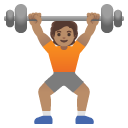


Appearance varies by platform and device. Google Noto, Twemoji, and OpenMoji are open-source.