🤽
The Emoji
Person Playing Water Polo
U+1F93D · :person_playing_water_polo:
Trend 22
Meaning layers
- interpretation
- Used ironically to signal being extremely busy or overwhelmed, as if juggling intense physical and mental demands simultaneously — like treading water while performing. Also used to flex niche athletic identity.
- tiktok usage
- Appears in 'underrated sport' content, athlete POV videos, and ironic 'what I do vs. what people think I do' formats. Sometimes used to describe multitasking chaos.
- irony level
- 4 / 10
Platform meanings
- meaning
- Represents water polo content, athletic hustle, and niche sport pride. Used ironically for 'barely keeping my head above water' relatable content.
- trend usage
- Appears in #WaterPolo highlight compilations, underrated sports TikToks, athlete day-in-the-life videos, and chaotic multitasking comedy skits.
- hashtags
- #WaterPolo#AquaticAthlete#NicheSport#PoolLife#AthleteLife
- virality score
- 28 / 100
Cultural meanings
🇺🇸
Western / Gen-Z
Used ironically to represent chaotic multitasking and underdog hustle — 'treading water while throwing punches' energy. Also genuinely embraced by water polo athletes as niche sport pride.
🇵🇰
Pakistan & India
Primarily understood literally as a swimming or water sport emoji; water polo is a niche sport with limited mainstream recognition. More commonly used during Olympic seasons when coverage increases.
🌍
Middle East
Water polo exists in Gulf states' sporting culture but remains niche; the emoji is used in sports club contexts and by athletes associated with national programs. Rarely used metaphorically.
🌐
Global Neutral
Universally recognized as representing water polo or aquatic sports. Used across languages and cultures to indicate the sport without significant metaphorical loading.
🇧🇩
Bangladesh
Water polo is extremely niche in Bangladesh; the emoji is rarely used organically and is more likely to appear in Olympic-related discussions or foreign sports content.
🇱🇰
Sri Lanka
Sri Lanka has a small but active water polo community, particularly in Colombo schools; the emoji appears in sports club communications and rare local sports media.
🇨🇳
China
Water polo has growing recognition in China, especially tied to national team achievements. The emoji is used in sports media and social platforms like Weibo during competitions.
🇯🇵
Japan
Japan has a competitive water polo history; the emoji is used in sports circles, school team communications, and Olympic coverage discussions with genuine athletic pride.
🇰🇷
South Korea
Water polo is emerging in South Korea's sports culture; the emoji appears in niche sports discussions, school athletics content, and Olympic season social media.
🇹🇼
Taiwan
Used in sports contexts and Olympic discussions; Taiwan's aquatic sports community uses the emoji authentically in team and coaching communications.
🇭🇰
Hong Kong
Water polo has a moderate presence in Hong Kong's sports culture; the emoji is used by school leagues, sports clubs, and aquatic sports associations.
🇵🇭
Philippines
The Philippines has a developing water polo scene; the emoji appears in sports federation content, school athletic events, and Southeast Asian Games coverage.
🇮🇩
Indonesia
Used primarily in Olympic and regional games contexts; Indonesia's water polo community is small but uses the emoji in official sports communications and team social media.
🇹🇭
Thailand
Thailand's water polo team participates in regional competitions; the emoji is used in sports ministry content, team social media, and aquatic sports discussions.
🇻🇳
Vietnam
Water polo is a niche sport in Vietnam; the emoji is used mainly during international sporting events and in content from aquatic sports federations.
🇲🇾
Malaysia
Malaysia's water polo community is active at the school and national level; the emoji is used in sports club posts, competition updates, and SEA Games content.
🇸🇦
Saudi Arabia
Water polo exists in Saudi Arabia's emerging sports scene; the emoji is used in sports authority communications and among the athletic community, especially post-Vision 2030 sports investment.
🇦🇪
UAE
The UAE has invested significantly in aquatic sports; the emoji appears in sports federation content, expat athletic communities, and national sports day promotions.
🇪🇬
Egypt
Egypt has a historic water polo program; the emoji is used with genuine sporting pride in local sports media, fan communities, and national team coverage.
🇹🇷
Turkey
Turkey has a competitive water polo scene; the emoji is actively used in sports club communications, fan discussions, and national league updates.
🇮🇷
Iran
Iran has participated in water polo at international levels; the emoji is used in sports contexts and national team discussions among sports enthusiasts.
🇳🇬
Nigeria
Water polo is a niche sport in Nigeria; the emoji is rarely used outside of Olympic coverage and international sports discussions among sports media professionals.
🇿🇦
South Africa
South Africa has a water polo culture rooted in school and university sports; the emoji is used genuinely in club communications, school leagues, and national team content.
🇬🇧
UK & Ireland
Water polo has a dedicated following in UK universities and clubs; the emoji is used authentically in sports team posts and ironically in 'British things nobody talks about' humor.
🇫🇷
France
France has a strong water polo tradition, especially in Mediterranean cities; the emoji is used proudly by athletes, clubs, and sports media covering national competitions.
🇩🇪
Germany
Germany's water polo culture is well-established; the emoji appears in Bundesliga water polo content, club social media, and sports federation communications.
🇪🇸
Spain & Italy
Spain and Italy are water polo powerhouses; the emoji carries genuine athletic prestige and is used widely in fan content, media coverage, and club communications with national pride.
🇧🇷
Brazil
Brazil has a growing water polo scene; the emoji is used in sports federation posts and occasionally in beach culture content connecting water sports to Brazilian identity.
🇲🇽
Mexico
Water polo is a niche sport in Mexico but present in national programs; the emoji appears in Olympic season discussions and university sports communications.
🌎
Latin America
Across Latin America, water polo is a niche but growing sport; the emoji is primarily used in sports federation and Olympic contexts rather than casual everyday conversation.
🇦🇺
Australia & NZ
Australia and New Zealand have strong water polo cultures; the emoji is used authentically in club communications, school leagues, and is recognized with athletic respect and occasional good-humored ribbing.
How its meaning shifted
- 2010
Barely used — water polo emojis weren't yet standardized and the sport was discussed primarily in text on early social platforms. Any usage was purely informational.
- 2015
Emerged with the broader sports emoji set; used mainly by actual water polo athletes and coaches on Twitter and Instagram to represent their sport. Little to no ironic usage.
- 2020
Gained slight traction during the Tokyo Olympics preparation coverage; began appearing in 'underrated sports' discourse and early multitasking metaphor memes on TikTok.
- 2026
Used in a blend of genuine sports pride (niche athlete identity), ironic multitasking metaphors, and Olympic hype content. Stable but not mainstream; recognized more broadly as a symbol of perseverance.
See it on every platform
Compare with
Adjacent emojis
- Often confused with
- person surfingperson rowing boatperson swimming
- Can replace
- person swimmingwater wavetrophy
Share & embed
Frequently asked
01What does the 🤽 Person Playing Water Polo emoji mean?
A person playing water polo, depicted mid-game throwing or catching a ball in a pool. Represents the sport of water polo, aquatic athletics, and competitive swimming.
02What does 🤽 mean on TikTok?
Represents water polo content, athletic hustle, and niche sport pride. Used ironically for 'barely keeping my head above water' relatable content.
03What does 🤽 mean on WhatsApp?
Sent to signal playing water polo, going to the pool for sports, or being overwhelmed and still going strong.
04What does 🤽 mean in Gen-Z slang?
Used ironically to signal being extremely busy or overwhelmed, as if juggling intense physical and mental demands simultaneously — like treading water while performing. Also used to flex niche athletic identity.
05Is the 🤽 emoji safe to use?
Represents the sport of water polo and aquatic athletics. Entirely safe for all ages and contexts in its literal usage.
06What does 🤽 mean in texting?
Evokes feelings of resilience and effort — the act of treading water while competing symbolizes persisting under pressure. Often associated with underdog energy and underappreciated dedication.
07What is the shortcode for 🤽?
The shortcode for Person Playing Water Polo is :person_playing_water_polo:
08What does 🤽 mean in dating?
Rarely used in direct flirting, but a water polo player might use it to signal an active, athletic lifestyle. Could be a subtle brag or an invitation to watch them play.
Safety & usage
- Safe meaning
- Represents the sport of water polo and aquatic athletics. Entirely safe for all ages and contexts in its literal usage.
- Caution
- No known toxic or harmful usage patterns. Extremely low risk of being weaponized as coded language or harmful symbolism.
No significant warnings. In extremely rare cases could be used in mocking contexts toward athletes, but this is not an established pattern.
How it looks across platforms
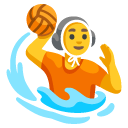


Appearance varies by platform and device. Google Noto, Twemoji, and OpenMoji are open-source.