🏃🏻
The Emoji
Person Running: Light Skin Tone
U+1F3C3 U+1F3FB · :person_running_light_skin_tone:
Trend 68
Meaning layers
- interpretation
- Used to signal avoiding a situation, ghosting someone, fleeing drama, or the 'running away from my problems' energy. Also genuinely used for fitness content.
- tiktok usage
- Appears in 'POV: me running from my responsibilities' videos, workout motivation content, and escape-from-cringe reaction clips.
- irony level
- 7 / 10
Platform meanings
- meaning
- Escape from drama, workout motivation, or comedic fleeing from life responsibilities.
- trend usage
- Used in captions like 'me after saying something embarrassing at 3am 🏃🏻' and fitness transformation content.
- hashtags
- #runningfromproblems#morningrun#fitcheck#runnersoftiktok#escaping
- virality score
- 72 / 100
Cultural meanings
🇺🇸
Western / Gen-Z
Primarily used ironically to mean fleeing situations, avoiding drama, or escaping responsibilities — the 'running from my problems' energy is the dominant interpretation.
🇵🇰
Pakistan & India
Used sincerely for fitness motivation, cricket training, and morning walk/run culture; also used humorously to indicate escaping awkward situations or elders' questions.
🌍
Middle East
Associated with athletic activity, marathon culture growing in Gulf cities, and fitness motivation; also used to imply urgency or leaving quickly.
🌐
Global Neutral
Universally understood as physical running or jogging; the most culturally neutral interpretation across all regions.
🇧🇩
Bangladesh
Primarily associated with literal running, school sports, and cricket culture; younger users adopt the escape meme interpretation from global trends.
🇱🇰
Sri Lanka
Used in fitness and sports contexts, especially around cricket and athletic events; also adopted by youth for humorous escape expressions.
🇨🇳
China
Used in fitness and health content popular on WeChat and Weibo; also appears in memes about fleeing awkward social situations, especially during holiday family gatherings.
🇯🇵
Japan
Associated with discipline, marathon culture (Japan has a rich marathon tradition), and physical endurance; also used in school sports day (undokai) content.
🇰🇷
South Korea
Common in fitness and health content; also widely used in K-drama fan spaces to indicate 'running to watch the new episode' and in escape-from-cringe humor.
🇹🇼
Taiwan
Used in running club communities, fitness motivation posts, and occasionally in meme formats about escaping stressful exam or work situations.
🇭🇰
Hong Kong
Connected to the strong urban running culture and charity races; also used humorously about the fast-paced lifestyle of the city.
🇵🇭
Philippines
Used in fitness content and oplan laro (sports) discussions; humor-adapted to mean running away from problems or awkward family situations during fiestas.
🇮🇩
Indonesia
Common in fitness community content and morning run culture; also used in meme formats about running from responsibilities or difficult social expectations.
🇹🇭
Thailand
Used in marathon and fitness communities; also adopted in humorous contexts about escaping sanuk (fun chaos) or fleeing from someone persistent.
🇻🇳
Vietnam
Associated with morning exercise culture common among Vietnamese people; also used by youth in meme formats about escaping difficult situations.
🇲🇾
Malaysia
Appears in running club and Hari Sukan Negara (National Sports Day) contexts; also used humorously about running from bosses or difficult relatives.
🇸🇦
Saudi Arabia
Growing usage tied to Saudi Vision 2030's push for fitness culture and marathon events; used sincerely for sports motivation.
🇦🇪
UAE
Common in Dubai and Abu Dhabi marathon communities; used in fitness motivation posts and by expatriate communities for workout content.
🇪🇬
Egypt
Used in sports and fitness contexts, particularly around football (soccer) training culture; also deployed humorously for escaping awkward situations.
🇹🇷
Turkey
Appears in fitness motivation content and marathon culture; also used in meme formats about fleeing political discourse or difficult conversations.
🇮🇷
Iran
Used in sports and fitness content; also has ironic usage among youth to signal metaphorical escape from strict social rules or expectations.
🇳🇬
Nigeria
Used in fitness motivation and athletics culture (Nigeria has strong track tradition); also humorously used to mean running away from 'wahala' (trouble).
🇿🇦
South Africa
Common in running culture — South Africa has a massive running community with the Comrades Marathon; used both seriously and humorously.
🇬🇧
UK & Ireland
Used for parkrun culture, marathon content, and fitness motivation; also heavily used in ironic Twitter/X culture for fleeing bad takes.
🇫🇷
France
Associated with jogging culture popular in French cities; also used in meme culture about escaping uncomfortable social or political debates.
🇩🇪
Germany
Connected to strong running and marathon culture in Germany; typically used sincerely for fitness but also in meme contexts about efficiency and deadlines.
🇪🇸
Spain & Italy
Used in fitness content and cross-country running tradition; also appears humorously in siesta avoidance jokes and fleeing drama.
🇧🇷
Brazil
Common in running communities and fitness culture; also used in meme contexts about running from responsibilities, ex-partners, or difficult situations.
🇲🇽
Mexico
Used in fitness and sports content; humorously deployed in contexts about fleeing work stress, family drama, or awkward quinceañera situations.
🌎
Latin America
Broadly used for fitness motivation across Latin America; the escape/flee meaning is popular among younger generations who follow global meme trends.
🇦🇺
Australia & NZ
Heavily associated with strong running culture, Parkrun, and outdoor fitness; also used in laid-back humorous contexts about running from work or chores.
How its meaning shifted
- 2010
Primarily used literally to indicate running, jogging, or exercise. Diversity skin tone modifiers did not yet exist; base yellow emoji dominated.
- 2015
Skin tone modifiers introduced in Unicode 8.0 (2015), making 🏃🏻 possible. Used mainly for fitness tracking, race announcements, and sports motivation.
- 2020
Meme usage surged — 'running away from problems' trope became dominant. Lockdown fitness content also boosted sincere usage as people took up running.
- 2026
Dual-meaning fully established: sincere fitness/athletic use coexists with deeply ironic 'escape/avoidance' meme usage; Gen Z deploys it as a shorthand for disengagement.
See it on every platform
Adjacent emojis
- Often confused with
- person running medium skin toneperson joggingperson running
- Can replace
- person runningdash symbolwind face
Share & embed
Frequently asked
01What does the 🏃🏻 Person Running: Light Skin Tone emoji mean?
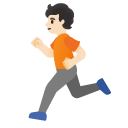
A person running with light skin tone, depicted in motion with one leg forward and arms pumping. The light skin tone modifier (🏻) specifies a fair complexion.
02What does 🏃🏻 mean on TikTok?
Escape from drama, workout motivation, or comedic fleeing from life responsibilities.
03What does 🏃🏻 mean on WhatsApp?
Casually signals leaving a conversation, heading out, or literally going for a run.
04What does 🏃🏻 mean in Gen-Z slang?
Used to signal avoiding a situation, ghosting someone, fleeing drama, or the 'running away from my problems' energy. Also genuinely used for fitness content.
05Is the 🏃🏻 emoji safe to use?
Physical exercise, running, jogging, fitness motivation, athletic performance, escaping a situation humorously.
06What does 🏃🏻 mean in texting?
The running figure psychologically activates feelings of momentum and escape — it can represent fight-or-flight responses in digital communication, often deployed humorously to signal discomfort or avoidance.
07What is the shortcode for 🏃🏻?
The shortcode for Person Running: Light Skin Tone is :person_running_light_skin_tone:
08What does 🏃🏻 mean in dating?
Rarely used as a flirt emoji; sometimes sent after a cheesy pickup line as a self-aware joke ('sending this before you block me 🏃🏻').
Safety & usage
- Safe meaning
- Physical exercise, running, jogging, fitness motivation, athletic performance, escaping a situation humorously.
- Caution
- In rare contexts, can be used to mock someone for 'running away' from accountability or ghosting — but this is context-dependent and not inherently toxic.
Generally safe in all contexts. Skin tone modifier adds representation without controversy. No significant history of being weaponized as a hate symbol or coded slur.
How it looks across platforms


Appearance varies by platform and device. Google Noto, Twemoji, and OpenMoji are open-source.