🏃🏾
The Emoji
Person Running: Medium-dark Skin Tone
U+1F3C3 U+1F3FE · :person_running_mediumdark_skin_tone:
Trend 74
Meaning layers
- interpretation
- Used humorously to represent 'running away' from responsibilities, awkward situations, bad news, or emotional conversations. Also used genuinely to hype up fitness content or indicate someone is on the move.
- tiktok usage
- Appears in fitness motivation videos, 'running from my problems' joke edits, and POV skits. Often used in comment sections when someone says something relatable and others respond with this emoji to indicate they're fleeing the situation.
- irony level
- 6 / 10
Platform meanings
- meaning
- Signals running away from something metaphorically or literally hyping a fitness journey. Appears in duets where someone reacts to stressful content by implying escape.
- trend usage
- Used in 'Hot Girl Walk' and 'that girl' aesthetic content, 5AM run routines, and ironic 'running from my problems' audio trends.
- hashtags
- #runningfromproblems#morningrun#fitnessmotivation#thatgirl#runnercheck
- virality score
- 72 / 100
Cultural meanings
🇺🇸
Western / Gen-Z
Primarily used ironically to represent fleeing responsibilities, awkward situations, or emotional unavailability, but also sincerely in fitness content. Strongly tied to meme culture.
🇵🇰
Pakistan & India
Used earnestly in fitness and gym communities, especially among young urban populations embracing running culture. Also used humorously to indicate leaving a difficult conversation.
🌍
Middle East
Associated with fitness and sports culture, especially as marathon and running events grow in cities like Dubai and Riyadh. The skin tone resonates with diverse regional populations.
🌐
Global Neutral
Universally understood as representing physical movement, exercise, or speed. The medium-dark skin tone adds inclusive representation without altering core meaning.
🇧🇩
Bangladesh
Used among younger fitness-conscious populations in urban areas like Dhaka. Represents aspiration toward active lifestyles as running events grow in popularity.
🇱🇰
Sri Lanka
Appears in fitness and sports content among urban youth. Associated with school athletics, marathon events, and general active lifestyle imagery.
🇨🇳
China
Less commonly used due to different emoji sets preferred on domestic platforms, but on international apps it signals fitness or urgency. Running culture is growing in Chinese cities.
🇯🇵
Japan
Associated with marathon culture, school sports festivals, and the deeply embedded running tradition in Japanese society. Used earnestly more often than ironically.
🇰🇷
South Korea
Tied to fitness culture, K-drama 'running away from feelings' humor, and the growing running community in Seoul. Also appears in wellness and self-improvement content.
🇹🇼
Taiwan
Used in fitness and outdoor activity contexts. Taipei's strong running community makes this emoji common in local sports social media.
🇭🇰
Hong Kong
Associated with the city's active running and hiking culture. Used sincerely in fitness posts and humorously in professional contexts to signal being overwhelmingly busy.
🇵🇭
Philippines
Used in fitness content and marathon communities. Also employed humorously in Tagalog-English mixed social media posts to indicate avoiding problems or drama.
🇮🇩
Indonesia
Appears in fitness motivation content popular among Indonesian youth on Instagram and TikTok. Also used to indicate being in a hurry in casual messaging.
🇹🇭
Thailand
Used in sports and fitness contexts, particularly as Thai marathon and running events grow. Also carries humorous 'escape' meaning among younger social media users.
🇻🇳
Vietnam
Appears in fitness and wellness content among Vietnamese urban youth. Running culture has grown significantly in Hanoi and Ho Chi Minh City, giving this emoji genuine sporting relevance.
🇲🇾
Malaysia
Common in fitness and running community posts. Malaysia's diverse population relates to the medium-dark skin tone, and the emoji appears in both sincere and humorous contexts.
🇸🇦
Saudi Arabia
Increasingly relevant as Saudi Arabia promotes sports culture and fitness events. Used in gym and marathon content, especially among younger Saudis embracing active lifestyles.
🇦🇪
UAE
Very relevant given Dubai and Abu Dhabi's large marathon and fitness culture. The medium-dark skin tone reflects the UAE's diverse population and is used across communities.
🇪🇬
Egypt
Used in fitness and sports content among Egyptian youth. Cairo's growing running community and sports culture make this emoji increasingly common.
🇹🇷
Turkey
Associated with fitness culture and the large Istanbul Marathon community. Also used humorously in Turkish social media to indicate escaping a difficult situation.
🇮🇷
Iran
Used among fitness-conscious Iranian youth on Instagram and Telegram. Running and outdoor activity culture has grown, making this emoji relevant in sports contexts.
🇳🇬
Nigeria
Highly relevant and widely used, as the medium-dark skin tone is strongly relatable. Appears in fitness content, motivational posts, and humorously in responses to chaotic situations.
🇿🇦
South Africa
Strongly resonates given South Africa's iconic running culture including the Comrades Marathon. The medium-dark skin tone is highly relatable and the emoji is used proudly in athletics communities.
🇬🇧
UK & Ireland
Used in running club communities, Park Run culture posts, and ironically in British humor contexts to indicate fleeing awkwardness or bad weather. The skin tone diversity is celebrated.
🇫🇷
France
Associated with jogging culture popularized since the 1980s. Used sincerely in fitness posts and occasionally humorously in response to social or political situations.
🇩🇪
Germany
Common in fitness, marathon, and sports content. Germany's strong running culture — including the Berlin Marathon — gives this emoji genuine athletic relevance.
🇪🇸
Spain & Italy
Used in fitness and outdoor running contexts. Also employed humorously in Mediterranean social media culture to indicate escaping a chaotic or dramatic situation.
🇧🇷
Brazil
Widely used given Brazil's vibrant running and fitness culture. The medium-dark skin tone is highly representative and the emoji appears in both sports communities and humorous escape memes.
🇲🇽
Mexico
Used in fitness and sports contexts, as well as humorously in Mexican social media to indicate fleeing drama, problems, or difficult situations with characteristic humor.
🌎
Latin America
Broadly used across Latin America in fitness content and escape humor. Resonates across the region's diverse populations and growing urban running communities.
🇦🇺
Australia & NZ
Common in running club posts, marathon content, and Park Run communities. Also used ironically in Australian humor culture to indicate 'noping out' of a situation.
How its meaning shifted
- 2010
Rarely used. The base running emoji existed but skin tone modifiers were not yet introduced. Usage was limited to basic 'I am running' or 'exercise' literal communication.
- 2015
Skin tone modifiers were introduced in Unicode 8.0 in 2015, making this specific variant newly available. Early adopters used it for representation and diversity-forward fitness content.
- 2020
Widely adopted in fitness culture aligned with the pandemic home workout boom. Ironic 'running from problems' usage surged on TikTok and Twitter. The medium-dark skin tone became actively chosen for self-representation.
- 2026
Deeply embedded in both sincere fitness content and ironic internet culture. Used across demographics for running away from responsibilities, hype for fitness goals, and as a shorthand reaction emoji in fast-paced platform discourse.
See it on every platform
Adjacent emojis
Share & embed
Frequently asked
01What does the 🏃🏾 Person Running: Medium-dark Skin Tone emoji mean?
A person running shown with medium-dark skin tone, depicted in a side-profile running pose. Used to represent physical activity, running, jogging, exercise, speed, or fleeing.
02What does 🏃🏾 mean on TikTok?
Signals running away from something metaphorically or literally hyping a fitness journey. Appears in duets where someone reacts to stressful content by implying escape.
03What does 🏃🏾 mean on WhatsApp?
Used in group chats to say you're on your way, running late, or humorously fleeing a conversation. Also signals being busy or in a rush.
04What does 🏃🏾 mean in Gen-Z slang?
Used humorously to represent 'running away' from responsibilities, awkward situations, bad news, or emotional conversations. Also used genuinely to hype up fitness content or indicate someone is on the move.
05Is the 🏃🏾 emoji safe to use?
Physical exercise, running, jogging, fitness, being in a hurry, or humorously avoiding a situation. Entirely benign in the vast majority of uses.
06What does 🏃🏾 mean in texting?
The running figure taps into both literal physical energy and metaphorical flight instinct. When used humorously, it reflects a generation's coping mechanism of deflecting stress through self-deprecating avoidance humor.
07What is the shortcode for 🏃🏾?
The shortcode for Person Running: Medium-dark Skin Tone is :person_running_mediumdark_skin_tone:
08What does 🏃🏾 mean in dating?
Rarely flirtatious on its own. Might be used to playfully say 'I'm coming to see you' or 'I ran here so fast' to show excitement about a date.
Safety & usage
- Safe meaning
- Physical exercise, running, jogging, fitness, being in a hurry, or humorously avoiding a situation. Entirely benign in the vast majority of uses.
- Caution
- Rarely weaponized, but could theoretically be used to mock someone for fleeing a situation or responsibility in a bullying context.
No significant safety concerns. The skin tone modifier aspect means it can occasionally be subject to skin-tone trolling in divisive online spaces, but this is uncommon. Generally a safe and positive emoji.
How it looks across platforms
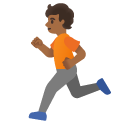


Appearance varies by platform and device. Google Noto, Twemoji, and OpenMoji are open-source.