🏊🏻
The Emoji
Person Swimming: Light Skin Tone
U+1F3CA U+1F3FB · :person_swimming_light_skin_tone:
Trend 45
Meaning layers
- interpretation
- Used to signal being 'in the zone', going with the flow, or navigating through life's challenges effortlessly. Also used to say someone is 'swimming in' something (money, drama, stress, etc.).
- tiktok usage
- Appears in fitness content, 'grinding' montages, and occasionally used ironically to say someone is drowning in responsibilities or swimming through chaos.
- irony level
- 3 / 10
Platform meanings
- meaning
- Fitness and sport content marker, also used metaphorically for grinding through challenges or being overwhelmed.
- trend usage
- Paired with gym motivation videos, summer swim challenges, Olympic swimmer tributes, and 'day in my life' athletic content.
- hashtags
- #SwimLife#PoolWorkout#SwimmerThings#FitnessTok#SwimChallenge
- virality score
- 52 / 100
Cultural meanings
🇺🇸
Western / Gen-Z
Used both literally for swim plans and ironically to describe being overwhelmed or 'in the deep end' of life situations. The light skin tone is generally unremarkable in diverse Western contexts.
🇵🇰
Pakistan & India
Primarily used literally to reference swimming as a sport or recreational activity; less common in casual conversation as swimming culture is less widespread in general public contexts but growing among urban youth.
🌍
Middle East
Used in contexts of resort and leisure swimming, particularly in Gulf countries where private pool culture is prominent among affluent communities; modest connotations may limit casual use.
🌐
Global Neutral
Universally understood as representing the physical act of swimming — used across cultures to communicate sport, fitness, or water recreation without significant cultural baggage.
🇧🇩
Bangladesh
Carries a practical connotation given the water-heavy geography; may reference actual river or pond swimming in rural contexts, or modern pool swimming among urban youth.
🇱🇰
Sri Lanka
Associated with beach and coastal culture as well as competitive swimming; used by sports enthusiasts and in tourism-related content given the island's affinity with water.
🇨🇳
China
Used straightforwardly in fitness and sports content; gains traction during Olympic seasons when Chinese swimmers are celebrated. Associated with discipline and athletic achievement.
🇯🇵
Japan
Swimming is a highly popular school sport in Japan, so this emoji resonates broadly; used by students, club athletes, and fitness communities with a strong association to school swim meets.
🇰🇷
South Korea
Tied to fitness culture and K-health trends; used in gym and wellness content, and occasionally in idol fan culture when idols mention swimming as a fitness activity.
🇹🇼
Taiwan
Used casually among fitness communities and in summer beach/pool content; Taiwanese youth use it similarly to Western Gen Z in metaphorical 'drowning in work' contexts.
🇭🇰
Hong Kong
Associated with competitive swimming given Hong Kong's strong Olympic swimming tradition; used proudly in sports communities and by fans of local swimming athletes.
🇵🇭
Philippines
Given the archipelago's water culture, this emoji is used frequently for beach trips, island hopping, and recreational swimming; very natural and positive connotations.
🇮🇩
Indonesia
Used in beach and ocean recreation contexts across the island nation; also appears in competitive swim content as the sport grows in urban Indonesian communities.
🇹🇭
Thailand
Associated with resort and leisure culture as well as competitive swimming; used in tourism and vacation content, and among fitness-forward Thai youth communities.
🇻🇳
Vietnam
Used for swimming lessons, coastal holiday content, and growing fitness culture among Vietnamese urban youth; straightforward and positive connotations.
🇲🇾
Malaysia
Used in fitness and sports contexts, particularly during national swim competitions; also appears in leisure and resort pool content given Malaysia's tourism industry.
🇸🇦
Saudi Arabia
More likely used in private pool or resort contexts; gender considerations around swimming mean the emoji is more commonly used by men or in gender-appropriate spaces.
🇦🇪
UAE
Heavily associated with luxury pool and beach resort culture in Dubai and Abu Dhabi; used frequently in affluent lifestyle content and fitness posts.
🇪🇬
Egypt
Associated with Mediterranean and Nile-area water culture; used in summer beach content along the Red Sea and Mediterranean coasts, and in competitive swim communities.
🇹🇷
Turkey
Used for Aegean and Mediterranean beach culture, pool vacations, and growing competitive swimming; popular in summer holiday content among Turkish youth.
🇮🇷
Iran
Used carefully given gender-segregated swimming facilities; more commonly seen in men's sports content or in diaspora communities with freer cultural expression.
🇳🇬
Nigeria
Growing use as swimming gains popularity among Nigerian youth; primarily used in fitness and achievement contexts, or by coastal communities referencing ocean swimming.
🇿🇦
South Africa
Strong swimming culture given the country's Olympic history (e.g., Chad le Clos); used enthusiastically in sports and fitness communities and in beach lifestyle content.
🇬🇧
UK & Ireland
Used in competitive swimming contexts, leisure center content, and summer holiday posts; also used metaphorically in dry British humor about 'swimming upstream' in life.
🇫🇷
France
France has a strong swimming tradition; used by athletes and enthusiasts, and gains visibility during Olympic events. Also appears in Côte d'Azur and Riviera vacation content.
🇩🇪
Germany
Associated with disciplined fitness culture and competitive sports; used straightforwardly in athletic and leisure contexts, particularly in Freibad (outdoor pool) summer content.
🇪🇸
Spain & Italy
Strongly associated with Mediterranean summer lifestyle — beaches, pools, and warm-weather recreation; very positive and leisure-oriented connotations in both countries.
🇧🇷
Brazil
Deeply embedded in beach and water culture; used enthusiastically for ocean swimming, pool parties, and competitive swimming content — Brazil's beach identity makes this emoji very natural.
🇲🇽
Mexico
Used in coastal and resort vacation content along Pacific and Caribbean coasts; also appears in fitness communities and competitive swimming circles in major Mexican cities.
🌎
Latin America
Broadly used across Latin America in beach, pool, and fitness contexts; carries joyful, leisure-oriented energy consistent with the region's vibrant outdoor culture.
🇦🇺
Australia & NZ
Extremely culturally resonant given Australia's iconic beach and pool swimming culture; used frequently and enthusiastically in everyday casual conversation, fitness content, and national sports pride.
How its meaning shifted
- 2010
Primarily used as a literal sport or activity indicator; limited usage overall as emoji adoption was still in early stages and sports emoji were used sparingly.
- 2015
Gained traction as emoji use expanded on iOS and Android; primarily used for swim plans, fitness posts, and sports reporting — still almost entirely literal.
- 2020
Skin tone modifier made the emoji more personalized and inclusive; saw surge during Tokyo Olympics anticipation content and 'just keep swimming' motivational usage grew alongside mental health conversations.
- 2026
Used across literal, ironic, metaphorical, and aesthetic contexts; integrated into fitness tracking captions, Olympic content, Gen Z overwhelm humor, and summer lifestyle branding — multi-layered cultural usage now standard.
See it on every platform
Compare with
Adjacent emojis
- Often confused with
- water wavedropletperson taking bath
- Can replace
- water waveperson bikingflexed biceps
Share & embed
Frequently asked
01What does the 🏊🏻 Person Swimming: Light Skin Tone emoji mean?
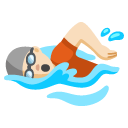
A person swimming with light skin tone, depicted in a horizontal swimming position with arms extended, representing the sport and activity of swimming.
02What does 🏊🏻 mean on TikTok?
Fitness and sport content marker, also used metaphorically for grinding through challenges or being overwhelmed.
03What does 🏊🏻 mean on WhatsApp?
Straightforwardly communicates going swimming, at the pool, or planning a swim session.
04What does 🏊🏻 mean in Gen-Z slang?
Used to signal being 'in the zone', going with the flow, or navigating through life's challenges effortlessly. Also used to say someone is 'swimming in' something (money, drama, stress, etc.).
05Is the 🏊🏻 emoji safe to use?
Represents swimming as a sport and leisure activity — universally safe, positive, and health-oriented.
06What does 🏊🏻 mean in texting?
Swimming is psychologically associated with freedom, fluid motion, and stress relief. The emoji can subconsciously evoke feelings of solitude, meditative focus, and resilience — common themes in athletic mental health discourse.
07What is the shortcode for 🏊🏻?
The shortcode for Person Swimming: Light Skin Tone is :person_swimming_light_skin_tone:
08What does 🏊🏻 mean in dating?
Occasionally used flirtatiously with light skin tone to hint at a toned, athletic body or to invite someone to the pool — subtly suggesting a swimsuit scenario.
Safety & usage
- Safe meaning
- Represents swimming as a sport and leisure activity — universally safe, positive, and health-oriented.
- Caution
- Extremely rare, but could be used in dark humor contexts about drowning or being overwhelmed, which may be insensitive in conversations involving water-related trauma.
No significant toxicity concerns. Minimal risk of misinterpretation. In rare cases, use around individuals with drowning trauma or water phobia (aquaphobia) may be inadvertently distressing — exercise basic contextual awareness.
How it looks across platforms


Appearance varies by platform and device. Google Noto, Twemoji, and OpenMoji are open-source.