🏊🏾
The Emoji
Person Swimming: Medium-dark Skin Tone
U+1F3CA U+1F3FE · :person_swimming_mediumdark_skin_tone:
Trend 52
Meaning layers
- interpretation
- Used to signal being in your element, going with the flow, or thriving in chaos. Can mean 'I'm surviving barely' or 'I'm crushing it' depending on context.
- tiktok usage
- Appears in 'swimming through life' POV videos, hustle content, and ironically in videos about being overwhelmed by responsibilities or social situations.
- irony level
- 4 / 10
Platform meanings
- meaning
- Represents athletic hustle, summer vibes, or metaphorical survival through chaos. Often used in fitness transformation content or 'day in my life' swimming routines.
- trend usage
- Appears in swim challenge videos, Black swimmer representation content, summer aesthetic compilations, and motivational sports POVs.
- hashtags
- #SwimmingLife#BlackSwimmers#PoolVibes#SwimTok#AthleteTok
- virality score
- 58 / 100
Cultural meanings
🇺🇸
Western / Gen-Z
Used both literally for swim content and metaphorically to describe persevering through hard times — resonates strongly with representation of Black and Brown swimmers in previously exclusionary spaces.
🇵🇰
Pakistan & India
Primarily literal in urban contexts — swimming pools are associated with middle-class leisure and fitness. The medium-dark skin tone is normalized and relatable to South Asian users.
🌍
Middle East
Swimming is popular in Gulf countries due to resort culture and hot climates. Used in vacation and leisure contexts, though public co-ed swimming has social nuances in more conservative regions.
🌐
Global Neutral
Universally understood as swimming or water activity — no significant negative connotations across global contexts, making it one of the safer sports emoji.
🇧🇩
Bangladesh
Swimming carries both recreational and practical survival connotations given the country's river-heavy geography. The emoji is used positively for sports and floods-related metaphors.
🇱🇰
Sri Lanka
Associated with coastal leisure and tourism — Sri Lanka's beach culture makes this emoji relevant for vacation and water sports content popular among younger demographics.
🇨🇳
China
Swimming is a prestigious Olympic sport in China with many celebrated champions. The emoji is used proudly in sports contexts and during competition seasons by fans.
🇯🇵
Japan
Swimming is a respected competitive sport with strong school programs. Used seriously in athletic contexts and also in summer festival or ocean trip posts.
🇰🇷
South Korea
Associated with fitness culture and summer beach trips to Jeju Island or resort pools. Used in health and wellness content popular on Korean social platforms.
🇹🇼
Taiwan
Used in summer beach and pool content, fitness posts, and during major swimming competitions. Taiwan's warm climate makes aquatic activities culturally significant.
🇭🇰
Hong Kong
Swimming is part of the school curriculum and leisure culture. Used in casual summer content, competitive swimming pride posts, and beach outing stories.
🇵🇭
Philippines
With over 7,000 islands, swimming is deeply ingrained culturally — used frequently in beach content, island hopping posts, and summer vacation stories.
🇮🇩
Indonesia
Indonesia's archipelago geography makes swimming culturally resonant. Used in beach tourism content, island adventure posts, and increasingly in fitness culture among urban youth.
🇹🇭
Thailand
Associated with tourist beach culture (Phuket, Koh Samui) and local resort life. Used in vacation content and increasingly in competitive swimming promotion.
🇻🇳
Vietnam
Used in coastal city vacation content (Da Nang, Phu Quoc) and growing fitness culture among Vietnamese youth on social media.
🇲🇾
Malaysia
Swimming pools are common leisure spaces; used in lifestyle content, fitness posts, and beach vacation stories. The skin tone representation feels inclusive to Malay users.
🇸🇦
Saudi Arabia
Swimming is gender-segregated in traditional contexts but growing in popularity post-Vision 2030 reforms. Used in sports and fitness content, increasingly in women's athletic empowerment posts.
🇦🇪
UAE
Dubai and Abu Dhabi's resort pool culture makes this emoji very common in luxury lifestyle and vacation content. Used by both expats and nationals in leisure contexts.
🇪🇬
Egypt
The Nile and Mediterranean coasts make swimming culturally present. Used in summer vacation content, Alexandria beach posts, and competitive swimming coverage.
🇹🇷
Turkey
Turkey's Aegean and Mediterranean coasts make swimming a beloved summer activity. The emoji is used frequently in vacation, beach, and water sports content.
🇮🇷
Iran
Swimming is popular but gender-segregated in public spaces. Used in sports contexts, private pool content, and fitness posts, with growing online presence among youth.
🇳🇬
Nigeria
Swimming is growing in popularity with increasing pool access in urban areas. The medium-dark skin tone representation is significant and celebrated in posts about Black excellence in aquatic sports.
🇿🇦
South Africa
South Africa has a strong competitive swimming tradition. The medium-dark skin tone is particularly meaningful as it represents the growing diversity in previously racially segregated swimming spaces.
🇬🇧
UK & Ireland
Used for leisure swimming, lido culture, and wild swimming trends. Also appears in dry British humor about 'swimming through the rain' or dealing with life's British inconveniences.
🇫🇷
France
France has a strong swimming culture from competitive pools to Mediterranean beaches. Used in summer content, sports pride during international competitions, and Paris 2024 Olympic swim excitement.
🇩🇪
Germany
Germans associate swimming strongly with fitness and outdoor Freibad (open-air pool) culture. Used in health and wellness content, summer leisure posts, and competitive sports coverage.
🇪🇸
Spain & Italy
Mediterranean beach and pool culture makes this emoji extremely common in summer content. Used in vacation posts, competitive swim coverage, and lifestyle content with high frequency.
🇧🇷
Brazil
Brazil's beach culture (Copacabana, Ipanema) makes swimming a national pastime. The medium-dark skin tone resonates deeply with Brazil's diverse population and is used proudly in beach and sports content.
🇲🇽
Mexico
Used in beach vacation content (Cancun, Los Cabos), pool party posts, and fitness content. Mexican social media users connect with the skin tone representation authentically.
🌎
Latin America
Across Latin America, swimming is tied to beach culture, resort vacations, and Olympic sports pride. The medium-dark skin tone is widely relatable across the region's diverse populations.
🇦🇺
Australia & NZ
Australia's surf and swimming culture is world-famous — this emoji is used in beach content, competitive swimming pride, surf safety messaging, and summer lifestyle posts year-round.
How its meaning shifted
- 2010
Emoji did not exist yet; the base swimming emoji was introduced later, and skin tone modifiers were not yet part of Unicode.
- 2015
Skin tone modifiers were introduced in Unicode 8.0 (2015). Early usage was primarily literal — used to indicate actual swimming activities or swimming events.
- 2020
Usage expanded with the rise of Black Lives Matter movement and conversations about diversity in sports. The medium-dark skin tone became a representation symbol alongside literal swimming content.
- 2026
Widely used across fitness content, summer lifestyle, and metaphorical 'staying afloat' contexts. The skin tone specificity is normalized and embraced as everyday inclusive representation rather than a special statement.
See it on every platform
Adjacent emojis
- Often confused with
- person taking bathperson in steamy roomdroplet
- Can replace
- water wavefishblue circle
Share & embed
Frequently asked
01What does the 🏊🏾 Person Swimming: Medium-dark Skin Tone emoji mean?
A person swimming, depicted with medium-dark skin tone, shown in a freestyle or front crawl swimming stroke with arms extended and face down in water.
02What does 🏊🏾 mean on TikTok?
Represents athletic hustle, summer vibes, or metaphorical survival through chaos. Often used in fitness transformation content or 'day in my life' swimming routines.
03What does 🏊🏾 mean on WhatsApp?
Casual indicator of going swimming, at the pool, or beach. Also used metaphorically to say 'I'm deep in it' or 'drowning in tasks'.
04What does 🏊🏾 mean in Gen-Z slang?
Used to signal being in your element, going with the flow, or thriving in chaos. Can mean 'I'm surviving barely' or 'I'm crushing it' depending on context.
05Is the 🏊🏾 emoji safe to use?
Completely safe and positive — represents swimming, athleticism, summer fun, fitness, and water sports. Celebrates diversity in sports through skin tone representation.
06What does 🏊🏾 mean in texting?
Swimming is psychologically associated with both escape and endurance — the emoji evokes feelings of pushing through resistance, which resonates with themes of resilience and self-mastery.
07What is the shortcode for 🏊🏾?
The shortcode for Person Swimming: Medium-dark Skin Tone is :person_swimming_mediumdark_skin_tone:
08What does 🏊🏾 mean in dating?
Can be used flirtatiously to suggest a pool date, beach hangout, or to hint at physical fitness. 'We should swim sometime 🏊🏾' is a low-key casual date suggestion.
Safety & usage
- Safe meaning
- Completely safe and positive — represents swimming, athleticism, summer fun, fitness, and water sports. Celebrates diversity in sports through skin tone representation.
- Caution
- Extremely rare misuse — could theoretically be used in harassment directed at swimmers or in drowning-related dark humor, but this is uncommon.
No significant toxic usage patterns documented. In rare dark web or edgy meme contexts, swimming emojis can be paired with drowning humor, but this is not mainstream.
How it looks across platforms
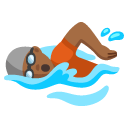


Appearance varies by platform and device. Google Noto, Twemoji, and OpenMoji are open-source.