🚶➡️
The Emoji
Person Walking Facing Right
U+1F6B6 U+200D U+27A1 U+FE0F · :person_walking_facing_right:
Trend 58
Meaning layers
- interpretation
- Used to signal leaving a situation, moving on, or walking away from drama, toxic people, or bad vibes. Often implies intentional forward momentum.
- tiktok usage
- Appears in POV videos about walking away from red flags, toxic exes, or cringe situations. Also used in 'walking into my era' transition content.
- irony level
- 4 / 10
Platform meanings
- meaning
- Signals walking away from negativity, entering a new era, or literal walking content like step challenges.
- trend usage
- Used in 'walking away from my old self' transformation videos, accountability walk content, and POV drama exits.
- hashtags
- #walkingaway#newera#movingon#walkingpov#girlwalk
- virality score
- 62 / 100
Cultural meanings
🇺🇸
Western / Gen-Z
Represents iconic 'main character walking away' energy; widely used to signal unbothered forward movement, leaving toxic situations, or entering a new life chapter.
🇵🇰
Pakistan & India
Used literally to indicate someone is walking or on their way; also used humorously online to signal leaving a drama-filled conversation or group chat.
🌍
Middle East
Generally interpreted as someone physically walking or traveling; in younger online communities, it mirrors global meme usage of 'walking away' from conflict.
🌐
Global Neutral
Universally understood as a person in motion walking to the right; serves as a directional, movement, or journey symbol across most cultures.
🇧🇩
Bangladesh
Primarily literal usage indicating travel on foot or commuting; among younger social media users, also adopted in 'moving on' meme contexts.
🇱🇰
Sri Lanka
Used in casual messaging to signal someone is heading somewhere on foot; younger users adapt it for social media exit or moving-on narratives.
🇨🇳
China
Interpreted as someone walking forward, often used in motivational contexts about perseverance and forward progress; the rightward direction aligns with positive forward-movement symbolism.
🇯🇵
Japan
Associated with daily walking culture, commuting on foot, and mindfulness walks; used in wellness content and politely signals someone is on their way.
🇰🇷
South Korea
Popular among younger users in K-culture online spaces to represent a 'cool exit' or someone unbothered by criticism; also used in step-count and health challenge content.
🇹🇼
Taiwan
Used similarly to mainland China for forward movement and walking routines; younger Taiwanese users also adopt it for Western-style meme formats about leaving drama.
🇭🇰
Hong Kong
Common in messaging to say someone is commuting or heading out; in meme culture, used to humorously signal exiting a conversation or online argument.
🇵🇭
Philippines
Used in casual chat to mean someone is walking over or heading somewhere; online communities use it to signal 'I'm leaving this drama' in a lighthearted way.
🇮🇩
Indonesia
Mainly literal in everyday messaging; in younger communities, mirrors global meme use of departing or walking away from awkward situations.
🇹🇭
Thailand
Associated with walking as a leisure or wellness activity; used in fitness content and among younger users to signal stepping away from something negative.
🇻🇳
Vietnam
Used literally for walking or travel contexts; increasingly adopted in younger Vietnamese online communities for 'moving on' or dramatic exit meme formats.
🇲🇾
Malaysia
Commonly used in group chats to indicate someone is on their way; bilingual online users also deploy it as a humorous 'I'm out of this conversation' signal.
🇸🇦
Saudi Arabia
Interpreted primarily as someone traveling on foot; among younger users active on global platforms, it carries the international connotation of moving on or departing.
🇦🇪
UAE
In the cosmopolitan UAE online scene, adopted across cultures; used for commuting references, wellness walks, and the globally understood 'walking away' meme format.
🇪🇬
Egypt
Used casually in messaging to indicate someone is heading somewhere; younger Egyptian social media users use it in the same dramatic exit context as global trends.
🇹🇷
Turkey
Represents physical travel or walking in everyday chat; online communities increasingly use it to signal unbothered departure from arguments or bad situations.
🇮🇷
Iran
Used among Persian-speaking internet users to indicate someone is walking away or leaving; also applied in motivational contexts about moving forward in life.
🇳🇬
Nigeria
Often used in Nigerian Twitter and Instagram communities to signal unbothered dismissal, similar to 'I'm not here for this' energy; also used literally for commuting on foot.
🇿🇦
South Africa
Used in online spaces to humorously signal leaving a messy situation; literal use includes walking as transport or exercise given South Africa's active lifestyle culture.
🇬🇧
UK & Ireland
Used ironically in dry British humor to signal a dignified or petty exit from a conversation; also used literally for walking commutes and countryside walks.
🇫🇷
France
Associated with the French cultural appreciation for walking, promenades, and flânerie; younger users also use it for the 'je m'en vais' (I'm leaving) digital exit.
🇩🇪
Germany
Practical usage related to commuting, hiking, and wellness walking; Germans may also use it to signal stepping away from a discussion with finality and no drama.
🇪🇸
Spain & Italy
In expressive Southern European online culture, used dramatically to signal storming off or ending a conversation; also represents leisurely walking and afternoon strolls.
🇧🇷
Brazil
Brazilian users deploy it in meme-heavy ways to signal walking away from cringe or drama; also used in fitness content given Brazil's strong running and walking culture.
🇲🇽
Mexico
Used humorously in Mexican internet culture to signal leaving a bad situation; also appears in content about morning walks, safety-conscious commuting, and fitness routines.
🌎
Latin America
Across Latin America, combines literal usage for walking commutes with meme usage for dramatically departing from online arguments or toxic situations.
🇦🇺
Australia & NZ
Used casually for walking and outdoor lifestyle content in a culture that values physical activity; also used with dry humor to signal leaving a boring or toxic conversation.
How its meaning shifted
- 2010
The emoji as a directional ZWJ sequence did not exist yet; general walking emojis were used only for literal pedestrian or travel contexts.
- 2015
Basic walking emojis gained traction for literal commuting and travel messages; directional variants were not yet widely supported or used.
- 2020
Walking emojis including directional variants began appearing in 'moving on' and self-improvement content on TikTok and Instagram during pandemic-era introspective culture.
- 2026
Widely used in 'main character era' content, walking-away memes, and wellness walking communities; the rightward direction is understood as a universal symbol of forward progress and departure.
See it on every platform
Compare with
Adjacent emojis
- Often confused with
- person walking facing leftperson runningperson in manual wheelchair
- Can replace
- person walkingrunnerfootprints
Share & embed
Frequently asked
01What does the 🚶➡️ Person Walking Facing Right emoji mean?
A person walking and facing toward the right side of the screen, representing forward movement, travel on foot, or pedestrian activity.
02What does 🚶➡️ mean on TikTok?
Signals walking away from negativity, entering a new era, or literal walking content like step challenges.
03What does 🚶➡️ mean on WhatsApp?
Literally indicates someone is on their way, walking to a location, or has left/is leaving a situation.
04What does 🚶➡️ mean in Gen-Z slang?
Used to signal leaving a situation, moving on, or walking away from drama, toxic people, or bad vibes. Often implies intentional forward momentum.
05Is the 🚶➡️ emoji safe to use?
Represents walking, movement, travel on foot, or metaphorical forward progress and departure from negative situations.
06What does 🚶➡️ mean in texting?
The rightward direction psychologically implies forward progress in Western left-to-right reading cultures, evoking a sense of agency, resolve, and deliberate departure from the past.
07What is the shortcode for 🚶➡️?
The shortcode for Person Walking Facing Right is :person_walking_facing_right:
08What does 🚶➡️ mean in dating?
Rarely flirtatious; sometimes used playfully as 'I'm coming to you' or 'walking into your life.'
Safety & usage
- Safe meaning
- Represents walking, movement, travel on foot, or metaphorical forward progress and departure from negative situations.
- Caution
- Occasionally used to taunt or dismiss someone by implying they should 'walk away' or that they are being ignored and dismissed.
Generally safe with no significant misuse patterns; very rarely used in coordinated harassment to tell someone to 'leave' a community.
How it looks across platforms
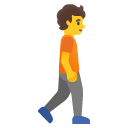
Appearance varies by platform and device. Google Noto, Twemoji, and OpenMoji are open-source.