🚶🏽
The Emoji
Person Walking: Medium Skin Tone
U+1F6B6 U+1F3FD · :person_walking_medium_skin_tone:
Trend 58
Meaning layers
- interpretation
- Used to signal leaving a situation, ghosting, walking away from drama, or casually departing without explanation. Often paired with silence or minimal context to convey unbothered energy.
- tiktok usage
- Appears in 'walking away from [toxic thing]' trend videos, slow-walk aesthetic content, and 'main character walking into their era' clips.
- irony level
- 5 / 10
Platform meanings
- meaning
- Represents unbothered departure, self-improvement walks, main character energy, or literally showing off a walking routine or commute.
- trend usage
- Used in 'hot girl walk' trend content, 'walking away from my old self' transformation videos, and 'day in my life' vlogs.
- hashtags
- #HotGirlWalk#MainCharacter#WalkingAway#WalkWithMe#SlowWalk
- virality score
- 62 / 100
Cultural meanings
🇺🇸
Western / Gen-Z
Iconic shorthand for 'I'm out' or 'unbothered exit energy'; heavily associated with self-respect narratives and walking away from toxicity. The medium skin tone adds a layer of representation that resonates with multiracial and Brown Western Gen Z users.
🇵🇰
Pakistan & India
Used frequently to indicate someone is heading out or on their way; culturally also invokes the image of a leisurely evening walk (sair) which is a common social tradition. The medium skin tone is especially relatable for South Asian users navigating skin tone representation.
🌍
Middle East
Conveys movement, commuting, or heading out — often used in casual chats about errands or outings. In more expressive contexts it can suggest 'I'm done with this conversation' with a dignified exit connotation.
🌐
Global Neutral
Universally understood as depicting a person in motion on foot; interpreted across most cultures as travel, exercise, or departure without strong secondary connotations.
🇧🇩
Bangladesh
Used in everyday texting to mean someone is on the move or heading somewhere; also appears in fitness and health content promoting walking as accessible exercise in urban and rural contexts.
🇱🇰
Sri Lanka
Commonly used to indicate being out for a walk or commuting; in a country where walking is a daily necessity for many, it holds genuine practical meaning in conversations about daily routines.
🇨🇳
China
Generally interpreted literally as walking or being en route; used in WeChat-equivalent platforms to signal someone is on their way. The skin tone aspect is less culturally loaded given the dominant Han default, but noted by diverse users.
🇯🇵
Japan
Used literally in messaging apps to indicate movement or commuting, aligning with Japan's strong walking and transit culture. Also appears in health apps tied to step-count goals (歩数) popular among Japanese users.
🇰🇷
South Korea
Appears in fitness and wellness content related to 'health walks' (건강 산책), a popular daily practice. Also used among younger Koreans in the same 'unbothered exit' meme style influenced by global social media trends.
🇹🇼
Taiwan
Used in casual messaging to mean 'heading out' or 'on my way'; also adopted into meme culture where walking away symbolizes disengaging from drama, mirroring global Gen Z usage patterns.
🇭🇰
Hong Kong
Used practically to signal commuting or being in transit — highly relevant in a city where walking is integral to daily life. Also picked up the ironic 'walking away from drama' tone through Cantonese meme culture.
🇵🇭
Philippines
Casually used in Filipino group chats to say someone is on the move or headed somewhere; also adopted in 'leaving the chat' humor which is common in Filipino meme culture.
🇮🇩
Indonesia
Used to convey being on one's way or out for a walk; popular in health content promoting jalan kaki (walking) as a wellness activity. GenZ Indonesians also use it in the global 'I'm leaving this conversation' meme context.
🇹🇭
Thailand
Appears in daily conversation to indicate walking or commuting; Thai social media users also use it in content about city walks and street food tours, reflecting Thailand's vibrant pedestrian culture.
🇻🇳
Vietnam
Used in casual messaging to mean someone is heading out; in the context of Vietnam's motorcycle-heavy culture, walking emojis sometimes carry a slightly nostalgic or alternative lifestyle connotation.
🇲🇾
Malaysia
Common in casual Malaysian texting as a movement indicator; also used in #JomJalan (let's walk) fitness communities and adopted by younger Malaysians in GenZ-style 'done with this' reply contexts.
🇸🇦
Saudi Arabia
Used to indicate someone is heading out or on an errand; public walking culture is growing in Saudi cities as part of Vision 2030 health initiatives, giving the emoji genuine lifestyle relevance.
🇦🇪
UAE
Popular in Dubai and Abu Dhabi contexts for indicating walks along promenades or corniche areas; also used in multicultural expat chats with the universal 'on my way' meaning.
🇪🇬
Egypt
Used in everyday Egyptian messaging to mean heading out or walking somewhere; the phrase 'ana maashi' (I'm walking/going) is a cultural parallel that gives this emoji immediate conversational relevance.
🇹🇷
Turkey
Used to signal movement, going out for a stroll (gezmek), or leaving a situation; Turkish social media culture has adopted the exit/walking-away meme meaning alongside its literal use.
🇮🇷
Iran
Used in Farsi-language chats to indicate movement or being on one's way; also carries a subtle connotation of quiet independence in a culture where walking alone has social nuance, particularly for women.
🇳🇬
Nigeria
Used in Nigerian messaging culture to indicate someone is on the move; Naija slang like 'I dey waka' (I'm walking/going) makes this emoji instantly relatable. Also used in humorous 'I'm out of this situation' contexts.
🇿🇦
South Africa
Used casually to signal movement or commuting; in a country with significant walking culture tied to daily necessity, it holds genuine practical meaning. Township slang for leaving ('I'm ghost') aligns with its exit usage.
🇬🇧
UK & Ireland
Widely used in British and Irish chats to suggest going for a walk — a deeply culturally embedded activity. The 'walking away from drama' meme use is also prevalent among UK Gen Z on TikTok and X.
🇫🇷
France
Resonates with French walking culture — the promenade is a beloved social tradition. Used literally in chats and also adopted by French youth in the global 'I'm unbothered, I'm leaving' meme format.
🇩🇪
Germany
Used practically to indicate walking, commuting, or being on a Spaziergang (leisurely walk), a culturally significant activity. German social media users also use it straightforwardly without heavy ironic layering.
🇪🇸
Spain & Italy
Strongly resonates with the paseo/passeggiata culture — the evening social walk is a beloved Mediterranean tradition. Used both literally and as a signal of graceful, drama-free departure.
🇧🇷
Brazil
Used casually in Brazilian chats to mean going out or on the move; also appears in fitness and wellness content. Brazilian meme culture has incorporated the walking-away format in Portuguese-language social media.
🇲🇽
Mexico
Used to indicate movement or heading out; Mexican slang like 'me piro' (I'm out) has a natural emoji parallel in this walking figure. Used in meme formats to signal leaving drama without creating more.
🌎
Latin America
Broadly understood across Latin America as indicating movement or departure; the 'walking away unbothered' meme resonates strongly with Latin American youth social media cultures across platforms.
🇦🇺
Australia & NZ
Associated with outdoor walking culture, hiking trails, and beach walks in Australian and New Zealand contexts. Also used in the global 'I'm out' meme format, especially popular among Australian Gen Z on TikTok.
How its meaning shifted
- 2010
Emoji were still gaining mainstream adoption; walking person emojis existed but skin tone modifiers did not yet — this specific variant did not exist. Generic yellow walking figures were used literally to mean 'walking' or 'pedestrian'.
- 2015
Skin tone modifiers were introduced (Unicode 8.0, 2015), making 🚶🏽 possible. Early usage was primarily literal — indicating walking, commuting, or being outdoors. Representation and diversity in emoji were the primary talking points.
- 2020
Usage expanded significantly with the rise of meme culture and TikTok; the emoji became associated with 'walking away' from toxic situations, self-care, and the 'hot girl walk' trend. Medium skin tone variants gained traction as representation discourse grew.
- 2026
Now deeply embedded in GenZ digital vocabulary as a symbol of unbothered exit, self-respect, and quiet confidence. The medium skin tone version is actively chosen by users who identify with Brown or mixed-race representation. Used across meme formats, wellness content, and as a minimalist reply token.
See it on every platform
Adjacent emojis
Share & embed
Frequently asked
01What does the 🚶🏽 Person Walking: Medium Skin Tone emoji mean?
A person walking shown in profile, facing left, with medium skin tone applied via Fitzpatrick scale modifier. Depicts the act of walking or being in motion on foot.
02What does 🚶🏽 mean on TikTok?
Represents unbothered departure, self-improvement walks, main character energy, or literally showing off a walking routine or commute.
03What does 🚶🏽 mean on WhatsApp?
Casual signal that someone is on their way, heading out, or leaving a situation — often sent as a one-word reply replacement.
04What does 🚶🏽 mean in Gen-Z slang?
Used to signal leaving a situation, ghosting, walking away from drama, or casually departing without explanation. Often paired with silence or minimal context to convey unbothered energy.
05Is the 🚶🏽 emoji safe to use?
A completely benign emoji depicting a person walking; used to indicate movement, exercise, departure, or transit in everyday conversation.
06What does 🚶🏽 mean in texting?
Walking symbolizes forward momentum and autonomy. Psychologically linked to self-regulation — choosing to physically and metaphorically move away suggests emotional control rather than explosive reaction.
07What is the shortcode for 🚶🏽?
The shortcode for Person Walking: Medium Skin Tone is :person_walking_medium_skin_tone:
08What does 🚶🏽 mean in dating?
Rarely flirtatious on its own; sometimes used playfully to suggest 'I'm heading your way' or 'come walk with me' in early-stage chatting.
Safety & usage
- Safe meaning
- A completely benign emoji depicting a person walking; used to indicate movement, exercise, departure, or transit in everyday conversation.
- Caution
- In rare harassment contexts, could be used to tell someone to 'walk away' or 'get out' in a dismissive or bullying manner, though this is uncommon and context-dependent.
No significant safety concerns. Skin tone variants have been weaponized in racially charged contexts on rare occasions on platforms like Twitter/X, but this is not inherent to the emoji's meaning. Generally safe across all platforms and audiences.
How it looks across platforms
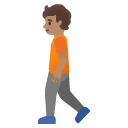


Appearance varies by platform and device. Google Noto, Twemoji, and OpenMoji are open-source.