🧑🦯
The Emoji
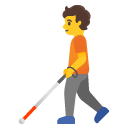
Person With White Cane
U+1F9D1 U+200D U+1F9AF · :person_with_white_cane:
Trend 38
Meaning layers
- interpretation
- Used literally to represent blindness or visual impairment, but also metaphorically to indicate someone who is oblivious, missing obvious signs, or 'blind' to something obvious in their life.
- tiktok usage
- Appears in commentary videos about people who are clearly ignoring red flags or missing obvious truths, often paired with captions like 'babe when they say they don't see the issue'
- irony level
- 5 / 10
Platform meanings
- meaning
- Represents someone who is oblivious or metaphorically blind to obvious signs, red flags, or truths; also used in genuine disability awareness content
- trend usage
- Appears in POV videos, red flag compilations, and commentary on celebrities or public figures ignoring clear issues
- hashtags
- #RedFlags#Oblivious#DisabilityAwareness#BlindToTheTruth#AccessibilityTok
- virality score
- 42 / 100
Cultural meanings
🇺🇸
Western / Gen-Z
Frequently used both for disability representation and ironically to call out obliviousness or red-flag blindness, often in meme or commentary contexts.
🇵🇰
Pakistan & India
Primarily interpreted literally as representing a visually impaired person; used in social media campaigns for disability rights and awareness, especially around elections and public infrastructure accessibility.
🌍
Middle East
Used mainly in its literal sense to represent blind or visually impaired individuals; appears in charity and welfare-related content on social media platforms.
🌐
Global Neutral
Universally recognized as representing a person with visual impairment using a white cane, serving as a symbol of disability inclusion and independent navigation.
🇧🇩
Bangladesh
Interpreted literally in the context of disability awareness; used in NGO communications and social media posts advocating for the rights of visually impaired individuals.
🇱🇰
Sri Lanka
Used in disability awareness campaigns and posts supporting visually impaired communities; rarely used metaphorically in digital communication.
🇨🇳
China
Used primarily to represent visually impaired individuals; occasionally appears in content about 盲道 (tactile paving) infrastructure debates and urban accessibility discussions.
🇯🇵
Japan
Used respectfully in disability-related content and accessibility discussions; Japan's strong disability awareness culture (障害者理解) means it is rarely used ironically.
🇰🇷
South Korea
Used in disability awareness campaigns and content advocating for accessibility in Korean cities and public transit; occasionally used ironically in online discourse to call out obliviousness.
🇹🇼
Taiwan
Appears in posts about accessibility infrastructure and disability rights advocacy; used sincerely and rarely for comedic effect.
🇭🇰
Hong Kong
Used in social media content about disability inclusion and urban accessibility; occasionally deployed humorously in political commentary to suggest willful blindness by officials.
🇵🇭
Philippines
Used in disability awareness content, often shared around World Sight Day and White Cane Day; also used metaphorically in social media commentary on public figures ignoring obvious issues.
🇮🇩
Indonesia
Primarily used in disability-related advocacy content; appears in posts by NGOs and government agencies promoting inclusive education and accessibility.
🇹🇭
Thailand
Used in disability awareness campaigns and content about accessible tourism; rarely used metaphorically, with the literal meaning being dominant.
🇻🇳
Vietnam
Used in posts about disability rights and accessibility improvements in Vietnamese cities; interpreted almost entirely in its literal sense.
🇲🇾
Malaysia
Appears in disability awareness and inclusion content; occasionally used in humorous contexts online to signal someone missing something obvious.
🇸🇦
Saudi Arabia
Used mainly for disability representation content and charity campaigns supporting visually impaired individuals; the white cane has clear symbolic meaning recognized publicly.
🇦🇪
UAE
Used in accessibility and disability inclusion campaigns, especially in the context of smart city initiatives in Dubai and Abu Dhabi promoting inclusive infrastructure.
🇪🇬
Egypt
Used in disability awareness posts and campaigns; the white cane is a familiar symbol and the emoji is used sincerely in content about visually impaired individuals.
🇹🇷
Turkey
Appears in disability rights advocacy and accessibility discussions; occasionally used to comment on public figures or politicians being 'blind' to societal problems.
🇮🇷
Iran
Used in disability awareness content and posts about the rights of visually impaired individuals; used literally and with sincerity in digital communication.
🇳🇬
Nigeria
Used in disability inclusion and awareness campaigns; also appears in social media commentary to call out leaders or institutions seen as ignoring obvious problems.
🇿🇦
South Africa
Used in disability rights advocacy content; also used metaphorically in political commentary to highlight willful blindness by government officials or institutions.
🇬🇧
UK & Ireland
Used both literally for disability representation and metaphorically in dry British humor to imply someone is being deliberately oblivious or ignorant.
🇫🇷
France
Used primarily in disability awareness content; occasionally appears in satirical political commentary to suggest a public figure is ignoring obvious truths.
🇩🇪
Germany
Interpreted mainly literally, with strong association to disability inclusion (Inklusion) and accessibility (Barrierefreiheit) discussions in professional and social contexts.
🇪🇸
Spain & Italy
Used in disability awareness and accessibility advocacy; occasionally appears in humorous online commentary about missing obvious things in daily life.
🇧🇷
Brazil
Used both for disability representation and humorously to indicate someone is 'blind' to a situation; appears in meme formats calling out obliviousness in Brazilian internet culture.
🇲🇽
Mexico
Used in disability awareness content and to express that someone is intentionally ignoring an issue; the metaphorical use is moderately common in Mexican social media humor.
🌎
Latin America
Broadly used for disability representation across Latin America; also appears in meme formats and social commentary calling out willful ignorance by public figures.
🇦🇺
Australia & NZ
Used for disability representation and inclusion discussions; also used in relaxed, irreverent Australian online humor to joke about missing something blindingly obvious.
How its meaning shifted
- 2010
Did not exist in 2010; disability representation in emoji was extremely limited, with no specific emojis for white cane users.
- 2015
Still did not exist; the broader emoji diversity push was underway but disability-specific emojis had not yet been introduced to Unicode.
- 2020
Newly introduced (Unicode 12.0, 2019), primarily used in disability awareness campaigns, accessibility advocacy, and representation discussions; metaphorical use was just beginning to emerge.
- 2026
Established dual use: sincere disability representation and advocacy on one hand, and widespread metaphorical use for calling out obliviousness and willful ignorance in meme and commentary culture on the other.
See it on every platform
Compare with
Adjacent emojis
- Opposite
- eyeseyeface with monocle
- Often confused with
- walking personold manhiking boot
- Can replace
- guide dogsee no evil monkeyeyes
Share & embed
Frequently asked
01What does the 🧑🦯 Person With White Cane emoji mean?
A person using a white cane, which is commonly associated with visual impairment or blindness. The white cane is an internationally recognized symbol of blindness and low vision.
02What does 🧑🦯 mean on TikTok?
Represents someone who is oblivious or metaphorically blind to obvious signs, red flags, or truths; also used in genuine disability awareness content
03What does 🧑🦯 mean on WhatsApp?
Literally represents a visually impaired person; in casual chats used to say 'I must be blind' or to indicate someone is ignoring something obvious
04What does 🧑🦯 mean in Gen-Z slang?
Used literally to represent blindness or visual impairment, but also metaphorically to indicate someone who is oblivious, missing obvious signs, or 'blind' to something obvious in their life.
05Is the 🧑🦯 emoji safe to use?
Represents a person with visual impairment navigating with a white cane; used for disability awareness, inclusion advocacy, and representation.
06What does 🧑🦯 mean in texting?
Evokes feelings of empathy and awareness around disability; when used metaphorically, it taps into the psychological concept of willful ignorance or cognitive blind spots, allowing people to externalize self-criticism humorously.
07What is the shortcode for 🧑🦯?
The shortcode for Person With White Cane is :person_with_white_cane:
08What does 🧑🦯 mean in dating?
Rarely used in flirting; occasionally deployed humorously to say 'I must be blind for not noticing you sooner' or sarcastically about ignoring obvious romantic signals
Safety & usage
- Safe meaning
- Represents a person with visual impairment navigating with a white cane; used for disability awareness, inclusion advocacy, and representation.
- Caution
- Can be used mockingly to demean someone's intelligence or perception, effectively ableist when deployed to insult rather than comment on obliviousness.
Using this emoji to mock or ridicule someone with a disability, or using it to demean someone by implying incompetence, can be considered ableist and offensive. Metaphorical use should be applied carefully to avoid trivializing visual impairment.
How it looks across platforms


Appearance varies by platform and device. Google Noto, Twemoji, and OpenMoji are open-source.