🪒
The Emoji
Razor
U+1FA92 · :razor:
Trend 58
Meaning layers
- interpretation
- Used to signify being 'sharp,' cutting something off (a person, habit, or situation), dark humor about self-image, or edginess in general. Also used in 'razor sharp wit' contexts.
- tiktok usage
- Appears in 'cutting people off' edits, transformation videos, and dark aesthetic content. Sometimes used ironically to signal emotional pain without spelling it out.
- irony level
- 6 / 10
Platform meanings
- meaning
- Signals cutting someone or something off, emotional sharpness, or dark aesthetic vibes. Used in transformation and 'new era' content.
- trend usage
- Appears in 'cut-off' montages, villain-era transformations, and e-boy/e-girl grooming aesthetic videos.
- hashtags
- #cuttingoff#razorsharp#newera#darkaesthetic#selfreinvention
- virality score
- 62 / 100
Cultural meanings
🇺🇸
Western / Gen-Z
Widely used to symbolize 'cutting people off' or entering a villain/boss era. Also recognized as a dark humor signal for emotional pain.
🇵🇰
Pakistan & India
Primarily understood as a grooming/shaving tool. Used in barber shop content and men's grooming posts; darker connotations are less commonly recognized.
🌍
Middle East
Associated with traditional barbershop culture and grooming rituals. Straight razors hold cultural significance in male grooming traditions.
🌐
Global Neutral
Universally understood as a shaving or grooming tool. Cross-cultural use for hygiene and personal care content.
🇧🇩
Bangladesh
Used mainly in grooming and barber-related content. Symbolizes traditional male grooming rituals common in local barbershops.
🇱🇰
Sri Lanka
Primarily literal — associated with shaving and personal grooming. Occasionally used in transformation or 'new look' posts.
🇨🇳
China
Represents precision grooming and self-care. Sometimes used metaphorically in business contexts to imply cutting through competition.
🇯🇵
Japan
Associated with the cultural appreciation of precision craftsmanship and ritual grooming. Straight razors carry aesthetic and artisanal respect.
🇰🇷
South Korea
Tied to Korea's strong men's grooming (K-beauty for men) culture. Used heavily in skincare and grooming product promotions.
🇹🇼
Taiwan
Used in grooming content and occasionally in 'cutting off' metaphors influenced by Western social media trends.
🇭🇰
Hong Kong
Primarily grooming-related. Western social media influence has introduced the 'cutting off' metaphor to younger users.
🇵🇭
Philippines
Used in barbershop and grooming contexts. The 'cutting off toxic people' usage is gaining traction among Gen Z Filipino users.
🇮🇩
Indonesia
Mainly associated with barbershop culture and grooming. Darker connotations are beginning to appear among younger, social-media-active users.
🇹🇭
Thailand
Common in men's grooming content. Also appears in transformation and makeover posts, reflecting Thailand's strong beauty culture.
🇻🇳
Vietnam
Primarily used for shaving and grooming product content. Less common in emotional or metaphorical contexts.
🇲🇾
Malaysia
Associated with barbershop culture and men's self-care. Younger Malaysians also use it in 'cutting people off' contexts.
🇸🇦
Saudi Arabia
Deeply tied to traditional barbershop and grooming culture. Straight razors are a respected part of male grooming tradition.
🇦🇪
UAE
Used in premium grooming and luxury barber content. The diverse expat population brings Western metaphorical usage as well.
🇪🇬
Egypt
Associated with traditional Egyptian barbershop culture and rites of male grooming. Darker connotations are less recognized.
🇹🇷
Turkey
Strongly associated with the iconic Turkish barbershop (berber) culture, where straight-razor shaving is a prestigious service.
🇮🇷
Iran
Used in grooming and personal care contexts. Traditional barbershop culture gives the razor a respected, craft-oriented meaning.
🇳🇬
Nigeria
Used in barbershop and grooming culture content, which is significant in Nigerian urban culture. Barbers hold high social status.
🇿🇦
South Africa
Associated with grooming and barbershop culture. Township barbershops are culturally significant, giving this emoji community meaning.
🇬🇧
UK & Ireland
Used in grooming content and dark British humor. 'Sharp as a razor' is a common expression influencing metaphorical use.
🇫🇷
France
Associated with elegance, precision grooming, and artisanal shaving culture. French traditional barbershops give it a refined connotation.
🇩🇪
Germany
Tied to precision and craftsmanship — Solingen (German razor city) gives this emoji particular cultural resonance in grooming contexts.
🇪🇸
Spain & Italy
Associated with Mediterranean barbershop culture, male grooming rituals, and artisanal craftsmanship. Also used in fashion-forward contexts.
🇧🇷
Brazil
Used in barbershop culture, which is a major social and community institution in Brazil. Barbers are key cultural figures.
🇲🇽
Mexico
Tied to the vibrant barbershop culture and male grooming traditions. Also used in 'cutting off' contexts among younger Gen Z users.
🌎
Latin America
Broadly used across Latin America in barbershop and grooming contexts. The 'cutting off' metaphor is growing in use among younger demographics.
🇦🇺
Australia & NZ
Used in grooming content and dark humor. 'Razor sharp' wit is a respected trait in Australian and NZ humor culture.
How its meaning shifted
- 2010
The razor emoji did not yet exist; shaving/grooming concepts were expressed with scissors ✂️ or improvised combinations.
- 2015
Still pre-introduction; grooming emojis remained limited. The concept existed in text but not as a dedicated emoji.
- 2020
Introduced in 2019 (Unicode 12.0), the emoji was initially used almost exclusively for literal grooming and shaving content.
- 2026
Now carries layered meanings — grooming, 'cutting people off,' villain-era signaling, dark humor, and emotional expression. Widely recognized in Gen Z digital language.
See it on every platform
Compare with
Adjacent emojis
- Opposite
- red heartseedlinghugging face
- Often confused with
- daggerkitchen knifescissors
Share & embed
Frequently asked
01What does the 🪒 Razor emoji mean?
A razor blade or safety razor used for shaving or grooming, depicted as a classic double-edge or straight razor.
02What does 🪒 mean on TikTok?
Signals cutting someone or something off, emotional sharpness, or dark aesthetic vibes. Used in transformation and 'new era' content.
03What does 🪒 mean on WhatsApp?
Usually literal — asking about grooming, sharing product recommendations. In emotional chats, can mean 'I'm done with this person/situation.'
04What does 🪒 mean in Gen-Z slang?
Used to signify being 'sharp,' cutting something off (a person, habit, or situation), dark humor about self-image, or edginess in general. Also used in 'razor sharp wit' contexts.
05Is the 🪒 emoji safe to use?
Shaving, grooming, personal hygiene, barbershop culture, precision, cutting off toxic people metaphorically.
06What does 🪒 mean in texting?
The razor carries dual psychological weight — it represents both self-care (grooming) and danger/self-harm, making it one of the most emotionally complex emojis. Context is critical for interpretation.
07What is the shortcode for 🪒?
The shortcode for Razor is :razor:
08What does 🪒 mean in dating?
Rarely used in flirting; occasionally used to compliment someone as 'razor sharp' or edgy. Could appear in dark-aesthetic flirting.
Safety & usage
- Safe meaning
- Shaving, grooming, personal hygiene, barbershop culture, precision, cutting off toxic people metaphorically.
- Caution
- Can be used as a subtle reference to self-harm or self-injury. Also used in implicit threats or intimidating messages.
This emoji is flagged in content moderation systems for potential self-harm association. Platforms like TikTok and Instagram may restrict content pairing this emoji with distress language. Community managers should apply context-sensitive review when this emoji appears alongside crisis-related language.
How it looks across platforms
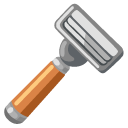


Appearance varies by platform and device. Google Noto, Twemoji, and OpenMoji are open-source.