🤜🏿
The Emoji
Right-facing Fist: Dark Skin Tone
U+1F91C U+1F3FF · :rightfacing_fist_dark_skin_tone:
Trend 65
Meaning layers
- interpretation
- Used to initiate a virtual fist bump, show solidarity, hype someone up, or signal 'let's go' energy. Often paired with 🤛🏿 to complete the bump. Also used to express Black pride and cultural solidarity.
- tiktok usage
- Appears in hype comment sections, duet reactions, and solidarity threads. Commonly placed at the end of affirmations or clapping-back moments.
- irony level
- 2 / 10
Platform meanings
- meaning
- Hype, solidarity, let's go energy, virtual fist bump to a creator or commenter
- trend usage
- Placed in comment sections to hype creators, often paired with 🤛 to complete the fist bump. Used in stitch/duet reactions to show alignment.
- hashtags
- #FistBump#BlackExcellence#HypeUp#Solidarity#LetItRip
- virality score
- 62 / 100
Cultural meanings
🇺🇸
Western / Gen-Z
Primarily used as a virtual fist bump or hype signal; deeply tied to Black culture and used by Black Gen Z to express pride and solidarity. Non-Black users also use it in solidarity or hype contexts.
🇵🇰
Pakistan & India
Less common but used in sports and gaming contexts to show team spirit or agreement; skin tone modifier adds a layer of representation for darker-skinned South Asian users.
🌍
Middle East
Used mostly in sports and male-bonding contexts to show camaraderie; the dark skin tone modifier may be less specifically noted, with focus on the gesture itself.
🌐
Global Neutral
Universally understood as a fist bump or show of strength; the dark skin tone makes it more specific and representative for darker-skinned communities worldwide.
🇧🇩
Bangladesh
Used in youth and sports communities to express team solidarity and excitement; the representational aspect of the skin tone is increasingly acknowledged among younger users.
🇱🇰
Sri Lanka
Appears in cricket fan groups and youth chats as a sign of support and enthusiasm; skin tone representation resonates with darker-skinned Sri Lankan users.
🇨🇳
China
Primarily understood as a strength or power symbol; fist bump cultural context is less native but adopted through Western pop culture and gaming.
🇯🇵
Japan
The fist bump gesture (gutto) is familiar; used in gaming and sports contexts for hype and solidarity, though the skin tone specificity is less culturally emphasized.
🇰🇷
South Korea
Used in esports, K-hip-hop, and youth culture to signal hype and respect; increasingly recognized in the context of global Black cultural influence through music.
🇹🇼
Taiwan
Understood as a power or agreement gesture; used in gaming and sports communities with less focus on the skin tone's cultural significance.
🇭🇰
Hong Kong
Used similarly to mainland China and Taiwan contexts; appears in protest and solidarity messaging given the gesture's association with strength and resistance.
🇵🇭
Philippines
Common in sports chats and youth groups as a hype or solidarity signal; the dark skin tone resonates with the diversity of Filipino skin tones and Afro-Filipino awareness.
🇮🇩
Indonesia
Used in sports fan groups and youth culture as a show of team spirit; skin tone nuance is less commonly discussed but growing in awareness.
🇹🇭
Thailand
Appears in gaming and sports contexts to signal excitement and solidarity; less culturally loaded in terms of skin tone politics than in Western contexts.
🇻🇳
Vietnam
Used in online gaming and youth communities as a hype signal; cultural meaning around the skin tone is less prominent but present in globally aware circles.
🇲🇾
Malaysia
Common in multicultural youth chats for hype and solidarity; the dark skin tone may resonate with Malay and Tamil communities within the diverse national context.
🇸🇦
Saudi Arabia
Used primarily in male friendship and sports contexts; the fist gesture reads as strength and brotherhood, with skin tone modifier less culturally specific.
🇦🇪
UAE
In the UAE's multicultural context, the dark skin tone resonates with South Asian, African, and Arab communities using it to signal solidarity and strength.
🇪🇬
Egypt
Used in sports and youth online spaces as a show of strength and solidarity; increasingly recognized through influence of Black American culture via music and social media.
🇹🇷
Turkey
Common in sports fan contexts and youth social media as a hype or respect signal; the skin tone specificity is less pronounced in cultural interpretation.
🇮🇷
Iran
Used in gaming and sports communities among youth for solidarity and excitement; Western cultural context of the emoji is understood through social media exposure.
🇳🇬
Nigeria
Strongly resonant — the dark skin tone makes this emoji feel personally representative. Used widely as a symbol of Black pride, solidarity, and cultural power in everyday digital communication.
🇿🇦
South Africa
Deeply meaningful in the context of Black African identity and pride; used in both casual hype contexts and more serious cultural solidarity conversations.
🇬🇧
UK & Ireland
Used in Black British communities as a symbol of identity and solidarity; also broadly used in youth and sports culture across the UK to signal respect and hype.
🇫🇷
France
Used in Afro-French and youth communities as a solidarity signal; also appears in sports contexts, especially around football and basketball culture.
🇩🇪
Germany
Used in multicultural and youth communities; increasingly recognized through Black German representation movements and global hip-hop influence.
🇪🇸
Spain & Italy
Used in sports and youth contexts for hype; in communities with African diaspora populations, it carries additional cultural solidarity meaning.
🇧🇷
Brazil
Highly resonant in Black Brazilian (Afro-Brasileiro) communities as a symbol of pride and solidarity; also broadly used in sports and music fan cultures.
🇲🇽
Mexico
Used in youth and sports contexts; among Afro-Mexican communities and those connected to Black American culture, it carries additional representational weight.
🌎
Latin America
Across Latin America, used as a hype and solidarity gesture; particularly meaningful in communities with significant Afro-Latino populations like Colombia, Cuba, and Panama.
🇦🇺
Australia & NZ
Used in youth culture, sports, and Indigenous/Black solidarity contexts; resonates with Aboriginal Australian and Pacific Islander communities seeking representation.
How its meaning shifted
- 2010
The emoji did not exist yet; fist gestures were represented with basic unicode characters or absent entirely, with no skin tone diversity options.
- 2015
The base fist emoji existed but skin tone modifiers were just being introduced; early adoption was limited and the representational significance was just beginning to be recognized.
- 2020
Widely adopted as a symbol of Black solidarity and pride, especially during the Black Lives Matter resurgence; became a go-to emoji for expressing cultural identity and community strength online.
- 2026
A normalized part of digital communication for Black communities and allies worldwide; used daily for hype, solidarity, identity expression, and completing the iconic fist bump pair.
See it on every platform
Adjacent emojis
Share & embed
Frequently asked
01What does the 🤜🏿 Right-facing Fist: Dark Skin Tone emoji mean?
A right-facing fist with dark skin tone modifier, representing a fist bump gesture pointing to the right, typically used to meet another fist bump (🤛) coming from the left.
02What does 🤜🏿 mean on TikTok?
Hype, solidarity, let's go energy, virtual fist bump to a creator or commenter
03What does 🤜🏿 mean on WhatsApp?
Initiating a virtual fist bump, showing respect or agreement in a conversation
04What does 🤜🏿 mean in Gen-Z slang?
Used to initiate a virtual fist bump, show solidarity, hype someone up, or signal 'let's go' energy. Often paired with 🤛🏿 to complete the bump. Also used to express Black pride and cultural solidarity.
05Is the 🤜🏿 emoji safe to use?
Virtual fist bump, solidarity, hype, strength, pride, agreement, camaraderie, cultural identity
06What does 🤜🏿 mean in texting?
The fist gesture psychologically communicates strength and unity. The dark skin tone modifier adds a layer of cultural identity and representational pride, making the emoji feel more personal and community-specific.
07What is the shortcode for 🤜🏿?
The shortcode for Right-facing Fist: Dark Skin Tone is :rightfacing_fist_dark_skin_tone:
08What does 🤜🏿 mean in dating?
Not typically used as a flirting tool; more of a friendly, platonic gesture. Could signal 'we're cool' or 'respect' in casual dating contexts.
Safety & usage
- Safe meaning
- Virtual fist bump, solidarity, hype, strength, pride, agreement, camaraderie, cultural identity
- Caution
- Could be misread as a threatening gesture by those unfamiliar with the fist bump context; occasionally used in aggressive or confrontational messaging when combined with threatening language
Generally safe; the dark skin tone modifier means it should be used with cultural awareness and sensitivity. Non-Black users should be mindful of context to avoid cultural appropriation or misrepresentation. Rarely used in toxic contexts on its own.
How it looks across platforms
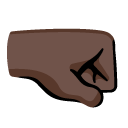


Appearance varies by platform and device. Google Noto, Twemoji, and OpenMoji are open-source.