🫸🏿
The Emoji
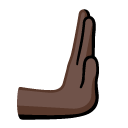
Rightwards Pushing Hand: Dark Skin Tone
U+1FAF8 U+1F3FF · :rightwards_pushing_hand_dark_skin_tone:
Trend 58
Meaning layers
- interpretation
- Used to signal 'not today', 'back off', 'talk to the hand', or to assert boundaries in a confident, unbothered way. Often paired with dismissal or clapping back at drama.
- tiktok usage
- Appears in videos where creators dramatically push away negativity, bad vibes, or toxic people — often used in choreography or lip-sync transitions.
- irony level
- 4 / 10
Platform meanings
- meaning
- A dramatic rejection or dismissal gesture used in transitions, reactions, and boundary-assertion content.
- trend usage
- Used in POV videos, 'push away the bad vibes' rituals, and choreography transitions.
- hashtags
- #boundaries#nottoday#talktothehand#pushingaway#unbothered
- virality score
- 62 / 100
Cultural meanings
🇺🇸
Western / Gen-Z
Core part of the boundary-setting and 'main character energy' lexicon — used constantly to dismiss negativity, bad advice, or unwanted attention online.
🇵🇰
Pakistan & India
Used to literally signal 'stay back' or 'don't come here' in casual chats, also carries the meaning of rejecting bad news or gossip in group conversations.
🌍
Middle East
Interpreted as a gesture of refusal or warding off, sometimes combined with religious sentiments like rejecting evil or bad energy.
🌐
Global Neutral
Universally understood as a pushing or blocking gesture, making its intent of rejection or stopping clearly readable across most cultures.
🇧🇩
Bangladesh
Used in informal chats to tell someone to stop bothering the sender, or to physically signal 'back off' in a non-confrontational way.
🇱🇰
Sri Lanka
Often used in youth messaging to dismiss gossip or drama in group chats, seen as a modern digital equivalent of ignoring someone.
🇨🇳
China
The pushing gesture is understood but the skin tone modifier may draw attention; used among younger netizens to signal 'don't come near me' or rejection of bad ideas.
🇯🇵
Japan
Japanese users may interpret this as a 'dame' (no/stop) gesture; the directional specificity is noted and it may be used in contexts of politely declining or refusing.
🇰🇷
South Korea
Popular in K-pop fan communities to push away haters or anti-fans, often used humorously in fan threads and reaction posts.
🇹🇼
Taiwan
Used in youth digital culture to dismiss drama or block negative energy, similar to western Gen Z usage with a local flair.
🇭🇰
Hong Kong
Used in Cantonese-language chats to mean 'get away' or 'don't bother me', resonates with local directness in communication style.
🇵🇭
Philippines
Used to tell someone 'wag na' (stop it/enough) or to push away drama in barkada (friend group) chats, very playful in tone.
🇮🇩
Indonesia
Commonly used to reject unsolicited opinions or bad suggestions in group chats, also used in youth content creation for comedic effect.
🇹🇭
Thailand
Interpreted as a fun rejection gesture; used in social media to push away stress, bad vibes, or unwanted romantic advances.
🇻🇳
Vietnam
Used by younger generations to signal dismissal or 'don't talk to me about that' in messaging apps, especially Zalo and Facebook Messenger.
🇲🇾
Malaysia
Used across multicultural friend groups to signal 'no thank you' or to push away drama, fits well with local informal texting culture.
🇸🇦
Saudi Arabia
Used to signal refusal or to ward off something unwanted; cultural modesty norms mean it's mostly used among same-gender friend groups.
🇦🇪
UAE
Popular among youth in Dubai and Abu Dhabi for dismissing drama in expat and local social circles, often mixed with English slang.
🇪🇬
Egypt
Used in Egyptian Arabic slang contexts to say 'روح' (go away) or to dismiss someone dramatically, popular in meme culture.
🇹🇷
Turkey
Used among Turkish youth to signal rejection of bad ideas or toxic behavior, often paired with local slang for emphasis.
🇮🇷
Iran
Younger Iranians use it on Instagram and Telegram to push away negativity or to reject gossip, sometimes carries a defiant connotation.
🇳🇬
Nigeria
Very popular in Nigerian internet culture — used in Afrobeats content, Naija Twitter, and WhatsApp to dismiss haters or bad energy with swagger.
🇿🇦
South Africa
Used across South African social media to dismiss drama or toxic behavior, resonates well given the emoji's dark skin tone representation.
🇬🇧
UK & Ireland
British and Irish users use it as a cheeky 'off you go' or 'not having it' gesture, often with dry humor or sarcasm.
🇫🇷
France
Used to signal 'laisse tomber' (forget it/drop it) energy — a digital brushing off of nonsense or boring drama.
🇩🇪
Germany
Germans use it quite literally to mean 'stop' or 'move back', less ironic than in English-speaking cultures but understood in youth digital spaces.
🇪🇸
Spain & Italy
Interpreted with dramatic flair — used to push away bad energy, bad food choices, or unwanted relationship drama with theatrical emphasis.
🇧🇷
Brazil
Brazilians use it widely on TikTok and Twitter to dismiss drama or reject haters, often with high-energy captions and humor.
🇲🇽
Mexico
Used to tell someone 'ya cállate' (stop talking) or to push away drama in a playful but firm way in Mexican internet culture.
🌎
Latin America
Across Latin America, the emoji signals rejection of negativity or a confident 'no' — fits well with the regional value of standing your ground.
🇦🇺
Australia & NZ
Used in a very casual, laid-back way to say 'nah mate' or 'not interested', fits into Australian bluntness and NZ humor culture.
How its meaning shifted
- 2010
This emoji did not exist in 2010; gesture-based emojis were limited to basic hand symbols with no directional specificity or skin tone modifiers.
- 2015
Still non-existent; the Unicode standard had not yet introduced directional pushing hands — users relied on 🖐️ or ✋ for similar stop/block meanings.
- 2020
Not yet introduced; Unicode 14.0 debuted in 2021, so directional pushing hands were still absent from the emoji keyboard.
- 2026
Firmly established in digital boundary-setting language — widely used by Gen Z and Gen Alpha for dismissal, self-care content, and assertive social media communication with strong cultural representation value.
See it on every platform
Compare with
Adjacent emojis
- Often confused with
- backhand index pointing rightraised back of handwaving hand
Share & embed
Frequently asked
01What does the 🫸🏿 Rightwards Pushing Hand: Dark Skin Tone emoji mean?
A hand with dark skin tone pushing or gesturing to the right, as if stopping something or pushing away an object or person.
02What does 🫸🏿 mean on TikTok?
A dramatic rejection or dismissal gesture used in transitions, reactions, and boundary-assertion content.
03What does 🫸🏿 mean on WhatsApp?
Telling someone to back off or stop, used in group chats to dismiss a bad idea or joke.
04What does 🫸🏿 mean in Gen-Z slang?
Used to signal 'not today', 'back off', 'talk to the hand', or to assert boundaries in a confident, unbothered way. Often paired with dismissal or clapping back at drama.
05Is the 🫸🏿 emoji safe to use?
Setting personal boundaries, rejecting negativity, playfully dismissing someone, or representing the physical action of pushing something to the right.
06What does 🫸🏿 mean in texting?
Physically mimics the act of pushing something away, which psychologically signals self-protection, personal space assertion, and confident deflection. The dark skin tone adds cultural specificity and representation.
07What is the shortcode for 🫸🏿?
The shortcode for Rightwards Pushing Hand: Dark Skin Tone is :rightwards_pushing_hand_dark_skin_tone:
08What does 🫸🏿 mean in dating?
Can be used playfully to 'push away' a flirty comment while secretly inviting more — a teasing 'stop it' gesture.
Safety & usage
- Safe meaning
- Setting personal boundaries, rejecting negativity, playfully dismissing someone, or representing the physical action of pushing something to the right.
- Caution
- Can be used aggressively to dismiss or dehumanize someone in an online argument, or in gang/threat contexts to signal someone being 'pushed out'.
Generally safe; in rare cases combined with threatening language it could escalate the aggressive intent of a message. The dark skin tone is specifically representative and should not be used inappropriately across racial contexts.
How it looks across platforms

Appearance varies by platform and device. Google Noto, Twemoji, and OpenMoji are open-source.