🦺
The Emoji
Safety Vest
U+1F9BA · :safety_vest:
Trend 38
Meaning layers
- interpretation
- Used to signal overprotectiveness, helicopter parenting, or being excessively cautious. Also used humorously to say 'I'm built different' or to mock safety-obsessed behavior.
- tiktok usage
- Appears in 'protective friend' content, safety PSA parodies, and as a joke about someone who takes zero risks in life or relationships.
- irony level
- 7 / 10
Platform meanings
- meaning
- Symbol of overprotection, safety culture parody, and 'built different' risk-averse personality jokes.
- trend usage
- Used in videos about overly cautious behavior, construction worker content, and ironic workplace safety POVs.
- hashtags
- #safetyfirst#constructionlife#protectivevibes#safetyvest#workercore
- virality score
- 42 / 100
Cultural meanings
🇺🇸
Western / Gen-Z
Used ironically to describe overly cautious, risk-averse behavior or to mock 'safety theater.' Also used with genuine blue-collar pride in workercore aesthetics.
🇵🇰
Pakistan & India
Primarily literal — represents construction workers, road crews, and daily wage laborers who wear this gear. Occasionally used to signal hard work and sacrifice.
🌍
Middle East
Associated with the large construction and infrastructure workforce, often representing migrant workers and labor dignity in social commentary.
🌐
Global Neutral
Universally recognized as a safety symbol for physical labor, construction, and hazard awareness across all cultures.
🇧🇩
Bangladesh
Strongly associated with the garment and construction industries; represents the working class and occupational safety conversations in labor circles.
🇱🇰
Sri Lanka
Used in contexts of road safety and construction work; also appears in awareness campaigns about occupational hazards.
🇨🇳
China
Represents the massive construction and infrastructure workforce; used in discussions about worker safety and urbanization.
🇯🇵
Japan
Associated with precision safety culture and construction protocols; Japan's strong safety ethos makes this a highly respected symbol.
🇰🇷
South Korea
Linked to construction culture and hardworking 'kkondae' (older worker) imagery; also appears in industrial safety campaigns.
🇹🇼
Taiwan
Used in occupational safety messaging and construction contexts, reflecting Taiwan's developed infrastructure sector.
🇭🇰
Hong Kong
Associated with construction workers and the city's constant building projects; used empathetically in labor rights discussions.
🇵🇭
Philippines
Represents OFW (Overseas Filipino Workers) in construction abroad and domestic laborers; carries deep connotations of sacrifice and hard work.
🇮🇩
Indonesia
Used in construction and manufacturing contexts; reflects Indonesia's growing infrastructure development and labor safety awareness.
🇹🇭
Thailand
Seen in construction and road safety content; also used in tourist safety campaigns in outdoor adventure contexts.
🇻🇳
Vietnam
Represents the growing construction sector and manufacturing workforce; used in occupational health discussions.
🇲🇾
Malaysia
Common in construction and logistics content; Malaysia's large foreign worker construction force gives this emoji a labor rights dimension.
🇸🇦
Saudi Arabia
Heavily associated with the massive construction boom and the large migrant labor workforce that powers Saudi infrastructure projects.
🇦🇪
UAE
Symbolic of the Gulf construction workforce; used in labor rights conversations and infrastructure pride content in Dubai and Abu Dhabi contexts.
🇪🇬
Egypt
Represents manual labor, construction, and road work; used with pride by tradespeople and blue-collar workers on social platforms.
🇹🇷
Turkey
Associated with construction and manufacturing industries; Turkey's rapid urbanization makes this a common blue-collar symbol.
🇮🇷
Iran
Represents construction and industrial work; used in labor-related social content and occupational safety discussions.
🇳🇬
Nigeria
Used in construction and road safety content; also appears in motivational posts about hard work and hustle culture.
🇿🇦
South Africa
Associated with mine safety, construction, and road crews; carries significant weight in workplace safety advocacy given the country's mining history.
🇬🇧
UK & Ireland
Used in construction and infrastructure contexts; also appears ironically in 'health and safety gone mad' jokes that are culturally popular in British humor.
🇫🇷
France
Linked to public works and road safety; also used in protests and labor movement content, as high-vis vests became iconic symbols of the Gilets Jaunes movement.
🇩🇪
Germany
Strongly associated with precision safety standards, construction, and engineering culture; Germany's rigorous workplace safety culture makes this highly literal.
🇪🇸
Spain & Italy
Used in construction and outdoor labor contexts; also appears in discussions about migrant worker rights and labor conditions in Southern Europe.
🇧🇷
Brazil
Represents construction workers and the booming infrastructure sector; used with pride in blue-collar communities and labor rights advocacy.
🇲🇽
Mexico
Associated with construction, road work, and migrant labor narratives; used in both literal safety content and social commentary about workers' rights.
🌎
Latin America
Broadly represents the construction and informal labor sectors across Latin America; carries connotations of hard work and economic survival.
🇦🇺
Australia & NZ
Strong association with tradie (tradesperson) culture — a celebrated identity in both countries. Used with genuine pride and humor in tradie communities.
How its meaning shifted
- 2010
The emoji did not exist yet. Safety vests were discussed online only in literal occupational safety or cycling contexts using text or photos.
- 2015
Still pre-emoji existence. High-visibility gear was mainly discussed in cycling forums, construction communities, and workplace safety literature online.
- 2020
Newly introduced emoji gaining traction post-Gilets Jaunes movement in France; used to represent protest, worker solidarity, and occupational safety. Early ironic use emerging.
- 2026
Established as a dual-use emoji — literal for blue-collar and safety professionals, ironic for Gen Z jokes about risk aversion, workercore aesthetics, and overprotective behavior.
See it on every platform
Compare with
Adjacent emojis
- Often confused with
- orange heartshopping bagslife preserver
Share & embed
Frequently asked
01What does the 🦺 Safety Vest emoji mean?
A bright orange or yellow reflective safety vest worn by construction workers, road crews, cyclists, and emergency personnel to increase visibility in hazardous environments.
02What does 🦺 mean on TikTok?
Symbol of overprotection, safety culture parody, and 'built different' risk-averse personality jokes.
03What does 🦺 mean on WhatsApp?
Sent to indicate someone is being cautious or playing it safe in a situation.
04What does 🦺 mean in Gen-Z slang?
Used to signal overprotectiveness, helicopter parenting, or being excessively cautious. Also used humorously to say 'I'm built different' or to mock safety-obsessed behavior.
05Is the 🦺 emoji safe to use?
Represents workplace safety, protective gear, construction work, and cautious behavior.
06What does 🦺 mean in texting?
The safety vest taps into primal feelings of protection and visibility — the psychological need to be seen and kept safe. It can evoke both reassurance and anxiety depending on context.
07What is the shortcode for 🦺?
The shortcode for Safety Vest is :safety_vest:
08What does 🦺 mean in dating?
Rarely used flirtatiously, but may appear as 'you're my safety vest 🦺' meaning someone makes you feel protected or grounded.
Safety & usage
- Safe meaning
- Represents workplace safety, protective gear, construction work, and cautious behavior.
- Caution
- Rarely used in toxic contexts; occasionally misappropriated in mocking content about immigrant or migrant construction laborers.
The emoji can be used insensitively when mocking blue-collar workers or migrant labor communities. Context of derision should be flagged in moderation.
How it looks across platforms
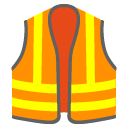


Appearance varies by platform and device. Google Noto, Twemoji, and OpenMoji are open-source.