🧑🏻🎤
The Emoji
Singer: Light Skin Tone
U+1F9D1 U+1F3FB U+200D U+1F3A4 · :singer_light_skin_tone:
Trend 58
Meaning layers
- interpretation
- Used to signal main character energy, performative confidence, or to announce that someone is about to say something dramatic or attention-grabbing. Often deployed as a self-hype emoji.
- tiktok usage
- Placed in bios or captions when someone is showing off a performance, singing reel, or presenting themselves as the main event. Also used ironically when someone is being extra or overdramatic.
- irony level
- 5 / 10
Platform meanings
- meaning
- Represents performer energy, used in music content, lip-sync videos, or any content where the creator is putting on a show.
- trend usage
- Appears in singer/artist reveal trends, 'POV you're a rockstar' formats, and aesthetic music content. Also used ironically in drama storytimes.
- hashtags
- #singervibes#performanceready#musicartist#maincharacter#rockstarenergy
- virality score
- 62 / 100
Cultural meanings
🇺🇸
Western / Gen-Z
Widely used to express performer identity, main character energy, or dramatic self-presentation — both sincerely and ironically in meme culture.
🇵🇰
Pakistan & India
Used by aspiring singers, Bollywood fans, and music enthusiasts to express musical passion or admiration for artists. Also common on social media for singing reels and cover videos.
🌍
Middle East
Associated with musical talent and entertainment; used in contexts celebrating local singers or sharing musical content, though cultural norms around public performance may nuance its interpretation.
🌐
Global Neutral
Universally recognized as representing a singer or musical performer, used across cultures to signal music-related content or creative identity.
🇧🇩
Bangladesh
Used by music fans and aspiring artists to show love for local folk music (Baul), Bangladeshi pop, or Bollywood — common in music-sharing communities.
🇱🇰
Sri Lanka
Associated with local music culture, used by fans of Sinhala or Tamil music to express support for performers or share musical content.
🇨🇳
China
Used in music-related contexts, particularly among fans of C-pop idols or talent show contestants. Heavily present in fan culture content on platforms like Weibo.
🇯🇵
Japan
Common in idol culture communities and J-pop fan spaces. Used to express admiration for performers or to mark oneself as a music creative.
🇰🇷
South Korea
Deeply tied to K-pop culture — used to celebrate idols, vocal performances, and music show moments. Common in fan accounts and music discussion spaces.
🇹🇼
Taiwan
Used in Mandopop and local music culture contexts, often by fans of Taiwanese artists or aspiring performers sharing their work.
🇭🇰
Hong Kong
Associated with Cantopop heritage and modern music culture — used by fans and artists alike to signal musical identity or celebrate performances.
🇵🇭
Philippines
Highly popular given the country's strong music culture — used to represent OPM (Original Pilipino Music) love, cover singers, and karaoke enthusiasm.
🇮🇩
Indonesia
Used across music communities, particularly for local pop and dangdut culture. Common among aspiring singers sharing content on TikTok and Instagram.
🇹🇭
Thailand
Associated with Thai pop and indie music scenes, used by fans and creators to express musical identity or promote performances.
🇻🇳
Vietnam
Used in V-pop and music fan communities to celebrate singers, share covers, or mark musical content on social platforms.
🇲🇾
Malaysia
Common among music fans and creators, used to represent local Malay pop or indie scenes, and to signal a love of performance.
🇸🇦
Saudi Arabia
Usage is growing with the liberalization of entertainment sectors — increasingly found in music event promotions and among younger Saudi music fans.
🇦🇪
UAE
Common in the UAE's diverse, cosmopolitan social media scene — used by expats and locals alike to celebrate musical performances and cultural events.
🇪🇬
Egypt
Associated with Egyptian music's rich tradition — used by fans of pop, shaabi, and classical Arabic music to express musical passion.
🇹🇷
Turkey
Used in Turkish pop (Türkpop) and indie music communities to show artist admiration or personal musical identity.
🇮🇷
Iran
Used cautiously in contexts where music performance is sensitive — more common in diaspora communities and private social spaces to express musical love.
🇳🇬
Nigeria
Tied to Afrobeats and Afropop culture — used enthusiastically by fans and artists to celebrate Nigerian music's global rise.
🇿🇦
South Africa
Associated with Amapiano, house, and local pop music culture — used to celebrate artists and express musical pride.
🇬🇧
UK & Ireland
Used broadly in music discussions, gig promotion, and pop culture commentary — also deployed ironically in dry humor contexts typical of British internet culture.
🇫🇷
France
Used in music fan communities and by artists — also appears in ironic commentary about someone being overly dramatic or theatrical, fitting French wit.
🇩🇪
Germany
Used in music communities and festival culture discussions — relatively straightforward in meaning with some ironic use in online commentary.
🇪🇸
Spain & Italy
Strongly associated with passionate musical expression — used enthusiastically in music fan spaces and to celebrate vocal performances.
🇧🇷
Brazil
Heavily used in MPB, sertanejo, and funk fan communities — Brazilians use it expressively to hype up performers and share musical content.
🇲🇽
Mexico
Common in regional Mexican music and pop fan spaces — used to show pride in artists or signal personal musical aspirations.
🌎
Latin America
Broadly used across Latin American cultures to celebrate singers, share music content, and express performer identity in music-rich communities.
🇦🇺
Australia & NZ
Used in music fan communities and casually in social media — also appears in dry, ironic humor contexts when calling out dramatic behavior.
How its meaning shifted
- 2010
This specific emoji did not exist yet — emoji skin tone modifiers were not introduced until 2015, so this variant had no usage.
- 2015
Introduced as part of Unicode 8.0's skin tone expansion — early usage was primarily technical validation and novelty, with some adoption by music fans wanting personal representation.
- 2020
Gained mainstream traction as diverse emoji usage normalized. Widely used in TikTok music content, singer bios, and performance-related social media posts during the pandemic music boom.
- 2026
Established emoji in music and performance culture online — used both sincerely by artists and creators, and ironically in meme culture to signal drama, theatrics, and main character energy.
See it on every platform
Adjacent emojis
- Often confused with
- person dancingmageperson with crown
- Can replace
- microphonemusical notestar struck
Share & embed
Frequently asked
01What does the 🧑🏻🎤 Singer: Light Skin Tone emoji mean?
A person with a light skin tone depicted as a singer or rock star, typically shown with a microphone and stylized hair or clothing associated with musical performance.
02What does 🧑🏻🎤 mean on TikTok?
Represents performer energy, used in music content, lip-sync videos, or any content where the creator is putting on a show.
03What does 🧑🏻🎤 mean on WhatsApp?
Signals that someone is in a musical or performative mood, or is sharing something music-related.
04What does 🧑🏻🎤 mean in Gen-Z slang?
Used to signal main character energy, performative confidence, or to announce that someone is about to say something dramatic or attention-grabbing. Often deployed as a self-hype emoji.
05Is the 🧑🏻🎤 emoji safe to use?
A representation of a singer with light skin tone, used to express musical identity, performance enthusiasm, or creative personality.
06What does 🧑🏻🎤 mean in texting?
Symbolizes the desire to be seen and heard, tapping into performance identity and the human need for creative validation. Using this emoji often correlates with extroverted self-presentation or aspirational identity.
07What is the shortcode for 🧑🏻🎤?
The shortcode for Singer: Light Skin Tone is :singer_light_skin_tone:
08What does 🧑🏻🎤 mean in dating?
Used by someone who wants to show off their personality or talents — a subtle flex that says 'I'm interesting and you should pay attention to me.' Can be a playful way to say 'come watch me perform.'
Safety & usage
- Safe meaning
- A representation of a singer with light skin tone, used to express musical identity, performance enthusiasm, or creative personality.
- Caution
- Rarely used in toxic contexts — can be deployed sarcastically to mock someone being dramatic or attention-seeking, but seldom carries genuine malice.
No significant safety concerns. In very rare cases, the skin tone specification could be used in racially charged comparisons, but this is not a common usage pattern.
How it looks across platforms
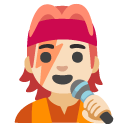


Appearance varies by platform and device. Google Noto, Twemoji, and OpenMoji are open-source.