🧑🏾🎤
The Emoji
Singer: Medium-dark Skin Tone
U+1F9D1 U+1F3FE U+200D U+1F3A4 · :singer_mediumdark_skin_tone:
Trend 68
Meaning layers
- interpretation
- Used to flex music taste, signal main character energy, or hype up anyone who just dropped a banger or performed well in any context.
- tiktok usage
- Appears in lip-sync videos, 'perform your truth' trends, and comment sections when someone's voice or vibe is elite-level.
- irony level
- 4 / 10
Platform meanings
- meaning
- Represents performers, musical moments, and anyone serving main character energy in a video.
- trend usage
- Used in lip-sync duets, singing challenge replies, and 'drop your villain arc' aesthetic trends.
- hashtags
- #singer#maincharacter#musicvibes#performancecheck#artistlife
- virality score
- 72 / 100
Cultural meanings
🇺🇸
Western / Gen-Z
Heavily used to signal artistic identity, musical flex, or to crown someone as the star of a situation. Carries strong main character and performer energy.
🇵🇰
Pakistan & India
Used to celebrate Bollywood singers, classical vocalists, and rising music stars on social media. Common in posts celebrating musical talent shows like Indian Idol or Coke Studio.
🌍
Middle East
Associated with Arabic music performers and nasheed artists. Used respectfully to celebrate talented vocalists at weddings or cultural events.
🌐
Global Neutral
Universally understood as representing a singer or musical performer, used across languages to indicate musical content or artist identity.
🇧🇩
Bangladesh
Used in support of local music scenes, including Bangla bands and folk singers. Common in social media posts celebrating local talent competitions.
🇱🇰
Sri Lanka
Associated with Sinhala and Tamil music performers. Used in fan pages and social media to celebrate local pop and classical singers.
🇨🇳
China
Used to celebrate C-pop idols and talent show contestants, especially popular during reality music competition seasons on platforms like Weibo.
🇯🇵
Japan
Associated with J-pop idols and karaoke culture. Often used in posts about idol groups, anime music, and professional singing competitions.
🇰🇷
South Korea
Deeply connected to K-pop culture — used to hype idols, reference vocal line members, and celebrate artist comebacks on platforms like Weverse and Twitter.
🇹🇼
Taiwan
Used in support of Mandopop artists and indie music scenes. Common in fan community posts on PTT and Instagram.
🇭🇰
Hong Kong
Associated with Cantopop legends and modern HK artists. Used nostalgically for classic artists and to support contemporary music scenes.
🇵🇭
Philippines
Filipinos, known for strong singing culture, use this frequently to celebrate OPM artists, choirs, and the country's internationally acclaimed vocalists.
🇮🇩
Indonesia
Used to celebrate dangdut, pop Indonesia, and indie artists. Common in idol show fan communities and music festival posts.
🇹🇭
Thailand
Associated with T-pop and Thai idol culture. Used heavily in fan communities supporting groups from labels like GMM Grammy.
🇻🇳
Vietnam
Used in V-pop fan spaces and to celebrate talented contestants on Vietnamese music reality shows and talent competitions.
🇲🇾
Malaysia
Used across Malay, Chinese, and Indian music communities in Malaysia to celebrate local pop stars and festival performances.
🇸🇦
Saudi Arabia
While music was historically restricted, the post-Vision 2030 cultural shift means this emoji is increasingly used to celebrate concerts and Saudi music artists.
🇦🇪
UAE
Used in cosmopolitan Dubai and Abu Dhabi contexts to celebrate international concerts, local Arab pop artists, and multicultural music events.
🇪🇬
Egypt
Associated with Egyptian pop music icons and classic Arabic vocal traditions. Used to celebrate stars like Amr Diab and contemporary pop artists.
🇹🇷
Turkey
Used to celebrate Turkish pop, arabesk, and folk music artists. Common in fan pages for major Turkish music competition shows.
🇮🇷
Iran
Used in diaspora communities and within Iran to celebrate Persian music artists, often in the context of underground or international performances.
🇳🇬
Nigeria
Heavily associated with Afrobeats culture — used to hype Afrobeats artists, celebrate local music talent, and flex music knowledge in Nigerian social media spaces.
🇿🇦
South Africa
Connected to Amapiano, Afropop, and kwaito music cultures. Used to celebrate South African artists on platforms like Twitter/X.
🇬🇧
UK & Ireland
Used in grime, UK garage, indie, and pop contexts. Common in music fan communities and when hyping local artists or pub open mic nights.
🇫🇷
France
Associated with chanson française, French pop, and the Paris music scene. Used to celebrate French artists and international concerts in France.
🇩🇪
Germany
Used in electronic music, indie, and pop contexts. Common in posts about festivals like Lollapalooza Berlin and celebrating German music artists.
🇪🇸
Spain & Italy
Associated with flamenco, reggaeton, and Mediterranean pop. Used to celebrate local musical traditions and international Latin music crossovers.
🇧🇷
Brazil
Strongly connected to sertanejo, funk, pagode, and MPB music scenes. Used enthusiastically to celebrate Brazil's rich and diverse musical culture.
🇲🇽
Mexico
Associated with mariachi, regional Mexican music, and Latin pop. Used widely to celebrate Mexican artists and music traditions.
🌎
Latin America
Broadly used across Latin America to celebrate the region's vibrant music scene including salsa, cumbia, bachata, and reggaeton artists.
🇦🇺
Australia & NZ
Used in indie, pop, and Aboriginal music contexts. Common in posts celebrating local artists, music festivals like Splendour in the Grass, and pub gigs.
How its meaning shifted
- 2010
Emoji did not exist yet; singer concepts were represented by basic music note emojis or the generic person emoji.
- 2015
Early stages of emoji diversity conversations — predecessor singer emojis existed but without skin tone support, limiting representation.
- 2020
Gained significant traction post-Unicode diversity update, used widely during COVID-era virtual concerts and TikTok music boom.
- 2026
Mainstream across all age groups as a performance identity marker; heavily used in AI music era discussions and artist authenticity conversations.
See it on every platform
Adjacent emojis
- Often confused with
- person in tuxedoperforming artsstudio microphone
- Can replace
- microphonemusical notestar struck
Share & embed
Frequently asked
01What does the 🧑🏾🎤 Singer: Medium-dark Skin Tone emoji mean?
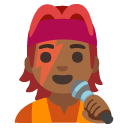
A person with medium-dark skin tone depicted as a singer or musical performer, often shown with a microphone and stylized hair.
02What does 🧑🏾🎤 mean on TikTok?
Represents performers, musical moments, and anyone serving main character energy in a video.
03What does 🧑🏾🎤 mean on WhatsApp?
Signals someone is in a musical or performative mood, often sent after sharing a voice note or song.
04What does 🧑🏾🎤 mean in Gen-Z slang?
Used to flex music taste, signal main character energy, or hype up anyone who just dropped a banger or performed well in any context.
05Is the 🧑🏾🎤 emoji safe to use?
Represents musical performers and artistic expression. Positive, celebratory, and identity-affirming in almost all contexts.
06What does 🧑🏾🎤 mean in texting?
Evokes feelings of self-expression, confidence, and performance identity. People use it to externalize creative ambition or celebrate artistic achievement in themselves or others.
07What is the shortcode for 🧑🏾🎤?
The shortcode for Singer: Medium-dark Skin Tone is :singer_mediumdark_skin_tone:
08What does 🧑🏾🎤 mean in dating?
Sent to someone whose voice, vibe, or energy is giving rockstar — implies you're obsessed with their 'performance' in life or conversation.
Safety & usage
- Safe meaning
- Represents musical performers and artistic expression. Positive, celebratory, and identity-affirming in almost all contexts.
- Caution
- Extremely rare misuse — occasionally used sarcastically to mock someone being overly dramatic or attention-seeking.
No significant toxic usage patterns identified. The medium-dark skin tone modifier promotes diversity representation without controversy.
How it looks across platforms


Appearance varies by platform and device. Google Noto, Twemoji, and OpenMoji are open-source.