🦹🏿
The Emoji
Supervillain: Dark Skin Tone
U+1F9B9 U+1F3FF · :supervillain_dark_skin_tone:
Trend 72
Meaning layers
- interpretation
- Used to own being the 'bad guy' in a situation, embracing chaotic or morally grey behavior with pride, or jokingly claiming villain status when doing something mischievous or self-serving.
- tiktok usage
- Appears in 'villain era' content where creators celebrate setting boundaries, cutting off toxic people, or embracing unbothered selfishness. Often used in transition videos revealing a 'glow up' through embracing a darker aesthetic.
- irony level
- 7 / 10
Platform meanings
- meaning
- Represents the 'villain era' aesthetic — being unbothered, self-prioritizing, and done with caring what others think.
- trend usage
- Used in transition videos, 'villain arc' montages, dark academia and baddie aesthetics, and 'I don't owe anyone kindness' commentary videos.
- hashtags
- #VillainEra#VillainArc#DarkSkinTok#UnbotheredVibes#BadGuyEnergy
- virality score
- 74 / 100
Cultural meanings
🇺🇸
Western / Gen-Z
Universally understood as the 'villain era' symbol — reclaiming the villain identity as empowering, unbothered, and self-prioritizing. The dark skin tone adds specific representation value celebrated in Black communities online.
🇵🇰
Pakistan & India
Gaining traction in urban digital spaces as a symbol of being done with people-pleasing and embracing a confident, no-nonsense persona. Bollywood villain aesthetics create strong cultural resonance.
🌍
Middle East
Used by younger social media users in private contexts to represent bold, rule-breaking confidence. The superhero/supervillain genre is popular via global streaming, giving the emoji recognizable context.
🌐
Global Neutral
Universally interpretable as representing a comic book or movie villain figure, with the dark skin tone recognized as a representation choice for diversity.
🇧🇩
Bangladesh
Primarily understood through the lens of Bollywood and Hollywood villain tropes among younger users; the villain era meme context is emerging via TikTok and Instagram.
🇱🇰
Sri Lanka
Associated with dramatic fictional villains from Tamil and Sinhala cinema as well as global superhero content; used humorously among youth for petty confident behavior.
🇨🇳
China
Interpreted through the lens of xia (chivalric hero-villain) tropes in wuxia and gaming culture. The dark skin tone representation is less culturally prominent but the villain concept resonates strongly in gaming communities.
🇯🇵
Japan
Connected to 'rival' and 'antagonist' archetypes in anime and manga culture. Used in gaming and otaku communities to signal alignment with a powerful, morally complex antagonist character.
🇰🇷
South Korea
Linked to K-drama villain aesthetics and 'villain-coded' character fan communities. Used by fans of morally grey K-pop antagonist concepts and dark concept idol groups.
🇹🇼
Taiwan
Used in gaming, anime, and idol fan communities to represent villain character alignment. The diversity representation aspect is noted and respected in progressive online circles.
🇭🇰
Hong Kong
Associated with gangster and triad film villain aesthetics alongside Western superhero villain content. Used by youth as a symbol of bold, fearless energy.
🇵🇭
Philippines
Used widely in meme culture and hugot (emotional) content to represent someone going through a 'villain arc' after heartbreak or betrayal. The dark skin tone resonates with Filipino colorism discourse.
🇮🇩
Indonesia
Used by Gen Z in villain aesthetic content on TikTok and Instagram. The concept of a confident, unbothered villain persona translates well into Indonesian youth internet culture.
🇹🇭
Thailand
Popular in gaming and cosplay communities. Used in dark aesthetic content and among fans of morally complex antagonist characters in Thai dramas and anime.
🇻🇳
Vietnam
Primarily used in gaming contexts and among anime fans. The villain era meme culture is spreading via TikTok among younger Vietnamese users.
🇲🇾
Malaysia
Used in meme culture and gaming contexts. The villain arc concept resonates particularly in multicultural Malaysian digital spaces as a symbol of bold self-confidence.
🇸🇦
Saudi Arabia
Primarily understood via global gaming and superhero content. Used carefully in younger, more private social media spaces to signal confidence without explicitly challenging social norms.
🇦🇪
UAE
Used by cosmopolitan youth in Dubai and Abu Dhabi social media, the villain aesthetic fits the luxury-meets-edge content culture popular on Instagram and TikTok in the region.
🇪🇬
Egypt
Associated with bold, dramatic villain characters from Egyptian cinema and global superhero franchises. Used by youth in meme culture to express unbothered confidence.
🇹🇷
Turkey
Connected to 'kötü adam' (bad guy) villain archetypes in Turkish drama and global content. Used in gaming communities and meme culture among younger Turks.
🇮🇷
Iran
Used mostly in gaming and anime fan communities. The villain era concept is understood through Persian storytelling's morally complex anti-hero tradition.
🇳🇬
Nigeria
Strongly resonates as the dark skin tone gives explicit representation significance. Used in Afrobeats culture, 'big bad energy' content, and as a symbol of unapologetic Black excellence and confidence.
🇿🇦
South Africa
The dark skin tone is particularly meaningful in South African digital spaces. Used to celebrate Black confidence, unapologetic power, and villain-coded aesthetics within Afro-futurism and township culture content.
🇬🇧
UK & Ireland
Used in British internet culture to signal someone is being 'a bit of a menace' or embracing their cheeky, ruthless side. Fits UK drill and grime culture's villain aesthetic perfectly.
🇫🇷
France
Used in urban French youth culture connected to rap and trap aesthetics. The emoji fits the 'bad boy/bad girl' archetypes celebrated in French rap music videos.
🇩🇪
Germany
Used primarily in gaming communities and among superhero film fans. The villain era irony is understood in digital-native Gen Z spaces but less prevalent in mainstream use.
🇪🇸
Spain & Italy
Used by youth in gaming, meme culture, and dramatic self-expression on TikTok and Instagram. The villain aesthetic connects to Mediterranean dramatic storytelling traditions.
🇧🇷
Brazil
Hugely popular in Brazilian internet culture where 'villain era' aligns with 'modo vilão' content. Used in funk and trap aesthetics, and the dark skin tone carries strong racial pride significance.
🇲🇽
Mexico
Used in meme culture and drama discourse on Twitter/X and TikTok. The villain concept resonates with 'malandro' energy — charming bad guy archetypes in Latin culture.
🌎
Latin America
Broadly understood across Latin America as representing someone entering their unapologetic, powerful phase. Villain aesthetic content has strong traction on regional TikTok.
🇦🇺
Australia & NZ
Used in Gen Z meme culture and gaming communities similarly to US/UK usage. The villain era content thrives in Australian TikTok and the dark skin tone representation is positively acknowledged.
How its meaning shifted
- 2010
Emoji did not exist yet; villain characters were represented via text symbols like '>:)' or typed descriptions.
- 2015
Emoji existed in early superhero/villain sets but skin tone modifiers were not yet available. Villain emoji used mostly in comic book fan contexts and gaming discussions.
- 2020
Dark skin tone variant in regular use. Gained significant momentum during the COVID-era TikTok boom when 'villain era' content and 'unbothered' aesthetics exploded as coping mechanisms.
- 2026
Firmly established as the primary visual shorthand for 'villain era' self-identification. The dark skin tone specifically celebrated as meaningful representation within Black creator communities globally.
See it on every platform
Adjacent emojis
- Often confused with
- ninjaperson in tuxedomage
- Can replace
- smiling face with hornsskullfire
Share & embed
Frequently asked
01What does the 🦹🏿 Supervillain: Dark Skin Tone emoji mean?
A supervillain character with dark skin tone modifier, depicted wearing a mask or hood with a menacing expression, representing an evil or villainous persona.
02What does 🦹🏿 mean on TikTok?
Represents the 'villain era' aesthetic — being unbothered, self-prioritizing, and done with caring what others think.
03What does 🦹🏿 mean on WhatsApp?
Jokingly sent when someone admits to doing something sneaky, petty, or self-serving in a group chat.
04What does 🦹🏿 mean in Gen-Z slang?
Used to own being the 'bad guy' in a situation, embracing chaotic or morally grey behavior with pride, or jokingly claiming villain status when doing something mischievous or self-serving.
05Is the 🦹🏿 emoji safe to use?
Playful self-expression of confidence, mischief, or villain-coded aesthetics; widely used in gaming, pop culture, and ironic 'villain era' empowerment content.
06What does 🦹🏿 mean in texting?
Psychologically, adopting a 'villain' identity digitally serves as a healthy detachment from people-pleasing tendencies. It signals a reclaiming of personal power and rejection of societal expectations to always be 'good' or accommodating.
07What is the shortcode for 🦹🏿?
The shortcode for Supervillain: Dark Skin Tone is :supervillain_dark_skin_tone:
08What does 🦹🏿 mean in dating?
Used flirtatiously to hint at being a 'bad boy/bad girl' energy or someone who is dangerous but irresistibly attractive. Often paired with winking or fire emojis.
Safety & usage
- Safe meaning
- Playful self-expression of confidence, mischief, or villain-coded aesthetics; widely used in gaming, pop culture, and ironic 'villain era' empowerment content.
- Caution
- Could potentially be used in harassment contexts to threaten someone or to glorify genuinely harmful behavior under the guise of 'villain energy', though this is uncommon.
Generally safe. The skin tone modifier adds representation significance that should be respected. Avoid using dark-skin-tone villain emoji to stereotype or associate dark-skinned individuals with villainy — context and intent matter significantly.
How it looks across platforms
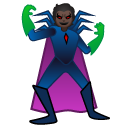


Appearance varies by platform and device. Google Noto, Twemoji, and OpenMoji are open-source.