🦹🏻
The Emoji
Supervillain: Light Skin Tone
U+1F9B9 U+1F3FB · :supervillain_light_skin_tone:
Trend 68
Meaning layers
- interpretation
- Used to represent someone embracing their chaotic, morally grey, or 'villain era' self. Often used with irony to signal that someone is doing something slightly devious, petty, or unapologetically self-serving — the 'villain era' aesthetic.
- tiktok usage
- Heavily used in 'villain era' trends where creators post about cutting off toxic people, prioritizing themselves, or doing something petty but satisfying. Also used in dark academia and anti-hero aesthetics.
- irony level
- 7 / 10
Platform meanings
- meaning
- Symbol of the 'villain era' — used when someone is done being nice and is choosing chaos, self-interest, or pettiness unapologetically.
- trend usage
- Appears in 'villain era' sound trends, 'POV: I'm the villain' skits, dark academia aesthetics, and 'I decided to stop being the main character and become the villain' narrative arcs.
- hashtags
- #villainera#nottheheroanymore#chaosmode#darkacademia#villainpov
- virality score
- 72 / 100
Cultural meanings
🇺🇸
Western / Gen-Z
Core emoji for the 'villain era' trend — universally understood as representing someone who is done people-pleasing and embracing their chaotic, self-prioritizing side. Heavily ironic and self-aware in usage.
🇵🇰
Pakistan & India
Used among urban youth in the context of being the 'baddie' or the antagonist in a situation; also used in Bollywood fan communities to reference iconic villain characters. Less tied to the Western 'villain era' trend.
🌍
Middle East
Used in youth pop culture contexts, often referencing dramatic TV villain characters or expressing a bold, unapologetic attitude. The skin tone modifier may prompt consideration of representation.
🌐
Global Neutral
Broadly understood as a villain or antagonist symbol; used in contexts of playful mischief, competitive scenarios, or dark humor across cultures regardless of local trends.
🇧🇩
Bangladesh
Primarily used among younger social media users familiar with global trends; associated with dramatic characters in media and playful expressions of doing something sneaky.
🇱🇰
Sri Lanka
Used in casual chats to express mischievous or cheeky behavior; also appears in local meme culture referencing antagonist characters in film and TV.
🇨🇳
China
Used on platforms like WeChat and Weibo to signal a 'big bad' energy or to reference villain characters in popular dramas and anime. The concept of a 'villain era' is emerging in Chinese youth internet culture as a similar self-empowerment meme.
🇯🇵
Japan
Strongly associated with anime villain aesthetics; used by fans of antagonist characters and in contexts where someone is adopting a 'cool villain' persona. Japan has a rich cultural appreciation for complex villain characters.
🇰🇷
South Korea
Popular in K-drama fan communities to reference villain characters; also used in the context of 'dark charm' aesthetics popular in K-pop. The 'villain era' concept resonates with Korean youth internet culture.
🇹🇼
Taiwan
Used in fandom contexts for villain characters in anime, dramas, and games. Also appears in meme culture where someone is jokingly acting as the antagonist in a social situation.
🇭🇰
Hong Kong
Appears in meme culture and pop culture discussions; used to reference villain characters in locally beloved dramas and films, as well as in global internet trend contexts.
🇵🇭
Philippines
Used in contexts related to teleserye (soap opera) villain characters and in Gen Z meme culture. The 'villain era' concept has been adopted in Filipino internet culture with local humor.
🇮🇩
Indonesia
Common in Indonesian meme culture and used among youth to express being in a bold, unapologetic mood. Also used in fandom contexts for antagonist character appreciation.
🇹🇭
Thailand
Used in Thai pop culture discussions and meme formats; associated with antagonist characters in Thai dramas (Lakorns) and in contexts of playful mischief.
🇻🇳
Vietnam
Appears in youth internet culture to express chaotic or mischievous energy; also used in fandom communities for villain character discussions.
🇲🇾
Malaysia
Used in casual digital communication among youth to express being in a petty or unbothered mood; also appears in local meme formats adapted from global 'villain era' trends.
🇸🇦
Saudi Arabia
Used among younger, globally connected users to express bold or rebellious attitudes; in conservative contexts, the villain framing may carry stronger negative connotations than in Western ironic use.
🇦🇪
UAE
Popular in cosmopolitan UAE youth culture, often referencing global internet trends. Used in contexts of bold self-expression and competitive ambition.
🇪🇬
Egypt
Used among Egyptian youth in social media contexts to express a dramatic, unbothered, or confrontational attitude. Also appears in meme culture referencing villain characters in popular media.
🇹🇷
Turkey
Used in Turkish social media to express being in a 'dark era' or adopting a villain persona; resonates with popular culture appreciation for complex antagonist characters in Turkish dramas (dizi).
🇮🇷
Iran
Used by digitally connected Iranian youth to express bold, defiant, or unapologetic attitudes online, often with ironic self-awareness similar to Western usage.
🇳🇬
Nigeria
Used in Nigerian internet culture (Naija Twitter/X) to express being done with drama and choosing chaos; fits into the broader 'no more nice guy' narrative popular in Nigerian social media humor.
🇿🇦
South Africa
Appears in South African Gen Z internet culture in contexts of bold self-expression and villain era trends; also used in fandom communities for international media.
🇬🇧
UK & Ireland
Used with dry British humor to ironically claim villain status after minor social transgressions. Fits well into British 'I'm not even sorry' comedic culture.
🇫🇷
France
Used among French youth in contexts of dramatic self-expression and pop culture references; the 'villain era' concept translates into French internet culture as being unapologetically oneself.
🇩🇪
Germany
Used in German meme culture for direct, no-nonsense expressions of doing something others might disapprove of; also popular in gaming communities for villain character discussions.
🇪🇸
Spain & Italy
Used in expressive, dramatic social media contexts; fits naturally into Southern European communication styles that embrace bold self-expression. Also popular in gaming and fandom communities.
🇧🇷
Brazil
Very popular in Brazilian internet culture (Twitter BR and TikTok BR) as part of the 'era da vilã' trend; Brazilians have enthusiastically adopted villain era content with their characteristic dramatic humor.
🇲🇽
Mexico
Used in Mexican internet culture to express a bold, rebellious attitude; also appears in telenovela fan communities referencing iconic villain characters.
🌎
Latin America
Broadly used across Latin American social media to express the 'villain era' concept, often fused with local telenovela culture and dramatic humor styles.
🇦🇺
Australia & NZ
Used with characteristic Australian/Kiwi sarcasm and dry humor to claim villain status after minor antisocial acts; fits into the local culture of self-deprecating humor with a chaotic edge.
How its meaning shifted
- 2010
This emoji did not exist in 2010; the supervillain emoji was introduced in Unicode 11.0 (2018), so there was no usage during this period.
- 2015
Still did not exist; prior to 2018, villain or mischievous sentiments were conveyed using 😈 (smiling face with horns) or 💀 (skull) as substitutes.
- 2020
Newly introduced emoji gaining traction in gaming communities, fandom spaces, and early adopters of the 'villain era' concept on TikTok and Twitter. Usage was growing but not yet mainstream.
- 2026
Firmly established as the primary 'villain era' emoji across all major platforms; deeply embedded in Gen Z internet culture as a self-empowerment symbol with heavy ironic usage, widely used in dark aesthetics and anti-hero narratives.
See it on every platform
Adjacent emojis
- Often confused with
- ninjaperson in tuxedodetective
- Can replace
- smiling face with hornsskullmasked face
Share & embed
Frequently asked
01What does the 🦹🏻 Supervillain: Light Skin Tone emoji mean?
A supervillain character with light skin tone, depicted wearing a mask or costume associated with villainy, often shown with a cape or dramatic pose. The light skin tone modifier applies the Fitzpatrick scale type 1-2 complexion.
02What does 🦹🏻 mean on TikTok?
Symbol of the 'villain era' — used when someone is done being nice and is choosing chaos, self-interest, or pettiness unapologetically.
03What does 🦹🏻 mean on WhatsApp?
Sent when someone is about to do something sneaky, petty, or devious — even if minor. Often used humorously between friends planning mischief.
04What does 🦹🏻 mean in Gen-Z slang?
Used to represent someone embracing their chaotic, morally grey, or 'villain era' self. Often used with irony to signal that someone is doing something slightly devious, petty, or unapologetically self-serving — the 'villain era' aesthetic.
05Is the 🦹🏻 emoji safe to use?
Playful expression of mischief, villain aesthetics, self-empowerment through 'villain era' framing, and fandom engagement with antagonist characters.
06What does 🦹🏻 mean in texting?
Psychologically, adopting a villain persona often reflects a healthy reclaiming of personal power and boundaries. The 'villain era' concept is tied to self-prioritization and rejection of people-pleasing behaviors, making this emoji emotionally cathartic for many users.
07What is the shortcode for 🦹🏻?
The shortcode for Supervillain: Light Skin Tone is :supervillain_light_skin_tone:
08What does 🦹🏻 mean in dating?
Used flirtatiously to signal that someone is a little dangerous, unpredictable, or 'bad for you' — which can be appealing. Might be sent after a bold or daring flirtatious message.
Safety & usage
- Safe meaning
- Playful expression of mischief, villain aesthetics, self-empowerment through 'villain era' framing, and fandom engagement with antagonist characters.
- Caution
- Could be used to glorify genuinely harmful, manipulative, or abusive behavior by framing it as a cool 'villain arc.' May also be used in harassment contexts to signal intentional harm.
While largely used ironically, this emoji can appear in contexts that romanticize manipulation, toxicity in relationships, or harmful behavior. The light skin tone modifier can occasionally attract commentary on racial representation in villain tropes. Monitor for use alongside harassment or bullying language.
How it looks across platforms
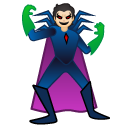


Appearance varies by platform and device. Google Noto, Twemoji, and OpenMoji are open-source.