🦹🏼
The Emoji
Supervillain: Medium-light Skin Tone
U+1F9B9 U+1F3FC · :supervillain_mediumlight_skin_tone:
Trend 70
Meaning layers
- interpretation
- Used to describe oneself or others acting devious, sneaky, or unapologetically selfish in a humorous way. Often signals 'I'm doing something chaotic and I don't care.' Also used when someone is plotting or scheming, even for mundane things.
- tiktok usage
- Appears in POV videos where creators play the villain role, 'villain era' content, and chaotic self-expression trends. Frequently paired with dramatic music and monologue-style captions.
- irony level
- 7 / 10
Platform meanings
- meaning
- Symbol of the 'villain era' trend, used to represent someone who has stopped being the people-pleaser and embraced their chaotic, unapologetic side.
- trend usage
- Paired with trending villain-coded audio clips, dramatic POV videos, and 'I did something petty and I'd do it again' type content.
- hashtags
- #VillainEra#SupervillainEnergy#ChaoticNeutral#NotTheHero#VillainArc
- virality score
- 72 / 100
Cultural meanings
🇺🇸
Western / Gen-Z
Central to the 'villain era' cultural movement where young people reclaim their autonomy by embracing a dramatic, unapologetic persona after years of people-pleasing. Highly relatable and widely celebrated.
🇵🇰
Pakistan & India
Used among urban, internet-savvy youth to express mischievous or scheming behavior, often in the context of Bollywood villain energy or playful drama between friends.
🌍
Middle East
Understood primarily through Western pop culture references; used among youth to signal chaotic or boldly self-serving behavior, though less embedded in local idioms.
🌐
Global Neutral
Universally recognized as a villain character from comics or movies; the ironic self-application layer is understood in digitally connected communities worldwide.
🇧🇩
Bangladesh
Used mainly by younger, social-media-active demographics to express playful mischief or admiration for bold, unapologetic behavior inspired by Western internet culture.
🇱🇰
Sri Lanka
Appears in youth social media contexts, often used to describe someone acting dramatically or mischievously, drawing from exposure to Western meme culture.
🇨🇳
China
On platforms like Weibo and Douyin, connects to the '反派 (villain)' aesthetic popular in c-drama fan culture; used to describe characters or people with dramatic, cunning energy.
🇯🇵
Japan
Resonates with the '悪役 (villain)' archetype deeply embedded in manga and anime culture; used to signal chaotic or strategically cunning behavior in a dramatically theatrical way.
🇰🇷
South Korea
Connected to villain characters in K-dramas and webtoons; used to describe someone acting boldly self-serving or as praise for a dramatic, calculated personality shift.
🇹🇼
Taiwan
Used similarly to Japan and South Korea, drawing on manga and drama villain tropes; signals unapologetic boldness or mischief among younger internet users.
🇭🇰
Hong Kong
Blends Western irony with local drama culture; used to describe someone pulling a clever or audacious move, with an undertone of dark humor.
🇵🇭
Philippines
Very popular in meme culture and among K-drama and anime fans; used to hype up someone's bold or petty behavior in group chats and social media.
🇮🇩
Indonesia
Used among younger Indonesians influenced by K-pop, anime, and Western internet culture to signal chaotic or strategically bold behavior.
🇹🇭
Thailand
Associated with drama series villain archetypes (นางร้าย); used to praise or call out someone acting scheming or dramatically self-interested.
🇻🇳
Vietnam
Used among youth to describe mischievous or cleverly devious behavior, often in the context of online games or interpersonal drama in group chats.
🇲🇾
Malaysia
Popular in multi-cultural youth internet spaces; used to signal 'villain energy' or to call out someone acting sneakily, often with humor.
🇸🇦
Saudi Arabia
Used primarily by younger social media users to reference Western superhero villain culture or to signal a boldly unapologetic attitude.
🇦🇪
UAE
In the highly cosmopolitan digital landscape of the UAE, used similarly to Western Gen Z usage — signaling chaotic, unbothered, or mischievous energy.
🇪🇬
Egypt
Used by Egyptian youth on TikTok and Instagram to describe someone acting dramatically or schemingly, often in the context of social drama.
🇹🇷
Turkey
Connected to dizi (Turkish drama) villain character energy; used to call out or admire someone for acting boldly self-serving or theatrically dramatic.
🇮🇷
Iran
Used among digitally connected Iranian youth primarily to reference Western pop culture villains or to signal playful mischief in online spaces.
🇳🇬
Nigeria
Used in Nollywood-adjacent meme culture and among Nigerian Gen Z to describe someone acting as the 'bad guy' of a situation, often with humorous admiration.
🇿🇦
South Africa
Fits into the local meme culture of 'doing the most' or acting dramatically; used to call out or celebrate chaotic behavior with humor.
🇬🇧
UK & Ireland
Used with quintessentially British dry humor to self-deprecatingly or sarcastically label oneself or others as the villain in minor everyday situations.
🇫🇷
France
Used among French youth who engage with American pop culture; signals a cynical, dramatically self-aware persona with a touch of French existential flair.
🇩🇪
Germany
Used relatively literally or with dry humor; tends to appear in gaming, meme communities, and pop culture discussions rather than deeply personal expression.
🇪🇸
Spain & Italy
Used with theatrical flair among Mediterranean youth to describe someone being dramatically scheming or unapologetically chaotic in an admirable way.
🇧🇷
Brazil
Highly popular in Brazilian meme culture; used to describe someone being boldly petty or strategically devious, often with enthusiastic humor.
🇲🇽
Mexico
Used among Mexican youth to signal chaotic, unapologetic, or cunningly bold behavior, often in playful online banter and meme sharing.
🌎
Latin America
Broadly used across Latin American social media to signal dramatic, villain-coded behavior, especially in the context of telenovela-style interpersonal drama.
🇦🇺
Australia & NZ
Used with classic Australian bluntness and humor to call out or celebrate mildly devious behavior; fits naturally into the local culture of self-deprecating cheek.
How its meaning shifted
- 2010
This specific emoji did not exist yet; villain themes in digital communication were expressed through text like 'mwahaha' or basic devil/skull emoticons.
- 2015
Still non-existent as an emoji; the concept was beginning to be expressed through 😈 and theatrical text-based villain roleplay in early social media.
- 2020
Introduced with Unicode 11.0 in 2018; by 2020, gaining traction in gaming communities, cosplay culture, and early 'villain era' content on TikTok.
- 2026
Fully embedded in mainstream 'villain era' and anti-hero cultural discourse; used across all platforms as shorthand for chaotic, unbothered, unapologetic self-expression.
See it on every platform
Compare with
Adjacent emojis
- Often confused with
- ninjaperson in stealthmage
- Can replace
- smiling face with hornsskullgoblin
Share & embed
Frequently asked
01What does the 🦹🏼 Supervillain: Medium-light Skin Tone emoji mean?
A person with medium-light skin tone dressed as a supervillain, typically depicted wearing a dark costume or mask, often associated with comic book villainy and dramatic evil personas.
02What does 🦹🏼 mean on TikTok?
Symbol of the 'villain era' trend, used to represent someone who has stopped being the people-pleaser and embraced their chaotic, unapologetic side.
03What does 🦹🏼 mean on WhatsApp?
Sent when someone is admitting to or bragging about doing something sneaky, petty, or mischievous in a group or personal chat.
04What does 🦹🏼 mean in Gen-Z slang?
Used to describe oneself or others acting devious, sneaky, or unapologetically selfish in a humorous way. Often signals 'I'm doing something chaotic and I don't care.' Also used when someone is plotting or scheming, even for mundane things.
05Is the 🦹🏼 emoji safe to use?
Playful self-expression of chaotic or mischievous energy, fictional villain roleplay, and pop culture references to comic book or movie antagonists.
06What does 🦹🏼 mean in texting?
Tapping into the cultural fascination with villain archetypes as symbols of freedom from societal rules. Using this emoji can be a safe way to express antisocial impulses or frustration through the lens of fiction and play.
07What is the shortcode for 🦹🏼?
The shortcode for Supervillain: Medium-light Skin Tone is :supervillain_mediumlight_skin_tone:
08What does 🦹🏼 mean in dating?
Used flirtatiously to hint at being a 'bad boy/bad girl' energy or teasing a partner with mischievous intentions. Implies playful danger and unpredictability in a romantic context.
Safety & usage
- Safe meaning
- Playful self-expression of chaotic or mischievous energy, fictional villain roleplay, and pop culture references to comic book or movie antagonists.
- Caution
- Could potentially be used to glorify genuinely harmful or manipulative behavior by framing it as 'villain coded' — normalizing toxicity under the guise of irony.
Generally safe; the 'villain era' trend can occasionally blur lines between empowering self-assertion and glorifying genuinely harmful interpersonal behavior. Use contextually.
How it looks across platforms
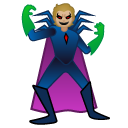


Appearance varies by platform and device. Google Noto, Twemoji, and OpenMoji are open-source.