🕒
The Emoji
Three O’clock
U+1F552 · :three_oclock:
Trend 65
Meaning layers
- interpretation
- Used to signal the 3AM 'unhinged hours' when people post chaotic, unfiltered, or existentially weird content. Also used ironically to represent being chronically online at odd hours.
- tiktok usage
- Appears in '3AM check' trends, late-night confession videos, and 'what are you doing at 3AM' challenges. Often paired with dark humor or surreal content.
- irony level
- 6 / 10
Platform meanings
- meaning
- Signals late-night posting energy, unfiltered confessions, or the chaotic '3AM brain' phenomenon. Also used in time-stamp storytelling videos.
- trend usage
- Featured in '3AM check' duet chains, 'things that hit different at 3AM' trends, and horror-adjacent GRWM (Get Ready With Me) parody content.
- hashtags
- #3amcheck#demonhours#3amthoughts#latenightvibes#3amtiktok
- virality score
- 72 / 100
Cultural meanings
🇺🇸
Western / Gen-Z
Deeply associated with the '3AM demon hours' internet culture — a symbol of unfiltered, emotionally raw, chaotic late-night online behavior that Gen Z has romanticized.
🇵🇰
Pakistan & India
Used practically to confirm meeting and call times across time zones, but younger urban users have adopted the Western 3AM meme culture through social media.
🌍
Middle East
Practical time communication tool in a region with strong café and social culture that often runs late into the night. Less meme connotation, more literal usage.
🌐
Global Neutral
Universally understood as a representation of the 3 o'clock hour, used cross-culturally for scheduling and time communication without additional cultural layers.
🇧🇩
Bangladesh
Primarily used for practical time communication in work and family group chats. Limited adoption of the Western meme interpretation among younger users.
🇱🇰
Sri Lanka
Used straightforwardly for time coordination in messaging apps. Tea culture means 3PM (tea time) has a mild positive, cozy association for some users.
🇨🇳
China
Used functionally for scheduling on WeChat and other platforms. The number 3 (三, sān) has neutral connotations, so the emoji carries no special symbolic weight.
🇯🇵
Japan
Practical scheduling use is dominant. Some younger users connect it to the concept of 'magical hours' (魔の時間) and late-night creative culture popular in Japanese internet spaces.
🇰🇷
South Korea
Used for scheduling and time references in KakaoTalk and other platforms. Among younger users influenced by global meme culture, the 3AM connotation is understood.
🇹🇼
Taiwan
Primarily practical in scheduling contexts. Night market culture gives 3PM a lively, social connotation while 3AM is associated with late-night study sessions (考試文化).
🇭🇰
Hong Kong
Used in practical communication with strong scheduling culture. The 24-hour city culture means both 3PM and 3AM carry active, social connotations rather than eerie ones.
🇵🇭
Philippines
Common for time coordination in group chats. Filipino night-owl culture means 3AM usage is relatable, and younger users engage with the global 3AM meme culture.
🇮🇩
Indonesia
Used practically for scheduling in WhatsApp-heavy communication culture. Some younger users engage with the '3AM challenge' trend common in local YouTube content.
🇹🇭
Thailand
Functional time communication use. Night culture is vibrant in Thailand, so both 3PM and 3AM have social, active connotations rather than the lonely Western 3AM vibe.
🇻🇳
Vietnam
Practical scheduling use dominates. Younger Vietnamese users on TikTok and Facebook have some exposure to the global 3AM meme aesthetic.
🇲🇾
Malaysia
Used for time coordination across multilingual group chats. Younger Malaysians heavily influenced by global TikTok culture engage with the 3AM demon hours meme.
🇸🇦
Saudi Arabia
Functional scheduling use with a cultural note — social and family life often runs very late in Saudi culture, making 3AM a legitimately active social hour without irony.
🇦🇪
UAE
Practical time communication in a cosmopolitan, multinational context. The global meme interpretation is understood among younger expat and local populations.
🇪🇬
Egypt
Used for time coordination. Egyptian night culture (سهر) is deeply embedded socially, so 3AM is not unusual for gatherings, reducing the 'lonely 3AM' emotional weight.
🇹🇷
Turkey
Practical usage for scheduling in WhatsApp and social media. Night culture in Turkish cities is active, so 3AM carries a social rather than isolating connotation.
🇮🇷
Iran
Used functionally for time communication. Younger Iranians on Instagram and Telegram engage with global aesthetic culture and may use it in the introspective late-night context.
🇳🇬
Nigeria
Practical scheduling use. Among younger Nigerians on TikTok and Twitter, the global 3AM meme culture has been adopted and remixed with Afrobeat and Naija humor.
🇿🇦
South Africa
Used for scheduling across multicultural communication contexts. Younger South Africans on Twitter/X engage heavily with the global 3AM meme and 'demon hours' discourse.
🇬🇧
UK & Ireland
Practical scheduling use plus strong adoption of the 3AM meme culture. British humor layers irony heavily — sending 🕒 late at night is understood as self-deprecating.
🇫🇷
France
Used for scheduling (15h00 in 24hr format culture). Less meme adoption than Anglo countries but younger French users on TikTok are familiar with the 3AM trope.
🇩🇪
Germany
Highly practical usage — German communication culture values directness, so 🕒 is almost exclusively used for clear time communication with minimal symbolic layering.
🇪🇸
Spain & Italy
Practical time use with a cultural twist — dinner culture runs late in both countries, so 3AM isn't inherently dramatic. Some meme adoption among younger social media users.
🇧🇷
Brazil
Used for scheduling in WhatsApp-dominant culture. Brazilian youth have strongly adopted the global 3AM meme aesthetic, often adding local humor and forró/funk cultural references.
🇲🇽
Mexico
Practical time communication alongside playful adoption of the 3AM internet culture. Mexican meme culture has created local variants of the 'demon hours' trope.
🌎
Latin America
Broadly used for scheduling across the region. WhatsApp-heavy communication means the clock emoji is functional. Younger users engage with the global 3AM meme trend.
🇦🇺
Australia & NZ
Practical scheduling use combined with strong adoption of global internet meme culture. The 'demon hours' 3AM trope is well understood and actively used by younger Australians.
How its meaning shifted
- 2010
Purely functional — used almost exclusively to indicate the time 3:00 in text messages and early social media posts. No meme or symbolic connotation existed yet.
- 2015
Still predominantly practical but beginning to appear in aesthetic Tumblr posts and early Instagram captions about insomnia and late-night creativity.
- 2020
Fully adopted into the '3AM meme' cultural ecosystem driven by TikTok. The 'demon hours' concept exploded and 🕒 became a recognized symbol of late-night unhinged energy.
- 2026
Deeply embedded in multiple cultural layers — practical, meme, aesthetic, and emotional. Used across generations with context-dependent meaning, from Boomer scheduling to Gen Z existential posting.
See it on every platform
Adjacent emojis
- Opposite
- sunrisesunbright button
- Often confused with
- three oclock threestopwatchhourglass not done
- Can replace
- alarm clockcrescent moonzzz
Share & embed
Frequently asked
01What does the 🕒 Three O’clock emoji mean?
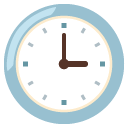
A clock face showing 3:00, representing the hour of three o'clock, used to indicate time, scheduling, punctuality, or the passage of time.
02What does 🕒 mean on TikTok?
Signals late-night posting energy, unfiltered confessions, or the chaotic '3AM brain' phenomenon. Also used in time-stamp storytelling videos.
03What does 🕒 mean on WhatsApp?
Literally used to communicate meeting times or remind someone of a 3 o'clock appointment. Also dropped casually when someone texts at 3AM to signal self-awareness.
04What does 🕒 mean in Gen-Z slang?
Used to signal the 3AM 'unhinged hours' when people post chaotic, unfiltered, or existentially weird content. Also used ironically to represent being chronically online at odd hours.
05Is the 🕒 emoji safe to use?
Completely safe in virtually all contexts — used for scheduling, time communication, aesthetic expression, and meme culture without harmful connotations.
06What does 🕒 mean in texting?
3 o'clock holds dual psychological weight — the 3AM association triggers vulnerability and raw emotion, while 3PM represents the mid-afternoon slump and low-energy dread, both tied to circadian rhythm psychology.
07What is the shortcode for 🕒?
The shortcode for Three O’clock is :three_oclock:
08What does 🕒 mean in dating?
Sending 🕒 late at night (interpreted as 3AM) is a soft way to signal you're thinking about someone at an intimate hour without being too explicit. A subtle 'you're on my mind.'
Safety & usage
- Safe meaning
- Completely safe in virtually all contexts — used for scheduling, time communication, aesthetic expression, and meme culture without harmful connotations.
- Caution
- In rare contexts, 🕒 sent repeatedly late at night can be part of a harassment or stalking pattern (implying surveillance of someone's schedule), but this is extremely uncommon.
No significant safety concerns. The only edge case is its use as a coded late-night contact signal in unwanted or pushy romantic contexts, but this is context-dependent and minor.
How it looks across platforms


Appearance varies by platform and device. Google Noto, Twemoji, and OpenMoji are open-source.