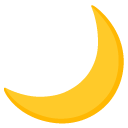
🌙
The Emoji
Crescent Moon
U+1F319 · :crescent_moon:
Trend 74
Meaning layers
- interpretation
- Used to signal a late-night, mysterious, or moody vibe. Often paired with aesthetic captions about staying up late, overthinking, or feeling mysterious and introspective.
- tiktok usage
- Appears in 'night owl' content, late-night vlogs, moody aesthetic edits, and 'dark feminine energy' trend videos.
- irony level
- 3 / 10
Platform meanings
- meaning
- Represents late-night content, mysterious vibes, and dark aesthetic energy. Used in 'night routine' and 'dark feminine' content.
- trend usage
- Paired with lo-fi music, dark aesthetics, 'villain era' trends, and slow-motion moon footage edits.
- hashtags
- #nightowl#moonvibe#darkfeminine#midnightaesthetic#mooncore
- virality score
- 72 / 100
Cultural meanings
🇺🇸
Western / Gen-Z
Represents mysterious, moody, or 'dark feminine' aesthetics and is heavily associated with late-night overthinking culture. Often used ironically to signal chaotic night-owl behavior.
🇵🇰
Pakistan & India
Deeply tied to Islamic identity and the sighting of the crescent moon marking the start of Ramadan and Eid. Also used widely in Bollywood-inspired romantic contexts as a poetic symbol of nighttime longing.
🌍
Middle East
Holds strong religious significance as the symbol of Islam and is used during Ramadan, Eid, and Islamic New Year celebrations. Also a common motif in Arabic poetry and romantic messaging.
🌐
Global Neutral
Universally understood as a symbol of the night, sleep, and the moon phase. Crosses cultural boundaries easily as a peaceful, non-controversial nighttime icon.
🇧🇩
Bangladesh
Used prominently during Ramadan and Eid al-Fitr as a religious symbol. Also common in everyday good-night greetings in Bengali messaging culture.
🇱🇰
Sri Lanka
Associated with nighttime and sleep in everyday digital communication. Also carries some Buddhist spiritual resonance when paired with other celestial symbols.
🇨🇳
China
Connected to the Mid-Autumn Festival (Zhongqiu Jie) and moon worship traditions. Represents reunion, nostalgia, and the beauty of the full moon season, though the crescent form is less central than the full moon.
🇯🇵
Japan
Linked to tsukimi (moon-viewing) traditions and the broader Japanese aesthetic appreciation of natural, seasonal beauty (mono no aware). Used in anime and kawaii culture to evoke a soft, dreamy nighttime feel.
🇰🇷
South Korea
Popular in K-pop fan communities and aesthetic content to signal a soft, dreamy, or romantic mood. Often used in late-night 'fan cam' content and idol birthday posts at midnight.
🇹🇼
Taiwan
Used during Mid-Autumn Festival contexts similarly to China, evoking family reunion and mooncake season. Also appears in aesthetic social media posts tied to night markets and evening culture.
🇭🇰
Hong Kong
Carries Mid-Autumn Festival associations and is used in nightlife and urban aesthetic contexts. Popular in social media posts capturing Hong Kong's vibrant night skyline.
🇵🇭
Philippines
Commonly used in late-night social media posts and good-night messages. Also appears in content related to Filipino folk beliefs about the moon influencing luck, health, and planting cycles.
🇮🇩
Indonesia
Strongly associated with Ramadan and Islamic celebration as Indonesia has the world's largest Muslim population. Widely used in Eid greetings and Ramadan countdown posts across all platforms.
🇹🇭
Thailand
Used in everyday good-night messaging and paired with starry visuals in aesthetic social content. Has some association with Buddhist lunar calendar events and Loy Krathong festival imagery.
🇻🇳
Vietnam
Connected to the Mid-Autumn Festival (Tết Trung Thu), a major children's festival celebrating the moon with lanterns and mooncakes. Evokes nostalgia, childhood, and family warmth.
🇲🇾
Malaysia
Holds both Islamic significance for the majority Muslim population and Mid-Autumn Festival meaning for the Chinese Malaysian community. A culturally layered symbol used across religious and secular contexts.
🇸🇦
Saudi Arabia
One of the most symbolically significant emojis in Saudi culture due to its centrality to Islamic identity and the official start of Ramadan determined by crescent moon sighting. Used extensively in religious and national holiday content.
🇦🇪
UAE
Used heavily during Ramadan and Eid celebrations in social media greetings. Also appears in luxury lifestyle and aesthetic night content given Dubai's glamorous nocturnal culture.
🇪🇬
Egypt
The crescent moon is deeply embedded in Egyptian Islamic culture and appears on the national flag. Used in Ramadan kareem greetings, spiritual posts, and poetic Arabic content about longing and night.
🇹🇷
Turkey
Carries strong national symbolism as the crescent appears on the Turkish flag. Used in patriotic contexts, Ramadan greetings, and as a general symbol of pride alongside the star emoji.
🇮🇷
Iran
While Iran's flag uses a different symbol, the crescent moon retains Islamic cultural resonance. Used in Persian poetry-inspired social media content and Nowruz-adjacent celestial aesthetics.
🇳🇬
Nigeria
Used by the large Muslim population in northern Nigeria during Ramadan and Islamic holidays. Also broadly used as a good-night emoji across all demographics in WhatsApp and Facebook messaging.
🇿🇦
South Africa
Primarily used as a universal nighttime or good-night symbol. Within the South African Muslim community, particularly in Cape Town, it holds Ramadan and Eid significance.
🇬🇧
UK & Ireland
Mostly used as a nighttime aesthetic symbol and in 'good night' messaging. Appears frequently in British Gen Z late-night social media content and dark academia aesthetics popularized in UK universities.
🇫🇷
France
Used in aesthetic and poetic contexts, reflecting French cultural appreciation for romantic and melancholic nocturnal imagery. Also used by the French Muslim community during Ramadan.
🇩🇪
Germany
Primarily a nighttime and sleep symbol in German digital culture. Used in good-night messages and occasionally in philosophy or introspection-themed posts.
🇪🇸
Spain & Italy
Associated with nightlife culture, romantic evening ambiance, and late-night Mediterranean social life. Used in flirty good-night messages and aesthetic posts about evening gatherings.
🇧🇷
Brazil
Used in late-night social media posts and as a good-night sign-off in WhatsApp. Also appears in aesthetic content tied to Brazilian music genres like bossa nova and MPB that evoke moonlit nights.
🇲🇽
Mexico
Connected to nocturnal folk culture, Día de los Muertos night imagery, and romantic serenading traditions. Used in late-night messages and content evoking the magical quality of Mexican nights.
🌎
Latin America
Broadly used across Latin America as a romantic, poetic nighttime symbol. Appears frequently in telenovela-inspired social content and late-night WhatsApp exchanges.
🇦🇺
Australia & NZ
Used as a simple good-night emoji and in astronomy-enthusiast content given the Southern Hemisphere's exceptional stargazing conditions. Also appears in Aboriginal cultural discussions about celestial navigation.
How its meaning shifted
- 2010
Primarily used as a literal representation of the moon or nighttime in early smartphone messaging. Common in simple good-night texts with little cultural or aesthetic layering.
- 2015
Began appearing in Islamic Ramadan and Eid social media greetings at scale. Also started being used in aesthetic Tumblr-era posts pairing moon imagery with poetry and introspection.
- 2020
Cemented as a core aesthetic emoji in TikTok's dark academia, cottagecore, and 'soft hours' content. Ramadan usage exploded globally on all platforms. Late-night overthinking culture adopted it as a signature symbol.
- 2026
Fully embedded in 'dark feminine,' 'villain era,' and celestial aesthetics. Used across moon phase astrology content, Ramadan digital campaigns, and as a mainstream good-night symbol that bridges Gen Z irony and sincere warmth.
See it on every platform
Compare with
Emoji combinations
Adjacent emojis
- Opposite
- sunsunrisebright button
- Often confused with
- new moonfull moonwaning crescent moon
- Can replace
- night with starssparklesstar
Share & embed
Frequently asked
01What does the 🌙 Crescent Moon emoji mean?
A crescent moon symbol representing the waning or waxing lunar phase, often associated with night, sleep, and celestial themes.
02What does 🌙 mean on TikTok?
Represents late-night content, mysterious vibes, and dark aesthetic energy. Used in 'night routine' and 'dark feminine' content.
03What does 🌙 mean on WhatsApp?
A gentle 'good night' or 'I'm heading to sleep.' Very common as a send-off in family and friend group chats.
04What does 🌙 mean in Gen-Z slang?
Used to signal a late-night, mysterious, or moody vibe. Often paired with aesthetic captions about staying up late, overthinking, or feeling mysterious and introspective.
05Is the 🌙 emoji safe to use?
Universally recognized as a benign symbol of the night, sleep, dreams, and Islamic cultural identity. Appropriate across all age groups and most cultural contexts.
06What does 🌙 mean in texting?
The crescent moon psychologically triggers associations with the unconscious mind, dreams, femininity, and cyclical change. It evokes a sense of quiet solitude and reflective sadness without despair.
07What is the shortcode for 🌙?
The shortcode for Crescent Moon is :crescent_moon:
08What does 🌙 mean in dating?
Sent late at night to signal 'I'm thinking of you' or as a subtle flirty 'you up?' opener without being too forward.
Safety & usage
- Safe meaning
- Universally recognized as a benign symbol of the night, sleep, dreams, and Islamic cultural identity. Appropriate across all age groups and most cultural contexts.
- Caution
- Rarely used in harmful contexts. In very niche online spaces, it has occasionally been co-opted in 'dark feminine' content that glorifies toxic independence or emotional unavailability.
Non-toxic in virtually all mainstream contexts. Sensitivity is warranted when used in discussions about Islam without cultural understanding, where it should be treated with respect rather than as a fashion accessory.
How it looks across platforms


Appearance varies by platform and device. Google Noto, Twemoji, and OpenMoji are open-source.