👎🏾
The Emoji
Thumbs Down: Medium-dark Skin Tone
U+1F44E U+1F3FE · :thumbs_down_mediumdark_skin_tone:
Trend 70
Meaning layers
- interpretation
- Used to express strong disapproval, calling something out as cringe, mid, or bad takes. Often deployed ironically to dunk on bad opinions, flop content, or disappointing reveals. Also used self-deprecatingly when owning a bad decision.
- tiktok usage
- Appears in comment sections to drag bad takes or flop videos. Used in duets and stitches to react to cringe content. Frequently paired with 'ratio' culture — dropping a thumbs down under a comment to signal mass disapproval.
- irony level
- 6 / 10
Platform meanings
- meaning
- Expresses disapproval or rejection of content, opinions, or trends. Used by creators and commenters alike to signal 'this is not it.'
- trend usage
- Dropped in comment sections as part of ratio culture. Used in reaction videos and duets to critique bad takes. Appears in 'POV: you just said something wrong' video formats.
- hashtags
- #ratio#notit#thumbsdown#flop#badtake
- virality score
- 72 / 100
Cultural meanings
🇺🇸
Western / Gen-Z
Core tool of digital disapproval culture — used in ratio wars, callouts, and ironic self-deprecation. The skin tone modifier is seen as authentic self-expression.
🇵🇰
Pakistan & India
Widely understood as a disapproval gesture, though the thumbs-down itself can carry stronger negative social weight in traditional contexts. Used freely in digital/youth spaces with less cultural baggage.
🌍
Middle East
The thumbs-down gesture is traditionally considered rude or offensive in many parts of the region. Digital-native youth use it more casually online, but older or more conservative audiences may find it disrespectful.
🌐
Global Neutral
Universally legible as 'disapproval' or 'dislike' across most digital cultures. The skin tone is noted as representing Brown/darker skin-toned individuals.
🇧🇩
Bangladesh
Understood as a rejection symbol in digital spaces. Traditional offline context still attaches negative social connotations to the thumbs-down gesture, but online usage among youth is increasingly casual.
🇱🇰
Sri Lanka
Used in digital communication to signal disagreement or dislike, particularly among younger users on social media. The gesture carries Western digital connotations more than local cultural ones.
🇨🇳
China
Thumbs-down is understood through the Western digital framework, especially among younger, globally connected users. Used in international platforms; on domestic platforms like WeChat, similar disapproval emojis are preferred.
🇯🇵
Japan
The thumbs-down is understood but less culturally native. Japanese digital communication often favors indirect expressions of disapproval. When used, it tends to carry a more blunt, Western-coded tone.
🇰🇷
South Korea
Understood through global internet culture and K-pop fandom dynamics. Used in fan communities to call out bad takes or industry decisions, especially on platforms like Twitter/X.
🇹🇼
Taiwan
Used similarly to broader East Asian digital culture — understood as a disapproval symbol. More commonly seen in international platform contexts than local LINE or PTT communications.
🇭🇰
Hong Kong
Widely used by younger, globally connected netizens, especially on Instagram and Twitter. Carries strong disapproval energy and is used prominently in political and social commentary.
🇵🇭
Philippines
Common in Filipino internet culture, especially in meme pages and Facebook comment sections. Used to signal 'bad' in the context of content reactions and opinion debates.
🇮🇩
Indonesia
Frequently used in social media comment sections to signal disapproval. Indonesian youth culture has adopted ratio and callout culture from TikTok and Twitter, where this emoji is a staple.
🇹🇭
Thailand
Understood through Western digital framing. Used by Thai youth on TikTok and Twitter to express disapproval, though it can be seen as blunt by older users.
🇻🇳
Vietnam
Used in online spaces to signal rejection or dislike of content. Vietnamese social media users, especially on Facebook and TikTok, deploy it in comment wars and reaction content.
🇲🇾
Malaysia
Bilingual and multicultural internet culture means this emoji is widely understood. Used casually to disapprove of content, bad jokes, or opinions in mixed-language group chats.
🇸🇦
Saudi Arabia
The thumbs-down gesture is traditionally considered offensive in Saudi Arabian culture. Digital-savvy youth use it online with awareness of its Western connotations, but it's used cautiously in mixed-audience contexts.
🇦🇪
UAE
In the cosmopolitan UAE digital scene, this emoji is widely used in its Western digital sense. Expat and younger audiences use it freely; traditional contexts may still find the gesture impolite.
🇪🇬
Egypt
Egyptian social media users, particularly on Facebook and TikTok, use it to express disapproval in comment sections. Offline, the thumbs-down gesture can still carry rude connotations in some social settings.
🇹🇷
Turkey
Used in Turkish internet culture to signal disapproval or rejection. Appears frequently in political and sports commentary on Twitter/X. Traditional offline associations with the gesture are less favorable.
🇮🇷
Iran
The thumbs-down gesture traditionally carries a vulgar or offensive meaning in Iranian culture. However, digitally savvy Iranian youth increasingly use it in its Western internet sense on platforms like Instagram and Telegram.
🇳🇬
Nigeria
Heavily used in Nigerian Twitter (NairaTwitter) and TikTok culture for callouts, bad takes, and content disapproval. The medium-dark skin tone resonates particularly strongly as a representation of Nigerian users.
🇿🇦
South Africa
Used across South African social media with strong ratio and callout culture influence. The medium-dark skin tone is especially resonant for Black South African users expressing disapproval.
🇬🇧
UK & Ireland
Common in British and Irish internet culture for dry, sarcastic disapproval. The medium-dark skin tone is widely used by British-Nigerian, British-Pakistani, and other diaspora communities.
🇫🇷
France
Used in French social media to signal disapproval, especially in the context of political debates and cultural commentary. The gesture is understood digitally but can seem abrupt in French social norms.
🇩🇪
Germany
Germans tend to use this emoji for direct, literal disapproval — fitting with a cultural communication style that values directness. Used frequently in review contexts and opinion posts.
🇪🇸
Spain & Italy
Used expressively in both Spanish and Italian internet culture to signal disapproval, especially around football, politics, and pop culture. The gesture is understood but can feel aggressive in some interpersonal contexts.
🇧🇷
Brazil
Brazilian internet culture uses it extensively in meme content, commentary, and social media debates. Carries strong 'this ain't it' energy and is frequently seen on Twitter/X and Instagram.
🇲🇽
Mexico
Used widely in Mexican social media, especially in humor-heavy contexts like meme pages and TikTok. Pairs well with Mexican internet slang for calling out bad behavior or cringe content.
🌎
Latin America
Across Latin America, this emoji is understood as a rejection signal and used in social media debates, sports commentary, and meme culture. Resonates strongly in youth digital spaces.
🇦🇺
Australia & NZ
Australian and New Zealand internet culture uses it with dry humor and casual frankness. Appears in sports commentary, political opinions, and everyday chat to signal blunt disapproval.
How its meaning shifted
- 2010
Primarily used in its literal sense as a simple dislike or disapproval signal, mirroring the YouTube dislike button era. Skin tone modifiers did not yet exist; the yellow default was standard.
- 2015
Skin tone modifiers introduced in Unicode 8.0 (2015), allowing users to personalize the emoji. Usage still largely literal — dislike, rejection, 'not good.' Social media reactions and Facebook's missing dislike button drove demand.
- 2020
Deeply embedded in ratio culture on Twitter, TikTok's rise drove comment-section disapproval culture. Ironic and meme usage increased significantly. The skin tone variant became a marker of personal identity in digital expression.
- 2026
Fully integrated into internet disapproval vocabulary. Used across serious callout culture, ironic self-deprecation, meme formats, and ratio wars. The medium-dark skin tone variant carries both representation significance and casual everyday use, with no stigma attached to either register.
See it on every platform
Compare with
Adjacent emojis
Share & embed
Frequently asked
01What does the 👎🏾 Thumbs Down: Medium-dark Skin Tone emoji mean?
A hand with the thumb pointing downward, rendered in a medium-dark skin tone (Fitzpatrick Type V). Universally represents disapproval, rejection, disagreement, or dislike.
02What does 👎🏾 mean on TikTok?
Expresses disapproval or rejection of content, opinions, or trends. Used by creators and commenters alike to signal 'this is not it.'
03What does 👎🏾 mean on WhatsApp?
Direct disapproval or rejection of a suggestion, plan, or statement in group or private chats. Quick shorthand for 'no' or 'bad idea.'
04What does 👎🏾 mean in Gen-Z slang?
Used to express strong disapproval, calling something out as cringe, mid, or bad takes. Often deployed ironically to dunk on bad opinions, flop content, or disappointing reveals. Also used self-deprecatingly when owning a bad decision.
05Is the 👎🏾 emoji safe to use?
A widely accepted digital expression of disapproval, rejection, or dislike. Used in feedback, voting, reactions, and casual social media commentary.
06What does 👎🏾 mean in texting?
The thumbs down taps into the psychological need for social judgment and boundary-setting. Combined with the medium-dark skin tone, it carries an added layer of personal identity investment in the stance being expressed. It signals a clear emotional boundary and can function as a low-effort but high-impact rejection signal in digital spaces.
07What is the shortcode for 👎🏾?
The shortcode for Thumbs Down: Medium-dark Skin Tone is :thumbs_down_mediumdark_skin_tone:
08What does 👎🏾 mean in dating?
Rarely used flirtatiously unless in a playful banter context — e.g., reacting to a bad date suggestion with 👎🏾 as a teasing challenge for the other person to do better.
Safety & usage
- Safe meaning
- A widely accepted digital expression of disapproval, rejection, or dislike. Used in feedback, voting, reactions, and casual social media commentary.
- Caution
- Can be weaponized in coordinated pile-ons, harassment campaigns, or targeted ratio attacks. When spammed at an individual, it becomes a tool of online bullying or mob disapproval.
In certain Middle Eastern, South Asian, and Iranian cultural contexts, the thumbs-down gesture can carry offensive or vulgar connotations offline. Users should be culturally aware when communicating across these contexts. Also note that some platforms have removed or hidden public dislike counts specifically because of the mental health impact of visible mass disapproval.
How it looks across platforms
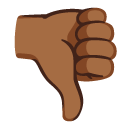


Appearance varies by platform and device. Google Noto, Twemoji, and OpenMoji are open-source.