🦃
The Emoji
Turkey
U+1F983 · :turkey:
Trend 62
Meaning layers
- interpretation
- Used humorously to call someone a fool or goofy person ('you absolute turkey'), or ironically to celebrate Thanksgiving with exaggerated enthusiasm. Also deployed when someone does something cluelessly dumb.
- tiktok usage
- Appears in Thanksgiving cooking fails, 'what I'm grateful for' trend videos, and as a self-deprecating label when someone acts silly or naive.
- irony level
- 6 / 10
Platform meanings
- meaning
- Signals Thanksgiving content, fall vibes, or calling someone a lovable idiot. Appears in cooking videos, family drama recaps, and seasonal trend compilations.
- trend usage
- Used in 'Thanksgiving preparation fails,' 'things I'm grateful for' POV videos, and ironically in 'main character' autumn aesthetic content.
- hashtags
- #Thanksgiving#TurkeyDay#FallVibes#GobbleGobble#ThanksgivingFail
- virality score
- 58 / 100
Cultural meanings
🇺🇸
Western / Gen-Z
Used primarily as a Thanksgiving symbol with heavy ironic and humorous secondary use — calling someone a turkey (idiot) is a low-key insult with comedic warmth.
🇵🇰
Pakistan & India
Virtually no cultural resonance with Thanksgiving; used literally to refer to the turkey bird (murgh/turkey) in food contexts or animal discussions.
🌍
Middle East
No strong cultural association; the bird is known but Thanksgiving is not widely celebrated — used occasionally in food discussions or when referencing American culture.
🌐
Global Neutral
Understood universally as a bird emoji; Thanksgiving associations are recognized but not personally relevant in most non-North American contexts.
🇧🇩
Bangladesh
Minimal cultural recognition beyond the literal bird; may appear in food content or discussions about American cultural traditions.
🇱🇰
Sri Lanka
Used in rare contexts referencing the bird in zoological or culinary discussions; no holiday association in local culture.
🇨🇳
China
Recognized as the American Thanksgiving symbol by younger, globally-aware users; occasionally used in posts about American culture or international food.
🇯🇵
Japan
Thanksgiving is not widely celebrated; the emoji is used in discussions about American culture, English-language content, or international food menus.
🇰🇷
South Korea
Occasionally seen in content about American culture, English study materials, or Korean-American community discussions around Thanksgiving.
🇹🇼
Taiwan
Associated with American cultural exports; used by Taiwanese users familiar with Thanksgiving through media, study abroad experiences, or U.S. cultural influence.
🇭🇰
Hong Kong
Recognized by the internationally-oriented population through American media; occasionally used in expat communities around Thanksgiving celebrations.
🇵🇭
Philippines
Thanksgiving has some recognition due to strong American cultural influence; Filipino-Americans use it widely and it appears in November food-sharing posts.
🇮🇩
Indonesia
Limited cultural resonance; understood as an American holiday symbol by globally-aware youth but rarely used organically in local communication.
🇹🇭
Thailand
Used mainly in food-related discussions or when reacting to American cultural content; no domestic holiday association.
🇻🇳
Vietnam
Recognized by Vietnamese-American diaspora communities; in Vietnam proper it appears mainly in contexts discussing American culture or imported food traditions.
🇲🇾
Malaysia
Used occasionally in food content or by Malaysian students/expats abroad who participate in Thanksgiving; no strong local cultural meaning.
🇸🇦
Saudi Arabia
Recognized as an American cultural symbol; occasionally used by Saudi users engaging with American social media content but holds no domestic holiday significance.
🇦🇪
UAE
In a cosmopolitan hub with many American expats, Thanksgiving and this emoji are more present than in other MENA countries — especially in November food and event posts.
🇪🇬
Egypt
Minimal domestic significance; used by Egyptians with American cultural exposure or those referencing U.S. holidays in academic or social media contexts.
🇹🇷
Turkey
Highly ironic and comedic — Turks frequently note and joke about sharing their country's name with the bird emoji, creating a rich layer of self-referential humor online.
🇮🇷
Iran
Little cultural resonance with Thanksgiving; used in rare references to American holidays or the literal bird in a zoological context.
🇳🇬
Nigeria
Thanksgiving is not a local tradition; the emoji may appear in Nigerian-American community posts or in content referencing American culture and holidays.
🇿🇦
South Africa
Recognized through American media influence; sometimes used in South African expat communities or by globally-connected youth during November.
🇬🇧
UK & Ireland
British users know the turkey primarily as a Christmas dinner symbol rather than Thanksgiving — creating a slight cultural remap of the emoji's meaning.
🇫🇷
France
French users associate the turkey (dinde) with Christmas feasting; the emoji may appear in holiday food discussions but lacks Thanksgiving resonance.
🇩🇪
Germany
Recognized as a Christmas or festive food symbol more than Thanksgiving; German users may use it in holiday cooking discussions.
🇪🇸
Spain & Italy
The turkey (pavo/tacchino) is known as a festive food item; the emoji is used in culinary contexts and occasionally to reference American Thanksgiving.
🇧🇷
Brazil
Used in references to American Thanksgiving by culturally aware Brazilians; also appears in food content referencing the bird in Brazilian cuisine.
🇲🇽
Mexico
Mexican-Americans use it heavily for Thanksgiving; in Mexico proper it sometimes refers to the guajolote (native turkey), giving it an additional indigenous cultural layer.
🌎
Latin America
Across Latin America, the turkey has pre-Columbian historical significance as a native bird, but the emoji is most often used in reference to American cultural exports.
🇦🇺
Australia & NZ
No Thanksgiving tradition locally; Australians and Kiwis use it primarily to refer to the bird literally or to acknowledge American cultural content in November.
How its meaning shifted
- 2010
Pre-emoji era on mobile; primarily used as a text-based turkey ASCII in Thanksgiving e-cards, email signatures, and early social media holiday posts.
- 2015
Released in Unicode 8.0 — immediately adopted for Thanksgiving posts on Instagram and Twitter. Usage was straightforward and seasonal with minimal irony.
- 2020
Thanksgiving 2020 during COVID lockdowns created a surge in the emoji as people shared virtual Thanksgiving plans, 'orphan Thanksgiving' content, and pandemic humor.
- 2026
Continues as a reliable seasonal emoji with layered meaning — still the dominant Thanksgiving symbol but now also embedded in Gen Z vocabulary as a synonym for a lovable idiot, with peak spikes every November.
See it on every platform
Compare with
Emoji combinations
Adjacent emojis
- Often confused with
- roosterduckhatching chick
- Can replace
- piemaple leaffallen leaf
Share & embed
Frequently asked
01What does the 🦃 Turkey emoji mean?
The turkey emoji depicts a domesticated turkey bird, commonly associated with Thanksgiving in North America, harvest festivals, and the animal itself.
02What does 🦃 mean on TikTok?
Signals Thanksgiving content, fall vibes, or calling someone a lovable idiot. Appears in cooking videos, family drama recaps, and seasonal trend compilations.
03What does 🦃 mean on WhatsApp?
Shorthand for Thanksgiving plans, sending holiday greetings, or calling someone a silly fool in a friendly way.
04What does 🦃 mean in Gen-Z slang?
Used humorously to call someone a fool or goofy person ('you absolute turkey'), or ironically to celebrate Thanksgiving with exaggerated enthusiasm. Also deployed when someone does something cluelessly dumb.
05Is the 🦃 emoji safe to use?
A harmless seasonal emoji primarily associated with Thanksgiving, the turkey bird, and autumnal harvest themes.
06What does 🦃 mean in texting?
Evokes strong seasonal memories tied to family gatherings and comfort food, particularly for Americans. Psychologically linked to themes of gratitude, abundance, and domestic warmth. Also carries a secondary comedic valence due to the bird's perceived silliness.
07What is the shortcode for 🦃?
The shortcode for Turkey is :turkey:
08What does 🦃 mean in dating?
Rarely used as a flirt tool; occasionally sent as a November inside joke ('come over for Thanksgiving?') or to affectionately call a crush a goofball.
Safety & usage
- Safe meaning
- A harmless seasonal emoji primarily associated with Thanksgiving, the turkey bird, and autumnal harvest themes.
- Caution
- In rare edge cases, used mockingly to dismiss or belittle someone as a fool ('absolute turkey'), but this usage is generally mild and comedic rather than toxic.
Very low risk emoji. Potential for mild insult use ('you turkey') but this is culturally benign in most English-speaking contexts. No known NSFW or coded hate usage.
How it looks across platforms
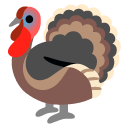


Appearance varies by platform and device. Google Noto, Twemoji, and OpenMoji are open-source.