🐓
The Emoji
Rooster
U+1F413 · :rooster:
Trend 58
Meaning layers
- interpretation
- Used humorously to refer to confidence, swagger, or as a veiled phallic reference. Also used ironically for anyone who wakes up absurdly early or acts like a morning person.
- tiktok usage
- Appears in 'rise and grind' culture parodies, cockfighting commentary, or as a cheeky substitute for explicit language in thirst traps and roast videos.
- irony level
- 7 / 10
Platform meanings
- meaning
- Morning energy icon, hustle culture parody, or cheeky innuendo in commentary videos
- trend usage
- Used in POV videos about waking up early, farm life aesthetics, and as coded language in thirst content under #RoosterEnergy
- hashtags
- #RoosterEnergy#RiseAndGrind#YearOfTheRooster#FarmTok#MorningVibes
- virality score
- 62 / 100
Cultural meanings
🇺🇸
Western / Gen-Z
Primarily used as a cheeky innuendo or ironic mockery of hustle culture; the double meaning is widely understood and often intentional.
🇵🇰
Pakistan & India
Commonly used in morning greetings on WhatsApp and symbolizes dawn prayers (Fajr); also associated with cockfighting culture in rural areas.
🌍
Middle East
Represents the morning call to prayer (Fajr) indirectly, and is used in agricultural and rural contexts; the innuendo meaning is generally not the primary association.
🌐
Global Neutral
Universally recognized as a farm animal representing dawn, morning, and rural life with minimal controversy in literal usage.
🇧🇩
Bangladesh
Used in morning greeting messages and associated with village life and poultry farming, which is a significant part of rural economy.
🇱🇰
Sri Lanka
Represents rural and agricultural life; the rooster is a culturally significant bird also associated with national sports like cockfighting.
🇨🇳
China
Highly significant as one of the 12 Chinese zodiac animals — people born in the Year of the Rooster use it proudly in bios, New Year posts, and cultural content.
🇯🇵
Japan
Associated with Shinto traditions where roosters are sacred birds of the sun goddess; used in New Year content and shrine-related posts.
🇰🇷
South Korea
Used in the context of the Chinese zodiac (닭띠) and morning energy content; K-pop fans use it for Rooster-year idols.
🇹🇼
Taiwan
Strong zodiac association; used widely during Chinese New Year celebrations and in references to the 雞年 (Year of the Rooster).
🇭🇰
Hong Kong
Used in zodiac contexts and also in Cantonese slang where it carries strong adult connotations — use with caution.
🇵🇭
Philippines
Associated with cockfighting (sabong), which is a deeply rooted cultural tradition; the emoji is used in sabong betting communities and rural life content.
🇮🇩
Indonesia
Represents rural life and is associated with cockfighting traditions; used in farming and agricultural community posts.
🇹🇭
Thailand
Used in morning content and is associated with cockfighting culture; also appears in Thai New Year and zodiac-related content.
🇻🇳
Vietnam
Strongly tied to the Vietnamese lunar zodiac; used heavily during Tết (Vietnamese New Year) when the Rooster year is celebrated.
🇲🇾
Malaysia
Used in Chinese Malaysian communities for zodiac references; also appears in rural and agricultural content across all ethnicities.
🇸🇦
Saudi Arabia
Used in agricultural and rural contexts; also occasionally in morning greeting posts, though not as culturally loaded as in East Asia.
🇦🇪
UAE
Used in multicultural contexts — expat Chinese communities use it for zodiac; locals use it in farming and morning content.
🇪🇬
Egypt
Associated with rural Egyptian life and morning wake-up calls; 'the rooster crowed' is a common phrase embedded in Egyptian culture.
🇹🇷
Turkey
Used in rural and village life contexts; the rooster (horoz) is a symbol of manliness and is used in expressions of confidence or bravado.
🇮🇷
Iran
Associated with dawn and morning in Persian culture; the rooster crowing is tied to Zoroastrian symbolism of light conquering darkness.
🇳🇬
Nigeria
Used in discussions about farm life and poultry; Nollywood and local proverbs about roosters give it cultural weight in storytelling content.
🇿🇦
South Africa
Used in rural and farming contexts across various communities; among younger users it carries the same innuendo awareness as in Western GenZ culture.
🇬🇧
UK & Ireland
The innuendo is well understood and often deployed humorously; also used in countryside and farming content with no double meaning intended.
🇫🇷
France
Le coq (rooster) is France's national symbol, so the emoji carries strong national pride connotations in French contexts.
🇩🇪
Germany
Used in farm and agricultural contexts; less culturally loaded than in France or China, mostly literal in usage.
🇪🇸
Spain & Italy
Associated with rural life and morning; in Spanish macho culture it can be used to signal confidence or bravado ('ser un gallo').
🇧🇷
Brazil
Used in rural content and also carries innuendo awareness among younger Brazilians; cockfighting (rinha de galos) references appear in regional content.
🇲🇽
Mexico
Strongly associated with cockfighting culture (pelea de gallos) and Mexican rural identity; also used in expressions of masculine pride.
🌎
Latin America
Across Latin America the rooster symbolizes masculine pride, rural roots, and cockfighting traditions; widely understood dual meanings exist.
🇦🇺
Australia & NZ
Used in farm and rural lifestyle content; GenZ users are fully aware of the innuendo and deploy it accordingly in informal digital spaces.
How its meaning shifted
- 2010
Used almost exclusively as a literal farm animal emoji in early smartphone texting and in Chinese New Year digital cards.
- 2015
Started appearing in morning routine posts and Chinese zodiac content on Instagram and Facebook; innuendo usage was rare but emerging.
- 2020
Widely adopted in hustle culture parody content and as a coded innuendo substitute across platforms; Chinese New Year spikes became significant.
- 2026
Fully dual-coded in digital culture — simultaneously a sincere farm/zodiac emoji and a widely understood innuendo; used heavily in irony-first GenZ communication and cottagecore aesthetics.
See it on every platform
Compare with
Emoji combinations
Adjacent emojis
- Opposite
- crescent moonsleeping faceowl
- Can replace
- chickenalarm clocksun with face
Share & embed
Frequently asked
01What does the 🐓 Rooster emoji mean?
A male chicken (rooster/cock), typically depicted with a red comb, wattle, and tail feathers, often crowing at dawn.
02What does 🐓 mean on TikTok?
Morning energy icon, hustle culture parody, or cheeky innuendo in commentary videos
03What does 🐓 mean on WhatsApp?
Good morning greeting, especially in family and friend groups — 'Wake up! 🐓'
04What does 🐓 mean in Gen-Z slang?
Used humorously to refer to confidence, swagger, or as a veiled phallic reference. Also used ironically for anyone who wakes up absurdly early or acts like a morning person.
05Is the 🐓 emoji safe to use?
A farm rooster representing dawn, morning energy, rural life, Chinese zodiac, and agricultural content.
06What does 🐓 mean in texting?
The rooster symbolizes assertiveness and self-assuredness; psychologically tied to dominance displays and the archetype of the herald who announces a new beginning.
07What is the shortcode for 🐓?
The shortcode for Rooster is :rooster:
08What does 🐓 mean in dating?
Often used as a not-so-subtle phallic innuendo in flirtatious DMs, especially when plausible deniability is desired.
Safety & usage
- Safe meaning
- A farm rooster representing dawn, morning energy, rural life, Chinese zodiac, and agricultural content.
- Caution
- Frequently used as a thinly veiled phallic reference or sexual innuendo in flirtatious, explicit, or harassing messages.
While the emoji is officially SFW, its widespread use as coded sexual innuendo means it can appear in harassment or unsolicited sexual messaging. Context-dependent moderation is advised.
How it looks across platforms
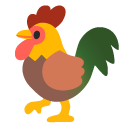


Appearance varies by platform and device. Google Noto, Twemoji, and OpenMoji are open-source.