👩🎨
The Emoji
Woman Artist
U+1F469 U+200D U+1F3A8 · :woman_artist:
Trend 62
Meaning layers
- interpretation
- Used to signal creative identity, artsy aesthetic, or someone who considers themselves an artist or creative soul. Often used ironically by people who doodle stick figures.
- tiktok usage
- Appears in 'artist POV' content, art process videos, aesthetic transitions, and whenever someone is flexing their creative skills or side hustle.
- irony level
- 5 / 10
Platform meanings
- meaning
- Signals art content, creative process, aesthetic identity, or ironic 'I'm so artistic' energy.
- trend usage
- Used in art tutorials, 'painting my feelings' trends, creative transformation videos, and 'day in the life of an artist' content.
- hashtags
- #artisttok#arttok#womanartist#creativegirl#artprocess
- virality score
- 68 / 100
Cultural meanings
🇺🇸
Western / Gen-Z
Widely used as a creative identity marker, especially by young women who identify as artists or aesthetes. Also used ironically to mock performative artsy behavior.
🇵🇰
Pakistan & India
Used by urban creative communities, art students, and female professionals in design fields. Less common in mainstream casual chat but growing with the rise of Instagram art culture.
🌍
Middle East
Used by female artists and creatives in contexts where gender representation in art is celebrated. More likely to appear in professional or academic art spaces than casual conversation.
🌐
Global Neutral
Universally understood as representing a female artist or creative person, with minimal cultural distortion in meaning.
🇧🇩
Bangladesh
Emerging in use among art students and creative professionals, particularly in Dhaka's growing design and digital art scene.
🇱🇰
Sri Lanka
Used by creatives in urban areas, especially among young women in art and fashion communities on Instagram and Facebook.
🇨🇳
China
Used on platforms like Weibo and Xiaohongshu by female artists, illustrators, and aesthetic lifestyle influencers. Associated with the 'wenyi qingnian' (literary and artistic youth) subculture.
🇯🇵
Japan
Associated with the 'geijutsu-ka' (artist) identity. Common in art Twitter communities and among illustrators on Pixiv and Twitter Japan.
🇰🇷
South Korea
Used in webtoon, illustration, and K-pop fanart communities. Female artists on platforms like Instagram and Twitter use it as a creative identity badge.
🇹🇼
Taiwan
Popular among digital artists and illustrators, particularly in indie art communities and creative professional circles.
🇭🇰
Hong Kong
Used in urban creative and design communities, often in bilingual posts mixing Chinese and English creative content.
🇵🇭
Philippines
Common among art students and Filipino illustrators on Twitter and Instagram, often with pride in local artistic talent.
🇮🇩
Indonesia
Used by creative professionals and art students, particularly in Jakarta's vibrant design and illustration community.
🇹🇭
Thailand
Popular in Thai art communities on Instagram and Facebook, used by both professional and hobbyist female artists.
🇻🇳
Vietnam
Appears in Ho Chi Minh City's growing creative scene, used by young female designers and artists sharing their work online.
🇲🇾
Malaysia
Used by creative professionals and art students, appearing frequently in Malaysia's bilingual social media art communities.
🇸🇦
Saudi Arabia
Used by female artists and creatives, particularly significant given the expanding arts scene and Vision 2030's cultural initiatives supporting women in creative fields.
🇦🇪
UAE
Common in Dubai and Abu Dhabi's cosmopolitan creative communities, used by female artists across diverse nationalities in the region's art scene.
🇪🇬
Egypt
Used by Cairo's growing creative community, particularly young female artists who share work on Instagram and Facebook.
🇹🇷
Turkey
Appears in Istanbul's vibrant arts and design community, used by female creatives across social media platforms.
🇮🇷
Iran
Used by female artists within Iran's rich artistic tradition, often in private online spaces or among diaspora communities celebrating Iranian women's artistry.
🇳🇬
Nigeria
Used in Lagos's growing creative economy among female designers, visual artists, and Afrofuturist creatives building presence on Instagram and Twitter.
🇿🇦
South Africa
Common in Cape Town and Johannesburg's creative industries, used by female artists across a range of visual art disciplines and mediums.
🇬🇧
UK & Ireland
Used broadly across creative sectors, art schools, and by women in design industries. Also appears in ironic British humor about 'being artistic.'
🇫🇷
France
Carries particular resonance in France given its deep artistic heritage. Used earnestly by artists and with chic irony by those who romanticize the Parisian creative lifestyle.
🇩🇪
Germany
Used in German design and art school communities with a more functional, professional tone. Less ironic usage compared to English-speaking cultures.
🇪🇸
Spain & Italy
Tied to strong visual art traditions; used proudly by female artists and creatives. Common in posts about painting, design, and Mediterranean aesthetic culture.
🇧🇷
Brazil
Very popular in Brazil's vibrant arts community, used by female artists, crafters, and creatives across São Paulo and Rio's cultural scenes.
🇲🇽
Mexico
Used by female artists celebrating Mexico's rich visual art tradition, often alongside references to figures like Frida Kahlo in art discussions.
🌎
Latin America
Broadly used across Latin America's growing digital creative communities, associated with female artistic empowerment and creative entrepreneurship.
🇦🇺
Australia & NZ
Used casually by artists and creatives, appears in art school communities, and is occasionally used with self-deprecating Aussie humor about being 'fancy artsy types.'
How its meaning shifted
- 2010
Did not exist yet; the emoji was not introduced until 2017. Creative women were represented with generic smileys or text like ':art:' in online communities.
- 2015
Still pre-existence of this specific emoji. The concept was represented through combinations of woman emoji and palette emoji on platforms that supported it.
- 2020
Established usage in art communities, creative professional bios, and social media identity markers. Used earnestly across platforms by female artists and enthusiasts.
- 2026
Widely used across all age groups with layered meanings: earnest creative identity, ironic aesthetic performance, and professional branding. Frequently appears in AI art discourse and debates about what 'being an artist' means in the age of generative AI.
See it on every platform
Compare with
Adjacent emojis
- Often confused with
- woman studentnail polishcrayon
- Can replace
- palettepaintbrushsparkles
Share & embed
Frequently asked
01What does the 👩🎨 Woman Artist emoji mean?
A woman with a beret and palette, representing a female artist or creative professional.
02What does 👩🎨 mean on TikTok?
Signals art content, creative process, aesthetic identity, or ironic 'I'm so artistic' energy.
03What does 👩🎨 mean on WhatsApp?
Indicating someone is creative, artistic, or currently doing art-related work.
04What does 👩🎨 mean in Gen-Z slang?
Used to signal creative identity, artsy aesthetic, or someone who considers themselves an artist or creative soul. Often used ironically by people who doodle stick figures.
05Is the 👩🎨 emoji safe to use?
Represents creativity, artistry, female empowerment in creative fields, and professional identity as a visual artist.
06What does 👩🎨 mean in texting?
Evokes feelings of autonomy and self-actualization through creative expression. Often tied to identity formation in younger users who link artistry to personal worth and uniqueness.
07What is the shortcode for 👩🎨?
The shortcode for Woman Artist is :woman_artist:
08What does 👩🎨 mean in dating?
Sending this to someone implies admiration for their creativity or aesthetic sensibility. Can be used flirtatiously to hint that someone 'paints your world colorful.'
Safety & usage
- Safe meaning
- Represents creativity, artistry, female empowerment in creative fields, and professional identity as a visual artist.
- Caution
- Occasionally used condescendingly to dismiss someone's work as overly 'artsy' or impractical. Rare misuse as a subtle dig at women who are perceived as prioritizing aesthetics over substance.
Generally very safe. Minimal risk of misinterpretation. In rare edge cases on certain platforms, might be used dismissively toward female creatives, but this is not a common or systemic usage.
How it looks across platforms
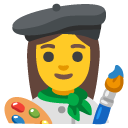


Appearance varies by platform and device. Google Noto, Twemoji, and OpenMoji are open-source.