👨🎨
The Emoji
Man Artist
U+1F468 U+200D U+1F3A8 · :man_artist:
Trend 58
Meaning layers
- interpretation
- Used to signal creative identity, aesthetic obsession, or that someone is in their 'art era.' Also used ironically for anyone who thinks they're more creative than they are.
- tiktok usage
- Paired with aesthetic content, art process videos, or sarcastically when someone does something unconventional and calls it 'art.'
- irony level
- 5 / 10
Platform meanings
- meaning
- Creative identity marker, used in art process videos, aesthetic content, and ironically for anyone doing something unconventional.
- trend usage
- Appears in 'art era' trend videos, painting TikToks, aesthetic room tours, and 'I woke up and chose art' captions.
- hashtags
- #ArtTok#ArtistOfTikTok#CreativeLife#ArtEra#PainterVibes
- virality score
- 62 / 100
Cultural meanings
🇺🇸
Western / Gen-Z
Used as a core part of creative identity signaling — if you're in your 'art era,' this emoji goes in your bio. Also used ironically when chaotic decisions are framed as artistic vision.
🇵🇰
Pakistan & India
Used by art students, designers, and creative professionals on Instagram and WhatsApp to showcase their profession. Also seen in university art society pages and creative startup profiles.
🌍
Middle East
Used by young creative professionals and art students to signal their field. Less common in older demographics but growing among Gulf-based designers and visual artists.
🌐
Global Neutral
Universally understood as representing an artist or creative person. Neutral and positive in virtually all global contexts with no significant cultural baggage.
🇧🇩
Bangladesh
Used by fine arts students and creative professionals, especially on Facebook and Instagram. Seen in art school communities and creative agency profiles.
🇱🇰
Sri Lanka
Appears in profiles of local artists, batik designers, and creative professionals. Used sincerely to represent artistic identity in social media bios.
🇨🇳
China
Used on platforms like Weibo and WeChat by visual artists, calligraphers, and designers. Associated with creative professionals in a respectful, career-focused context.
🇯🇵
Japan
Used earnestly by illustrators, manga artists, and designers on Twitter/X and Instagram. In Japan's strong otaku and art culture, this emoji carries genuine respect.
🇰🇷
South Korea
Popular among webtoon artists, graphic designers, and K-pop fan artists on Twitter and Instagram. Used both professionally and in fan communities.
🇹🇼
Taiwan
Used by illustrators, indie artists, and designers active on social media. Taiwan's vibrant indie art scene makes this emoji a respected identity marker.
🇭🇰
Hong Kong
Used by creative professionals and art students in a straightforward professional context. Also appears in posts about the local art scene and creative industries.
🇵🇭
Philippines
Common among digital artists, illustrators, and graphic designers active on Facebook and Twitter. The Filipino art community is large online, making this emoji frequently used.
🇮🇩
Indonesia
Used by designers, illustrators, and batik/traditional art practitioners on Instagram. Indonesia's large creative economy gives this emoji strong professional relevance.
🇹🇭
Thailand
Used by street artists, muralists, traditional artists, and digital creators. Appears frequently in Thai creative community posts and arts education content.
🇻🇳
Vietnam
Used by graphic designers and fine arts students to signal their profession. Growing usage among Vietnam's expanding digital creative industry.
🇲🇾
Malaysia
Used by local artists, designers, and creative professionals across platforms. Common in art school communities and Malaysian design industry social media.
🇸🇦
Saudi Arabia
Used by young Saudi creatives and Vision 2030-era designers to signal creative careers. Growing acceptance of artistic professions makes this emoji increasingly relevant.
🇦🇪
UAE
Popular among Dubai and Abu Dhabi's vibrant art and design scene — used by gallery artists, designers, and creative professionals in a cosmopolitan context.
🇪🇬
Egypt
Used by Egyptian artists, designers, and art students on Facebook and Instagram. Egypt's strong fine arts tradition makes this a respected professional identifier.
🇹🇷
Turkey
Common among Turkish designers, fine artists, and creative professionals on social media. Used earnestly to signal artistic profession or passion.
🇮🇷
Iran
Used by Iranian artists and designers, particularly on Instagram which is heavily used by Iran's vibrant underground arts community. Signals creative identity and resistance through art.
🇳🇬
Nigeria
Used by Afrobeats album cover designers, visual artists, and creative entrepreneurs. Nollywood's visual culture and Nigeria's booming creative industry make this increasingly common.
🇿🇦
South Africa
Used by local artists, designers, and creative professionals across social media. Common in Cape Town and Johannesburg's vibrant arts scenes online.
🇬🇧
UK & Ireland
Used by art students, designers, and creative professionals in a straightforward way. Also used with British irony when someone's DIY project goes hilariously wrong.
🇫🇷
France
Given France's strong cultural identity around fine arts and design, this emoji carries prestige. Used earnestly by artists and sarcastically when someone claims 'artistic' justification for anything.
🇩🇪
Germany
Used by graphic designers, fine artists, and Bauhaus-inspired creatives. Germany's design culture gives this emoji a serious, professional connotation.
🇪🇸
Spain & Italy
In these cultures with rich artistic heritage, this emoji is used respectfully for artists and also casually in contexts referencing the Mediterranean aesthetic lifestyle.
🇧🇷
Brazil
Used widely in Brazil's large and vibrant creative community — graphic designers, street artists, and digital creators. Often paired with colorful, expressive content.
🇲🇽
Mexico
Mexico's rich artistic heritage (Frida Kahlo, muralism) gives this emoji cultural weight. Used by artists, designers, and creatives with pride and cultural reference.
🌎
Latin America
Broadly used across Latin America by creative professionals and art students. In regions with strong mural and folk art traditions, it carries cultural respect.
🇦🇺
Australia & NZ
Used by artists, designers, and creatives in a casual, positive way. Also used with Aussie/Kiwi humor when someone's DIY or 'creative solution' is charmingly unconventional.
How its meaning shifted
- 2010
This emoji did not yet exist in 2010; the profession emoji set had not been introduced, so artist representation was done with basic palette or brush symbols.
- 2015
Introduced around this period as part of Unicode 8.0/9.0 profession expansions. Primarily used straightforwardly by artists and designers in bios and posts.
- 2020
Gained ironic usage as 'art era' culture grew on TikTok and Instagram. Used both sincerely by creatives and sarcastically in meme contexts around chaotic creativity.
- 2026
Now embedded in creative identity culture online. Used in AI art debates (human vs AI), 'creative era' TikTok trends, and as a mainstream bio emoji for anyone in a creative field.
See it on every platform
Compare with
Adjacent emojis
- Often confused with
- man studentman singerperforming arts
- Can replace
- palettepaintbrushwoman artist
Share & embed
Frequently asked
01What does the 👨🎨 Man Artist emoji mean?
A male-presenting person holding a paint palette, representing an artist, painter, creative professional, or someone engaged in visual arts.
02What does 👨🎨 mean on TikTok?
Creative identity marker, used in art process videos, aesthetic content, and ironically for anyone doing something unconventional.
03What does 👨🎨 mean on WhatsApp?
Used to describe someone who is artistic or creative, or to tag a friend who makes art.
04What does 👨🎨 mean in Gen-Z slang?
Used to signal creative identity, aesthetic obsession, or that someone is in their 'art era.' Also used ironically for anyone who thinks they're more creative than they are.
05Is the 👨🎨 emoji safe to use?
Represents an artist, creative professional, or someone engaged in visual arts. Universally positive and safe in all standard contexts.
06What does 👨🎨 mean in texting?
Signals a desire to be seen as creative and expressive; psychologically linked to identity formation around artistic talent and the need for validation of one's creative output.
07What is the shortcode for 👨🎨?
The shortcode for Man Artist is :man_artist:
08What does 👨🎨 mean in dating?
Used to signal a sensitive, creative, and expressive personality. Often used as a subtle flex of artistic talent to attract romantic interest.
Safety & usage
- Safe meaning
- Represents an artist, creative professional, or someone engaged in visual arts. Universally positive and safe in all standard contexts.
- Caution
- Rarely used in toxic contexts; occasionally weaponized in debates about AI art to mock human artists or to dismiss creative effort as pretentious.
No significant safety concerns. Extremely rarely used in coded or harmful contexts. Safe for all audiences and platforms.
How it looks across platforms
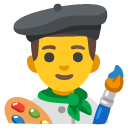


Appearance varies by platform and device. Google Noto, Twemoji, and OpenMoji are open-source.