👩🦲
The Emoji
Woman: Bald
U+1F469 U+200D U+1F9B2 · :woman_bald:
Trend 55
Meaning layers
- interpretation
- Used to signal confidence, boldness, and not caring what others think. Often deployed ironically to say 'I did something drastic' or 'I'm going through it.' Also used humorously when someone 'loses' something metaphorically (hair, patience, sanity).
- tiktok usage
- Appears in videos about hair transformations, mental health journeys, cancer survivorship, or dramatic life decisions. Also used comedically in 'I'm about to do something unhinged' contexts.
- irony level
- 5 / 10
Platform meanings
- meaning
- Represents boldness, cancer survivorship, alopecia visibility, dramatic hair decisions, or stress humor
- trend usage
- Used in hair transformation videos, 'shaved my head' trends, cancer journey vlogs, and chaotic life decision TikToks
- hashtags
- #baldisbeautiful#alopecia#cancerwarrior#shavemyhead#baldwoman
- virality score
- 62 / 100
Cultural meanings
🇺🇸
Western / Gen-Z
Widely understood as a symbol of empowerment, cancer survivorship, or alopecia representation; also used ironically in stress humor and 'going unhinged' memes.
🇵🇰
Pakistan & India
Primarily associated with illness (especially cancer treatment) or religious practices where women shave heads; less commonly used for humor and more often for sincere health-related conversations.
🌍
Middle East
Often linked to illness or medical contexts; in some communities, a shaved head on a woman carries significant cultural weight and the emoji is used carefully and empathetically.
🌐
Global Neutral
Universally readable as a bald woman, with contextual meaning shifting between medical representation, personal boldness, and comedic stress expression across cultures.
🇧🇩
Bangladesh
Primarily understood in the context of illness, particularly cancer, or religious rituals; used respectfully in health support conversations rather than humor.
🇱🇰
Sri Lanka
Associated with illness or religious head-shaving practices; the emoji carries a solemn undertone and is typically used in sincere, supportive contexts.
🇨🇳
China
Often interpreted in relation to illness or chemotherapy, and may also evoke Buddhist associations with head-shaving; used respectfully in health discussions.
🇯🇵
Japan
Understood as a representation of illness or unconventional beauty; in younger online communities, may also represent boldness or a dramatic personal change.
🇰🇷
South Korea
In K-beauty culture where hair is highly valued, this emoji carries significant emotional weight; used in cancer support contexts or to signal a dramatic, rebellious departure from norms.
🇹🇼
Taiwan
Similar to broader East Asian interpretations, associated with illness or bold self-expression; used in health awareness and personal empowerment conversations.
🇭🇰
Hong Kong
Used in medical and health-related discussions; younger users may also adopt it in humor or empowerment contexts influenced by Western internet culture.
🇵🇭
Philippines
Primarily associated with cancer treatment or illness; also used in solidarity messages and increasingly in bold self-expression content influenced by global social media trends.
🇮🇩
Indonesia
Largely interpreted in medical or illness contexts; religious connotations may also be present in certain communities; used with sensitivity and care.
🇹🇭
Thailand
Associated with Buddhist traditions of head-shaving as well as illness; the emoji carries both spiritual and medical associations depending on context.
🇻🇳
Vietnam
Primarily understood in health and illness contexts; gaining traction among younger users as a symbol of resilience and bold self-expression via global social media.
🇲🇾
Malaysia
Interpreted in medical contexts or as a representation of bold unconventional appearance; used in health advocacy and occasionally in humor among younger users.
🇸🇦
Saudi Arabia
Typically associated with illness such as cancer; the concept of a woman with a shaved head may carry strong cultural sensitivity, and the emoji is used carefully in health support contexts.
🇦🇪
UAE
Used in cancer awareness and health support contexts; among younger, more cosmopolitan users, may also appear in bold self-expression or empowerment messaging.
🇪🇬
Egypt
Primarily associated with illness or chemotherapy; a shaved head on a woman is culturally significant and the emoji is used with empathy and seriousness.
🇹🇷
Turkey
Used in health-related conversations, particularly cancer support; younger users influenced by global internet culture may also use it in stress humor or empowerment contexts.
🇮🇷
Iran
Primarily associated with illness; carries cultural sensitivity around women's appearance, so typically used in sincere health support or advocacy conversations.
🇳🇬
Nigeria
Used in cancer awareness campaigns and health support conversations; also gaining use in empowerment contexts as bold self-expression becomes celebrated in urban youth culture.
🇿🇦
South Africa
Used in cancer survivorship and alopecia awareness communities; also embraced in empowerment and natural beauty movements celebrating diverse appearances.
🇬🇧
UK & Ireland
Understood as representing cancer survivors, alopecia, or bold hair choices; used in both sincere health discussions and humor about stress or drastic decisions.
🇫🇷
France
Appreciated in the context of avant-garde fashion and bold aesthetics as well as illness representation; French users may see it as a statement of unconventional beauty.
🇩🇪
Germany
Used straightforwardly in health and medical contexts; also appears in diversity and inclusion discussions; humor usage is less common but present among younger users.
🇪🇸
Spain & Italy
Associated with illness or bold fashion statements; used in cancer support conversations and increasingly in empowerment or dramatic self-expression content.
🇧🇷
Brazil
Used in cancer awareness campaigns and solidarity messaging; younger Brazilians also adopt it in bold empowerment and self-expression contexts on social media.
🇲🇽
Mexico
Primarily used in health and illness contexts; also appears in solidarity messages and bold self-expression content, particularly in online feminist and empowerment communities.
🌎
Latin America
Broadly used in cancer awareness and health solidarity across Latin America; empowerment usage is growing, particularly in feminist and body-positivity online spaces.
🇦🇺
Australia & NZ
Used in cancer support, alopecia awareness, and bold self-expression contexts; also appears in stress humor and 'gone unhinged' meme formats among younger users.
How its meaning shifted
- 2010
This emoji did not exist in 2010; bald woman representation was completely absent from the emoji keyboard, with no Unicode support for this character.
- 2015
Still nonexistent as an emoji; discussions about emoji diversity were beginning to grow, but bald representation for women had not yet been addressed by Unicode.
- 2020
Newly established (introduced in 2018), primarily used in cancer awareness content, alopecia representation, and early adoption by empowerment communities; also beginning to appear in stress humor formats.
- 2026
Widely recognized across platforms for multiple layered meanings including cancer survivorship, alopecia visibility, bold self-expression, stress humor, and Gen Z ironic chaos signaling; normalized in diverse representation conversations.
See it on every platform
Compare with
Adjacent emojis
- Often confused with
- person baldman baldalien
- Can replace
- person baldwoman short hairwoman red hair
Share & embed
Frequently asked
01What does the 👩🦲 Woman: Bald emoji mean?
A woman emoji depicted with a bald or shaved head, introduced as part of the 2018 Unicode 11.0 update to represent diversity in hair representation.
02What does 👩🦲 mean on TikTok?
Represents boldness, cancer survivorship, alopecia visibility, dramatic hair decisions, or stress humor
03What does 👩🦲 mean on WhatsApp?
Typically used to represent a bald or shaved-head woman in conversation, or humorously to indicate stress-induced metaphorical hair loss
04What does 👩🦲 mean in Gen-Z slang?
Used to signal confidence, boldness, and not caring what others think. Often deployed ironically to say 'I did something drastic' or 'I'm going through it.' Also used humorously when someone 'loses' something metaphorically (hair, patience, sanity).
05Is the 👩🦲 emoji safe to use?
Represents women who are bald due to medical conditions, alopecia, or personal choice; used in health advocacy, empowerment, and identity representation.
06What does 👩🦲 mean in texting?
Hair carries deep cultural and personal identity significance; a bald woman emoji can evoke both vulnerability (illness, loss) and empowerment (choosing to shed societal norms). The emoji often signals a complex emotional state layered with strength and humor.
07What is the shortcode for 👩🦲?
The shortcode for Woman: Bald is :woman_bald:
08What does 👩🦲 mean in dating?
Rarely used in flirting contexts; sometimes deployed humorously to say 'you're driving me so crazy I want to shave my head' or to express extreme exasperation with a crush.
Safety & usage
- Safe meaning
- Represents women who are bald due to medical conditions, alopecia, or personal choice; used in health advocacy, empowerment, and identity representation.
- Caution
- Could potentially be used mockingly toward women experiencing hair loss due to illness, though this is uncommon; may rarely appear in body-shaming contexts.
Generally a safe and positive emoji; context matters — while usually empowering or neutral, it could be used insensitively to mock someone's medical condition or appearance in rare cases.
How it looks across platforms
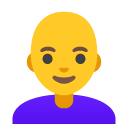


Appearance varies by platform and device. Google Noto, Twemoji, and OpenMoji are open-source.