🤸🏾♀️
The Emoji
Woman Cartwheeling: Medium-dark Skin Tone
U+1F938 U+1F3FE U+200D U+2640 U+FE0F · :woman_cartwheeling_mediumdark_skin_tone:
Trend 65
Meaning layers
- interpretation
- Used to express unbothered energy, doing the absolute most, thriving chaotically, or being extra and living your best life. Also used to say 'I'm out here flipping through life.'
- tiktok usage
- Appears in captions about thriving despite chaos, living freely, or doing something outrageous but confident. Often paired with unhinged life updates.
- irony level
- 6 / 10
Platform meanings
- meaning
- Signals carefree, unbothered, or extra energy. Used in fitness content and chaotic life update videos.
- trend usage
- Appears in 'living my best life' montages, gym transformation videos, and ironic 'thriving' content under stress.
- hashtags
- #cartwheel#gymnasticsgirl#livingmybestlife#unbothered#girlboss
- virality score
- 62 / 100
Cultural meanings
🇺🇸
Western / Gen-Z
Iconic 'unbothered' and 'chaotic thriving' energy symbol. Widely used ironically to signal doing the absolute most or coping through disaster with a smile.
🇵🇰
Pakistan & India
Primarily used in the context of fitness, dance, and Bollywood-inspired movement. Appreciated for its energetic and celebratory tone among younger urban users.
🌍
Middle East
Used among younger, digitally active demographics to express joy, sports, or celebration. Less common in conservative contexts due to the active female figure.
🌐
Global Neutral
Universally understood as expressing physical activity, joy, freedom of movement, and celebration. Safe and broadly positive across most cultures.
🇧🇩
Bangladesh
Used mainly among fitness-conscious youth and students to express excitement and energy. Associated with sport and school-age enthusiasm.
🇱🇰
Sri Lanka
Seen as a fun, sporty emoji used by younger generations to celebrate achievements or express playful energy, especially in social media captions.
🇨🇳
China
Used to express energetic positivity and athleticism. Popular among fitness and lifestyle content creators on WeChat and Weibo.
🇯🇵
Japan
Appreciated for its kawaii-adjacent energy and physical expressiveness. Used in fitness content and upbeat social posts, sometimes with a kawaii or genki nuance.
🇰🇷
South Korea
Used in K-pop fan communities and fitness content to express dynamic energy, 'idol-level' dedication, or playful hype.
🇹🇼
Taiwan
Used similarly to South Korea — energetic, sporty, and expressive. Common in youth culture and lifestyle content.
🇭🇰
Hong Kong
Used in fitness, lifestyle, and youth content to signal a spirited, active personality. Appreciated for its energetic visual.
🇵🇭
Philippines
Popular for expressing OA (over-acting) enthusiasm or genuine excitement. Used in fitness and celebratory social media posts.
🇮🇩
Indonesia
Used among young, active social media users to express joy, sportsmanship, and carefree energy in lifestyle content.
🇹🇭
Thailand
Associated with cheerfulness, physical activity, and youth culture. Used in fitness content and fun social media posts by younger users.
🇻🇳
Vietnam
Seen as a fun, active emoji among youth. Used to express excitement and energy in social captions and workout content.
🇲🇾
Malaysia
Used in fitness, lifestyle, and youth content to project an active, positive personality. Also used humorously in relatable chaos posts.
🇸🇦
Saudi Arabia
Usage is mostly among younger, digitally active women expressing fitness goals or joy. Cultural sensitivity around the female athletic figure exists in more conservative circles.
🇦🇪
UAE
Used widely in the cosmopolitan UAE social media scene, especially among fitness influencers and youth expressing active lifestyles.
🇪🇬
Egypt
Used by younger Egyptians on social media to express excitement and energy. Seen as a sporty, modern, and youthful symbol.
🇹🇷
Turkey
Common in fitness content and youth culture posts. Used to express being carefree, energetic, and celebratory.
🇮🇷
Iran
Primarily used among younger, digitally active Iranians on international platforms to express joy and physical freedom, though the athletic female figure can be sensitive in conservative contexts.
🇳🇬
Nigeria
Used to express big energy, celebration, and confidence. Fits Afrobeat and energetic cultural vibes. Very at home in Nigerian youth internet culture.
🇿🇦
South Africa
Used across cultures in South Africa to express athletic joy, freedom, and celebration. Common in youth and sports content.
🇬🇧
UK & Ireland
Used with a mix of genuine enthusiasm and sarcastic humor. Common in captions about 'smashing it' or ironic posts about barely coping but keeping it moving.
🇫🇷
France
Used to convey joie de vivre and physical expressiveness. More likely to appear in genuine athletic or celebratory contexts than ironic ones.
🇩🇪
Germany
Used primarily in fitness and sports contexts. Straightforward expression of physical activity and positive energy.
🇪🇸
Spain & Italy
Used to express exuberant joy and celebration. Fits the expressive, physical communication style common in Southern European social media culture.
🇧🇷
Brazil
Highly embraced for its energetic, celebratory connotations. Fits naturally into Brazilian social media culture which prizes movement, sport, and joy.
🇲🇽
Mexico
Used to express excitement, celebration, and unbothered confidence. Popular in youth culture and fitness content with a joyful, spirited vibe.
🌎
Latin America
Broadly used across Latin America to express physical joy, celebration, and carefree living. Very positive connotations across the region.
🇦🇺
Australia & NZ
Used in a laid-back, energetic way — often in fitness, outdoors, and beach lifestyle content. Also used ironically in the classic Aussie 'she'll be right' humor register.
How its meaning shifted
- 2010
Emoji did not exist yet. Gymnastics and physical activity online were represented with text emoticons or simple symbols.
- 2015
Woman cartwheeling emoji introduced around this period as part of Unicode's expansion into sports and activity emojis. Primarily used literally for gymnastics and physical activity.
- 2020
Gained ironic and meme usage. Started appearing in 'everything is fine' disaster content and empowerment posts. Skin tone variants increasingly used for representation.
- 2026
Firmly established as both a genuine fitness/activity emoji and an ironic 'chaotic thriving' symbol. A cornerstone of unbothered and carefree girl aesthetics on all major platforms.
See it on every platform
Adjacent emojis
- Often confused with
- person doing cartwheelwoman runningwoman gymnastics
- Can replace
- woman dancingflexed bicepspartying face
Share & embed
Frequently asked
01What does the 🤸🏾♀️ Woman Cartwheeling: Medium-dark Skin Tone emoji mean?
A woman performing a cartwheel, displayed with a medium-dark skin tone. Represents gymnastics, acrobatics, physical activity, flexibility, and athleticism.
02What does 🤸🏾♀️ mean on TikTok?
Signals carefree, unbothered, or extra energy. Used in fitness content and chaotic life update videos.
03What does 🤸🏾♀️ mean on WhatsApp?
Expresses excitement, doing something fun or active, or reacting to good news with over-the-top happiness.
04What does 🤸🏾♀️ mean in Gen-Z slang?
Used to express unbothered energy, doing the absolute most, thriving chaotically, or being extra and living your best life. Also used to say 'I'm out here flipping through life.'
05Is the 🤸🏾♀️ emoji safe to use?
A woman performing a cartwheel — represents physical activity, gymnastics, joy, and freedom of movement.
06What does 🤸🏾♀️ mean in texting?
Cartwheeling symbolizes uninhibited physical expression and childhood freedom. Psychologically linked to releasing tension, celebrating small wins, and embodying carefree confidence.
07What is the shortcode for 🤸🏾♀️?
The shortcode for Woman Cartwheeling: Medium-dark Skin Tone is :woman_cartwheeling_mediumdark_skin_tone:
08What does 🤸🏾♀️ mean in dating?
Signals a fun, active, adventurous personality. Used to show off a sporty or playful side in flirty conversations.
Safety & usage
- Safe meaning
- A woman performing a cartwheel — represents physical activity, gymnastics, joy, and freedom of movement.
- Caution
- No inherently toxic usage. In rare cases, used condescendingly to mock someone for being overly enthusiastic or naive.
No significant safety concerns. The depiction of an athletic woman may be culturally sensitive in some conservative regional contexts, but the emoji itself is not harmful.
How it looks across platforms
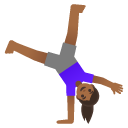
Appearance varies by platform and device. Google Noto, Twemoji, and OpenMoji are open-source.