👩🏭
The Emoji
Woman Factory Worker
U+1F469 U+200D U+1F3ED · :woman_factory_worker:
Trend 35
Meaning layers
- interpretation
- Used to represent the grind, hustle culture, working-class pride, or ironic commentary on overworking. Sometimes deployed to signal 'I'm doing the work no one sees' or as solidarity with labor movements.
- tiktok usage
- Appears in 'quiet quitting' vs 'hustle culture' debate videos, WFH vs factory work comparisons, and blue-collar appreciation content.
- irony level
- 5 / 10
Platform meanings
- meaning
- Symbol of hard work, blue-collar pride, or ironic commentary on overworking and capitalism.
- trend usage
- Used in labor rights awareness content, 'day in my life at the factory' vlogs, and sarcastic work-life balance commentary.
- hashtags
- #BlueCollarLife#WorkingClass#FactoryWorker#GirlsWhoWork#LaborRights
- virality score
- 38 / 100
Cultural meanings
🇺🇸
Western / Gen-Z
Seen as a symbol of blue-collar pride and feminist labor empowerment; irony-coded in anti-capitalist or 'rise and grind' critique contexts.
🇵🇰
Pakistan & India
Interpreted literally as a female factory worker; in urban progressive circles, it represents women's economic empowerment and the fight against gender-segregated labor norms.
🌍
Middle East
Can carry complex connotations due to traditional gender roles; increasingly used by advocates of women's workforce participation to signal progress and independence.
🌐
Global Neutral
Universally understood as a woman in an industrial or manufacturing job; used to represent female workers in blue-collar sectors without irony.
🇧🇩
Bangladesh
Carries significant cultural weight as Bangladesh has one of the world's largest female factory workforces, often used to represent the garment industry and women's economic contribution.
🇱🇰
Sri Lanka
Associated with the export manufacturing sector and female labor; used in contexts celebrating women's contributions to the national economy.
🇨🇳
China
Evokes the image of the hardworking manufacturing-sector woman; used proudly in labor culture content and sometimes in nationalist industrial pride narratives.
🇯🇵
Japan
Less commonly used ironically; associated with the monozukuri (manufacturing craft) culture and is used respectfully to represent female workers in precision industries.
🇰🇷
South Korea
Used in content about labor rights and gender equality in the workplace; also appears in memes about the pressure of Korea's work culture.
🇹🇼
Taiwan
Associated with Taiwan's semiconductor and electronics manufacturing pride; used to represent skilled female workers in high-tech industries.
🇭🇰
Hong Kong
Used in labor rights and protest contexts; evokes solidarity with workers' movements and economic justice discourse.
🇵🇭
Philippines
Associated with women working in economic zones and export industries; used to celebrate OFW (Overseas Filipino Worker) culture and the dignity of labor.
🇮🇩
Indonesia
Represents women in the textile and manufacturing sectors; used in labor advocacy content and women's empowerment campaigns.
🇹🇭
Thailand
Used to represent women in export manufacturing; appears in social media content celebrating hard-working women in industrial sectors.
🇻🇳
Vietnam
Evokes the large female workforce in Vietnam's garment and electronics manufacturing sectors; used with pride in labor dignity content.
🇲🇾
Malaysia
Associated with women in electronics and manufacturing free trade zones; used in feminist labor discourse and working-class community content.
🇸🇦
Saudi Arabia
Used in the context of Saudi Vision 2030 and women entering the workforce; represents the growing presence of women in previously male-dominated industrial roles.
🇦🇪
UAE
Appears in content about migrant workers and labor rights; also used in women's empowerment contexts celebrating female workers in the UAE's growing industrial sector.
🇪🇬
Egypt
Represents women in manufacturing and textile industries; used in feminist economic empowerment discussions and labor rights content.
🇹🇷
Turkey
Associated with women in the textile manufacturing industry; used in labor rights advocacy and feminist economic independence discussions.
🇮🇷
Iran
Used to represent working women navigating economic hardship; carries undertones of resilience and defiance of restrictive gender norms.
🇳🇬
Nigeria
Used in content celebrating women's entrepreneurial and industrial contributions; associated with female market traders and factory workers in Lagos and other industrial cities.
🇿🇦
South Africa
Connected to labor rights movements and the history of female workers in mining and manufacturing; used in trade union and workers' rights content.
🇬🇧
UK & Ireland
Used in conversations about working-class feminism, trade unionism, and the legacy of female factory workers in British industrial history.
🇫🇷
France
Associated with feminist labor discussions and the gilets jaunes (yellow vests) working-class movement; used to represent female workers in blue-collar solidarity content.
🇩🇪
Germany
Represents the Facharbeiter (skilled worker) culture applied to women; used respectfully in vocational training and industrial pride content.
🇪🇸
Spain & Italy
Associated with women in manufacturing and textile sectors; used in labor rights and feminist economic empowerment content, especially during worker strikes.
🇧🇷
Brazil
Represents women in Brazil's large industrial and manufacturing sector; used in working-class pride content and feminist labor advocacy.
🇲🇽
Mexico
Associated with maquiladora culture and the female-dominated manufacturing zones near the US border; used in labor rights and women's economic empowerment content.
🌎
Latin America
Broadly represents the significant role of women in Latin American manufacturing and export industries; used in labor solidarity and feminist economic discourse.
🇦🇺
Australia & NZ
Used in content about women in trades and manufacturing; appears in campaigns to recruit women into blue-collar sectors traditionally dominated by men.
How its meaning shifted
- 2010
Did not exist yet; female worker representation was limited to generic smiley emojis or no emoji at all in digital labor conversations.
- 2015
Still non-existent; the push for diverse professional emojis was just gaining momentum following advocacy from tech companies and Unicode committees.
- 2020
Gained traction during COVID-19 as 'essential worker' conversations highlighted manufacturing and factory labor; used in appreciation posts for frontline workers.
- 2026
Used across labor rights movements, feminist economic empowerment content, anti-hustle culture discourse, and ironic commentary on capitalism and wage labor in the gig economy era.
See it on every platform
Adjacent emojis
- Opposite
- woman office workerlaptopcrown
- Often confused with
- woman cookwoman firefighterwoman construction worker
Share & embed
Frequently asked
01What does the 👩🏭 Woman Factory Worker emoji mean?
A woman working in a factory or industrial setting, wearing a hard hat and safety gear, representing female labor in manufacturing and industrial sectors.
02What does 👩🏭 mean on TikTok?
Symbol of hard work, blue-collar pride, or ironic commentary on overworking and capitalism.
03What does 👩🏭 mean on WhatsApp?
Signals that someone is busy at work, especially in a hands-on or industrial job.
04What does 👩🏭 mean in Gen-Z slang?
Used to represent the grind, hustle culture, working-class pride, or ironic commentary on overworking. Sometimes deployed to signal 'I'm doing the work no one sees' or as solidarity with labor movements.
05Is the 👩🏭 emoji safe to use?
Represents female factory and industrial workers; used for labor appreciation, feminist empowerment, and blue-collar identity expression.
06What does 👩🏭 mean in texting?
Evokes a sense of working-class dignity and the psychological validation of physical labor. Can also trigger feelings of systemic inequality when used in feminist or labor rights contexts.
07What is the shortcode for 👩🏭?
The shortcode for Woman Factory Worker is :woman_factory_worker:
08What does 👩🏭 mean in dating?
Rarely used for flirting; occasionally used to signal 'I'm independent and hardworking' or to compliment someone's work ethic in a playful way.
Safety & usage
- Safe meaning
- Represents female factory and industrial workers; used for labor appreciation, feminist empowerment, and blue-collar identity expression.
- Caution
- Rarely weaponized, but could be used condescendingly to demean someone's profession or socioeconomic status in classist online arguments.
Generally safe to use. In rare cases, may be used in classist or sexist commentary to diminish women in blue-collar work. Context monitoring recommended in hostile communities.
How it looks across platforms
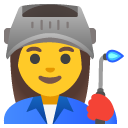


Appearance varies by platform and device. Google Noto, Twemoji, and OpenMoji are open-source.