🧚🏽♀️
The Emoji
Woman Fairy: Medium Skin Tone
U+1F9DA U+1F3FD U+200D U+2640 U+FE0F · :woman_fairy_medium_skin_tone:
Trend 68
Meaning layers
- interpretation
- Used to signal ethereal, whimsical, or 'main character' energy — often expressing a carefree, magical, or unbothered attitude. Also used ironically to mock or playfully call out someone's delusion or over-the-top behavior.
- tiktok usage
- Appears in 'that girl' aesthetic content, cottagecore vibes, and self-care routines. Also used sarcastically when someone acts like they're living in a fantasy.
- irony level
- 5 / 10
Platform meanings
- meaning
- Represents magical aesthetics, fairycore content, carefree girlhood energy, or ironic unbothered vibes.
- trend usage
- Paired with dreamy transitions, cottagecore outfits, forest aesthetics, or 'main character syndrome' confessions.
- hashtags
- #fairycore#thatgirl#maincharacter#ethereal#cottagecore
- virality score
- 72 / 100
Cultural meanings
🇺🇸
Western / Gen-Z
Iconic in fairycore and cottagecore aesthetics; used to signal whimsy, unbothered energy, or ironic 'delulu' behavior.
🇵🇰
Pakistan & India
Used to describe someone as beautiful, magical, or ethereal, especially for women; sometimes used to call someone a dreamer or out of touch with reality.
🌍
Middle East
Associated with jinn or magical beings in some contexts; generally used to express admiration for someone's enchanting beauty or a dreamy quality.
🌐
Global Neutral
Universally understood as a magical, whimsical fairy character; used across cultures to express enchantment, beauty, or playfulness.
🇧🇩
Bangladesh
Used to describe someone as ethereally beautiful or dreamy; less common in ironic contexts, more sincere in complimentary use.
🇱🇰
Sri Lanka
Often used to compliment someone's beauty or describe a magical, enchanting quality; associated with fairy tales and fantasy stories.
🇨🇳
China
Associated with fantasy games and anime culture; used in fandom communities and among younger users to signal magical or fairy-type characters (仙女 aesthetic).
🇯🇵
Japan
Connects strongly to magical girl (mahou shoujo) culture; used in anime fandom, kawaii culture, and to describe an otherworldly, delicate beauty.
🇰🇷
South Korea
Used in K-beauty and K-pop fan communities to describe an idol's fairy-like visuals; associated with the 'fairy-type' concept in idol fandoms.
🇹🇼
Taiwan
Used in gaming and fantasy communities; also popular in aesthetic social media content celebrating dreamy, magical visuals.
🇭🇰
Hong Kong
Common in young women's social media to signal a carefree, magical persona; used in fantasy gaming communities as well.
🇵🇭
Philippines
Used to express enchantment or describe someone as impossibly beautiful; associated with local folklore fairy figures and fantasy narratives.
🇮🇩
Indonesia
Connected to local mythology and fantasy; used by younger generations in aesthetic content and to describe someone with a magical, otherworldly quality.
🇹🇭
Thailand
Used in fantasy and gaming contexts; also popular among younger users to describe a delicate, ethereal beauty aligned with Thai beauty ideals.
🇻🇳
Vietnam
Used primarily in aesthetic and fantasy social media content; can describe someone as gracefully beautiful and otherworldly.
🇲🇾
Malaysia
Used in social media to express enchantment or describe someone as magically beautiful; also appears in fantasy gaming communities.
🇸🇦
Saudi Arabia
Used mostly by younger women on social media to signal a dreamy, magical aesthetic; less common in traditional or older demographics.
🇦🇪
UAE
Popular in lifestyle and beauty content to signal luxury, ethereal aesthetics, and magical self-presentation.
🇪🇬
Egypt
Used to express admiration for someone's beauty or magical qualities; may evoke associations with mythological imagery.
🇹🇷
Turkey
Popular in young women's social media to describe ethereal beauty or a whimsical, carefree personality.
🇮🇷
Iran
Used among younger social media users to describe someone as magically beautiful or living in a dreamy, idealized world.
🇳🇬
Nigeria
Used to compliment someone as extraordinarily beautiful or magical; sometimes used humorously to call someone delusional or over-the-top.
🇿🇦
South Africa
Used in aesthetic social media content and to describe someone as enchantingly beautiful; also appears in fantasy and gaming communities.
🇬🇧
UK & Ireland
Common in Gen Z and Millennial social media to signal fairycore aesthetics; also used sarcastically for someone acting overly whimsical or precious.
🇫🇷
France
Used in artistic and aesthetic contexts to describe someone as ethereally beautiful; less ironic use, more sincere admiration.
🇩🇪
Germany
Primarily used in fantasy and gaming communities; less common in ironic contexts, more associated with literal fairy-tale imagery.
🇪🇸
Spain & Italy
Used to express admiration for beauty or a magical quality; popular in lifestyle and aesthetic content among younger users.
🇧🇷
Brazil
Used to describe someone as magically beautiful or enchanting; also popular in fantasy fandoms and aesthetic social media content.
🇲🇽
Mexico
Used to signal a magical, whimsical personality or to call someone extraordinarily beautiful; connected to magical realism cultural themes.
🌎
Latin America
Broadly used to express enchantment, describe magical beauty, or signal a dreamy, fantastical aesthetic in social media content.
🇦🇺
Australia & NZ
Used similarly to UK Gen Z culture — signals fairycore aesthetics, carefree energy, and occasionally ironic 'main character' behavior.
How its meaning shifted
- 2010
Did not exist yet; the base fairy emoji was not yet introduced, and skin tone variants came later.
- 2015
Just beginning to appear following Unicode additions; used mostly literally to represent fairy characters in fantasy contexts.
- 2020
Surged in use as fairycore and cottagecore aesthetics exploded on TikTok and Instagram; began appearing in ironic 'not my problem' meme contexts.
- 2026
Firmly embedded in fairycore, 'delulu,' and ethereal aesthetic culture; used both sincerely and ironically across all major platforms by Gen Z and Gen Alpha.
See it on every platform
Adjacent emojis
- Often confused with
- woman angelwoman elfwoman mage
- Can replace
- sparklesbutterflywoman dancing
Share & embed
Frequently asked
01What does the 🧚🏽♀️ Woman Fairy: Medium Skin Tone emoji mean?
A fairy character presented as a woman with medium skin tone, featuring wings and a magical appearance, derived from the base fairy emoji with a female gender modifier and medium skin tone modifier.
02What does 🧚🏽♀️ mean on TikTok?
Represents magical aesthetics, fairycore content, carefree girlhood energy, or ironic unbothered vibes.
03What does 🧚🏽♀️ mean on WhatsApp?
A playful, whimsical emoji used between friends to call someone cute, magical, or extra. Also used to tease someone for being dramatic.
04What does 🧚🏽♀️ mean in Gen-Z slang?
Used to signal ethereal, whimsical, or 'main character' energy — often expressing a carefree, magical, or unbothered attitude. Also used ironically to mock or playfully call out someone's delusion or over-the-top behavior.
05Is the 🧚🏽♀️ emoji safe to use?
A whimsical, magical fairy character used to express enchantment, beauty, playfulness, and ethereal aesthetics.
06What does 🧚🏽♀️ mean in texting?
Evokes a sense of enchantment and imagination, often used when someone feels carefree or wants to project an otherworldly, idealized self-image. Can signal emotional lightness or a desire to escape reality.
07What is the shortcode for 🧚🏽♀️?
The shortcode for Woman Fairy: Medium Skin Tone is :woman_fairy_medium_skin_tone:
08What does 🧚🏽♀️ mean in dating?
Used flirtatiously to suggest someone is magical, enchanting, or otherworldly — effectively a compliment on someone's aura or looks.
Safety & usage
- Safe meaning
- A whimsical, magical fairy character used to express enchantment, beauty, playfulness, and ethereal aesthetics.
- Caution
- Occasionally used to mock someone as delusional, out of touch, or living in a fantasy — can be subtly dismissive.
Generally safe for all audiences. The mockery use is typically mild and indirect. No significant NSFW associations in mainstream use.
How it looks across platforms
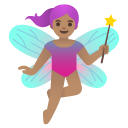
Appearance varies by platform and device. Google Noto, Twemoji, and OpenMoji are open-source.