🧎🏽♀️➡️
The Emoji
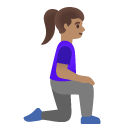
Woman Kneeling Facing Right: Medium Skin Tone
U+1F9CE U+1F3FD U+200D U+2640 U+FE0F U+200D U+27A1 U+FE0F · :woman_kneeling_facing_right_medium_skin_tone:
Trend 38
Meaning layers
- interpretation
- Used to express humility, bowing down to something/someone, or ironically 'taking a knee' in solidarity or defeat. Also used as a dramatic 'I'm not worthy' gesture or to indicate being in awe.
- tiktok usage
- Appears in reaction videos where someone is metaphorically bowing down to a skill, a celebrity, or an achievement. Often paired with crown or fire emojis.
- irony level
- 5 / 10
Platform meanings
- meaning
- Kneeling in awe or respect, often used to show someone is 'not worthy' of a moment, skill, or person featured in a video.
- trend usage
- Appears in duet reactions and comment sections when responding to incredibly talented or impressive creators. Also used in 'taking a knee' solidarity content.
- hashtags
- #bowingdown#notworthy#respect#kneeling#humbled
- virality score
- 42 / 100
Cultural meanings
🇺🇸
Western / Gen-Z
Used ironically and genuinely to express admiration or defeat, often in meme contexts saying 'I kneel before your excellence'. Fits into the broader 'not worthy' cultural shorthand.
🇵🇰
Pakistan & India
Strongly associated with reverence, prayer posture (similar to sajda in Islamic context or devotion in Hindu practice), making it feel spiritually significant rather than casual.
🌍
Middle East
Likely interpreted in the context of Islamic prayer prostration (sujood), lending it a deeply religious connotation that makes casual use feel disrespectful to some.
🌐
Global Neutral
Universally readable as a gesture of respect, humility, or physical kneeling; context-dependent interpretation makes it broadly usable across cultures.
🇧🇩
Bangladesh
Carries religious undertones similar to South Asian and Islamic contexts; may be associated with prayer or devotional postures and used with spiritual intent.
🇱🇰
Sri Lanka
In Buddhist-majority contexts, may evoke devotional kneeling before statues or elders; used respectfully in cultural or religious conversation.
🇨🇳
China
Less directly associated with prayer; more likely interpreted as a physical posture like stretching or bowing, with some historical connotations of submission to authority.
🇯🇵
Japan
Kneeling (seiza) is a deeply cultural act of respect and formality in Japan; this emoji may evoke formal deference, apology, or ceremonial respect.
🇰🇷
South Korea
Associated with formal respect, bowing culture, and K-drama scenes of emotional submission or dramatic apology; also used in fan culture to 'bow' to idols.
🇹🇼
Taiwan
Interpreted similarly to broader East Asian contexts of respect and formality; may also be used humorously in internet culture to express admiration.
🇭🇰
Hong Kong
Used in meme culture and social commentary; 'kneeling' has political undertones in some Hong Kong discourse related to submission to authority.
🇵🇭
Philippines
Has strong Catholic religious associations with kneeling in prayer; also used casually online to express admiration or comedic defeat.
🇮🇩
Indonesia
In the predominantly Muslim context, kneeling evokes prayer posture; used both sincerely in religious discussions and casually in admiration.
🇹🇭
Thailand
Connected to Buddhist reverence and respect; kneeling before monks or royalty is culturally significant, lending this emoji a formal or respectful tone.
🇻🇳
Vietnam
Associated with respect for elders and ancestral worship; the kneeling posture carries cultural weight in traditional and religious settings.
🇲🇾
Malaysia
In the multicultural Malaysian context, may be read as prayer (Islamic), reverence (Buddhist/Hindu), or casual online expression of admiration.
🇸🇦
Saudi Arabia
Strongly linked to Islamic prayer posture; casual or humorous use may be considered inappropriate, as the gesture holds significant religious meaning.
🇦🇪
UAE
Similar to Saudi Arabia in religious connotation; in the cosmopolitan UAE, younger users may use it more casually in digital contexts while being mindful of religious sensitivity.
🇪🇬
Egypt
Has Islamic prayer associations; also used in popular culture to express dramatic admiration or comedic submission in meme-friendly online spaces.
🇹🇷
Turkey
Bridges Eastern and Western interpretations; used in both religious contexts (prayer) and casual social media to express respect or ironic defeat.
🇮🇷
Iran
Primarily associated with religious prayer postures in the Islamic context; casual meme usage exists among younger internet users but with cultural awareness.
🇳🇬
Nigeria
Used in both Christian and Muslim contexts to represent prayer or worship; also widely used in Afrobeats fan culture to 'bow down' to artists or impressive moments.
🇿🇦
South Africa
Interpreted in the context of Ubuntu humility and respect; also used casually in social media to express admiration across diverse cultural communities.
🇬🇧
UK & Ireland
Used casually and ironically in British internet culture; the 'taking a knee' association with sports activism (following Marcus Rashford etc.) is particularly resonant.
🇫🇷
France
Used more literally or in wellness/sports contexts; French internet culture may deploy it ironically with characteristic dry humor.
🇩🇪
Germany
Interpreted practically as a posture emoji for fitness or yoga; also used online to express sincere respect or acknowledgment of excellence.
🇪🇸
Spain & Italy
Used expressively in Mediterranean digital communication to show dramatic admiration or passionate respect; fits well in fan communities.
🇧🇷
Brazil
Deployed enthusiastically in fan culture, football commentary, and social media to 'bow down' to great moments; fits the expressive Brazilian online style.
🇲🇽
Mexico
Used in both religious contexts (Catholic devotion) and lively internet culture to express admiration, respect, or comedic surrender.
🌎
Latin America
Broadly understood as a gesture of respect or devotion; used across social platforms to express admiration for music, sports, and cultural figures.
🇦🇺
Australia & NZ
Used casually and with humor; strong association with the 'taking a knee' social movement, making it appear in activist and sports-related online discourse.
How its meaning shifted
- 2010
This specific emoji did not exist in 2010; directional and gender-specific person emojis had not yet been introduced to Unicode.
- 2015
Still not yet introduced; basic human emojis existed but directional variants were not part of the standard set.
- 2020
Directional kneeling emojis were introduced around this period; initial usage was limited and largely tied to the global 'take a knee' social justice movement's digital expression.
- 2026
Established as a versatile emoji used across spiritual, fitness, admiration, and meme contexts; skin tone variants normalized in inclusive digital communication practices.
See it on every platform
Compare with
Adjacent emojis
Share & embed
Frequently asked
01What does the 🧎🏽♀️➡️ Woman Kneeling Facing Right: Medium Skin Tone emoji mean?
A woman kneeling and facing right with medium skin tone, depicted in a side-profile kneeling position directed toward the right side.
02What does 🧎🏽♀️➡️ mean on TikTok?
Kneeling in awe or respect, often used to show someone is 'not worthy' of a moment, skill, or person featured in a video.
03What does 🧎🏽♀️➡️ mean on WhatsApp?
Expressing deep respect or humility in a casual chat context, or humorously surrendering in a debate.
04What does 🧎🏽♀️➡️ mean in Gen-Z slang?
Used to express humility, bowing down to something/someone, or ironically 'taking a knee' in solidarity or defeat. Also used as a dramatic 'I'm not worthy' gesture or to indicate being in awe.
05Is the 🧎🏽♀️➡️ emoji safe to use?
Represents a woman kneeling and facing right; used for prayer, yoga, fitness, respect, admiration, or social commentary.
06What does 🧎🏽♀️➡️ mean in texting?
Kneeling is a universal posture of submission, respect, or reverence across cultures. In emotional messaging it often signals someone lowering their defenses or showing deep respect, but can also indicate exhaustion or defeat.
07What is the shortcode for 🧎🏽♀️➡️?
The shortcode for Woman Kneeling Facing Right: Medium Skin Tone is :woman_kneeling_facing_right_medium_skin_tone:
08What does 🧎🏽♀️➡️ mean in dating?
Rarely used in flirting directly, but can be used playfully to say 'I'm on my knees for you' in an overly dramatic, humorous romantic context.
Safety & usage
- Safe meaning
- Represents a woman kneeling and facing right; used for prayer, yoga, fitness, respect, admiration, or social commentary.
- Caution
- Could be used in degrading contexts implying submission or subservience in a disrespectful or sexualized manner.
While generally safe, the kneeling posture can be weaponized in harassment to demand submission or humiliation from others. Context sensitivity is advised.
How it looks across platforms
Appearance varies by platform and device. Google Noto, Twemoji, and OpenMoji are open-source.