🏋🏿♀️
The Emoji
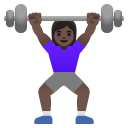
Woman Lifting Weights: Dark Skin Tone
U+1F3CB U+1F3FF U+200D U+2640 U+FE0F · :woman_lifting_weights_dark_skin_tone:
Trend 68
Meaning layers
- interpretation
- Used to signal gym dedication, hustle, empowerment, or flexing on haters. Often used alongside captions about mental toughness, self-improvement, or 'getting that bag.'
- tiktok usage
- Appears in fitness transformation videos, 'that girl' aesthetic content, gym motivation clips, and captions about leveling up physically and mentally.
- irony level
- 3 / 10
Platform meanings
- meaning
- Represents gym grind, fitness transformation, and Black female empowerment in fitness spaces.
- trend usage
- Used in 'that girl' morning routine videos, gym glow-up content, and motivational voiceover videos about self-discipline.
- hashtags
- #GymGirl#BlackGirlFitness#ThatGirl#LiftingWeights#GlowUp
- virality score
- 72 / 100
Cultural meanings
🇺🇸
Western / Gen-Z
Strongly associated with the 'that girl' self-improvement aesthetic, Black female empowerment, and gym culture — widely celebrated and frequently used in fitness content.
🇵🇰
Pakistan & India
Less common but growing in urban fitness communities; used by women in gym or sports contexts to signal modernity and physical empowerment, sometimes seen as bold or progressive.
🌍
Middle East
Used primarily in private fitness communities and women-only gym groups; signals strength and health but may be used discreetly given cultural norms around women's public physical expression.
🌐
Global Neutral
Universally understood as a symbol of female strength, fitness, and physical dedication regardless of cultural context.
🇧🇩
Bangladesh
Emerging in urban youth fitness culture, particularly among women participating in gym culture; seen as a sign of progressive self-care and physical empowerment.
🇱🇰
Sri Lanka
Used in fitness and wellness communities, particularly among younger women; represents a growing interest in gym culture and women's sports participation.
🇨🇳
China
Associated with fitness culture and female empowerment in urban contexts; the skin tone specificity may be less culturally salient but the fitness meaning is universally understood.
🇯🇵
Japan
Used in fitness and gym contexts; the dark skin tone may carry less representational weight culturally but the emoji is recognized as gym/strength related.
🇰🇷
South Korea
Appears in gym culture content and K-fitness communities; the strength and discipline aspect resonates strongly with Korean fitness and self-improvement culture.
🇹🇼
Taiwan
Used in fitness contexts and women's empowerment discussions; embraced in progressive social media circles as a symbol of strong, independent women.
🇭🇰
Hong Kong
Common in fitness and wellness content; used to signal a disciplined, health-conscious lifestyle among urban youth.
🇵🇭
Philippines
Widely used in fitness communities and women's empowerment posts; particularly resonant given the pride in strong Filipina women athletes and sports culture.
🇮🇩
Indonesia
Growing usage in urban fitness communities; used by women to signal strength and dedication, increasingly common in women's sports and gym-related social content.
🇹🇭
Thailand
Associated with fitness culture and the growing gym community in Thailand; used to represent strong, active women and physical wellness.
🇻🇳
Vietnam
Used in fitness and self-improvement content among urban youth; signals modernity, discipline, and a health-forward lifestyle.
🇲🇾
Malaysia
Common in fitness communities and women's empowerment content; the skin tone representation resonates with Malay and South Asian Malaysian communities.
🇸🇦
Saudi Arabia
Used increasingly in women's fitness content following Vision 2030 reforms enabling women's gym participation; carries a culturally significant empowerment meaning in this context.
🇦🇪
UAE
Widely used in the multicultural UAE fitness community; resonates across diverse expat and local communities interested in wellness and female empowerment.
🇪🇬
Egypt
Used in women's fitness communities and empowerment spaces; signals strength and dedication, growing in popularity as gym culture expands among Egyptian women.
🇹🇷
Turkey
Associated with fitness culture and strong women narratives; used in gym and sports content as Turkey's fitness industry grows.
🇮🇷
Iran
Used in private fitness and women's empowerment communities online; carries a subtle but meaningful connotation of resistance and female strength.
🇳🇬
Nigeria
Highly resonant — used widely to celebrate Black female strength, fitness, and excellence; deeply tied to pride in Nigerian women athletes and the broader Afro-fitness movement.
🇿🇦
South Africa
Strong cultural resonance representing Black South African women's strength and empowerment; used in fitness, sports, and social justice contexts.
🇬🇧
UK & Ireland
Used in gym culture, fitness influencer content, and Black British women's empowerment spaces; popular in diverse urban communities across London and other cities.
🇫🇷
France
Used in fitness and sports contexts; carries representation significance for France's large Afro-French community in sports and wellness spaces.
🇩🇪
Germany
Appears in fitness and sports content; increasingly used in diversity and representation discussions within German wellness culture.
🇪🇸
Spain & Italy
Used in gym and fitness content; the representation aspect resonates in discussions about diversity in Southern European sports and wellness media.
🇧🇷
Brazil
Strongly resonant in Brazil's fitness-obsessed culture, particularly celebrated in Afro-Brazilian communities where this emoji represents pride, strength, and cultural identity.
🇲🇽
Mexico
Used in fitness communities and women's empowerment content; growing presence in Mexican gym culture social media.
🌎
Latin America
Broadly used across Latin America in fitness content and Afro-Latina empowerment spaces, celebrating strength and the representation of darker-skinned women in wellness.
🇦🇺
Australia & NZ
Used in fitness culture and diversity/inclusion content; resonates in Indigenous and Black communities in Australia and the Pacific Islander communities of New Zealand.
How its meaning shifted
- 2010
This specific emoji did not exist yet; the base weightlifter emoji was not part of Unicode until 2014, and skin tone/gender variants came later.
- 2015
Introduced as part of Unicode 8.0 skin tone modifiers and gender additions; primarily used literally to denote gym activity and weightlifting.
- 2020
Became a symbol of Black female empowerment and fitness culture; usage surged alongside body positivity, 'that girl' aesthetic beginnings, and heightened racial justice awareness.
- 2026
Deeply embedded in intersectional wellness culture, used across fitness, empowerment, and self-improvement content; a staple in Black women's digital expression and mainstream fitness social media.
See it on every platform
Adjacent emojis
- Opposite
- person in bedcouch and lampzzz
- Often confused with
- man lifting weightswoman cartwheelingperson doing cartwheel
- Can replace
- flexed bicepsfiresparkles
Share & embed
Frequently asked
01What does the 🏋🏿♀️ Woman Lifting Weights: Dark Skin Tone emoji mean?
A woman lifting weights with a dark skin tone modifier, representing strength training, weightlifting, and physical fitness.
02What does 🏋🏿♀️ mean on TikTok?
Represents gym grind, fitness transformation, and Black female empowerment in fitness spaces.
03What does 🏋🏿♀️ mean on WhatsApp?
Signals that someone is at the gym, talking about workouts, or expressing that they are strong and determined.
04What does 🏋🏿♀️ mean in Gen-Z slang?
Used to signal gym dedication, hustle, empowerment, or flexing on haters. Often used alongside captions about mental toughness, self-improvement, or 'getting that bag.'
05Is the 🏋🏿♀️ emoji safe to use?
Represents female fitness, strength training, gym culture, empowerment, and Black women's representation in sports and wellness.
06What does 🏋🏿♀️ mean in texting?
The combination of femininity, physical strength, and dark skin tone signals intersectional empowerment — challenging both gender and racial stereotypes about who 'belongs' in strength sports.
07What is the shortcode for 🏋🏿♀️?
The shortcode for Woman Lifting Weights: Dark Skin Tone is :woman_lifting_weights_dark_skin_tone:
08What does 🏋🏿♀️ mean in dating?
Can signal to a partner that the sender is strong, disciplined, and self-sufficient — sometimes used playfully to flex physique in early flirting stages.
Safety & usage
- Safe meaning
- Represents female fitness, strength training, gym culture, empowerment, and Black women's representation in sports and wellness.
- Caution
- Rarely misused; could theoretically appear in body-shaming or toxic fitness culture contexts, but this is uncommon.
Generally a very safe and positive emoji. In rare cases, fitness culture toxicity (diet culture, over-exercising glorification) may accompany it, but the emoji itself carries no negative connotation.
How it looks across platforms
Appearance varies by platform and device. Google Noto, Twemoji, and OpenMoji are open-source.