🚵♀️
The Emoji
Woman Mountain Biking
U+1F6B5 U+200D U+2640 U+FE0F · :woman_mountain_biking:
Trend 54
Meaning layers
- interpretation
- Signals an outdoorsy, adventurous, independent woman who doesn't need anyone to keep up with her. Often used to express hustle, grind energy, or a 'leave me alone I'm thriving' vibe.
- tiktok usage
- Used in fitness motivation videos, 'that girl' aesthetic content, solo adventure vlogs, and captions about self-improvement or escaping toxic situations.
- irony level
- 2 / 10
Platform meanings
- meaning
- Active girl energy, fitness motivation, 'that girl' aesthetic, or comedic escape from responsibility.
- trend usage
- Appears in 5am routine videos, outdoor adventure content, 'glow-up' montages, and sarcastic 'running from my problems' skits.
- hashtags
- #mountainbike#thatgirl#activegirl#outdoorlife#girlswhoride
- virality score
- 58 / 100
Cultural meanings
🇺🇸
Western / Gen-Z
Strongly associated with the 'that girl' trend, outdoor independence, and empowerment — used frequently in fitness content and self-improvement narratives. Also used ironically to represent riding away from problems or toxic situations.
🇵🇰
Pakistan & India
Less commonly used in casual conversation but appears in urban fitness communities and women's sports content on Instagram. Carries a progressive connotation of active, independent women breaking traditional expectations.
🌍
Middle East
Predominantly used in fitness and wellness contexts among urban youth; signals modernity and an active lifestyle. In more conservative regions it may feel slightly unconventional but is generally accepted in sports contexts.
🌐
Global Neutral
Universally understood as a woman participating in mountain biking or outdoor sports. Carries broadly positive, active, and empowering connotations across most global contexts.
🇧🇩
Bangladesh
Primarily used in fitness-forward urban social media spaces; represents an aspirational active lifestyle for women. Less common in everyday conversation but not considered offensive.
🇱🇰
Sri Lanka
Used by younger, urban demographics to signal fitness and outdoor activity interest. Associated with modern, health-conscious lifestyles among Sri Lankan youth on Instagram and WhatsApp.
🇨🇳
China
Used in fitness and outdoor sports communities, especially among young urban women embracing active lifestyles. Platforms like WeChat and Weibo see it in outdoor sports group chats and fitness content.
🇯🇵
Japan
Associated with outdoor sports culture and the growing mountain biking scene in Japan. Used in fitness communities and by women posting about trail riding or cycling in mountainous regions.
🇰🇷
South Korea
Tied to the growing interest in outdoor sports and health culture among Korean youth. Appears in fitness content and is associated with an active, disciplined, self-improving lifestyle aesthetic.
🇹🇼
Taiwan
Used in outdoor cycling and mountain sports communities; Taiwan's strong cycling culture makes this emoji well-recognized and positively received. Frequently seen in cycling group posts and outdoor adventure content.
🇭🇰
Hong Kong
Popular in outdoor sports and fitness circles given Hong Kong's active trail culture. Used to represent female cyclists and trail riders, fitting naturally into the city's vibrant outdoor recreation scene.
🇵🇭
Philippines
Used in fitness and outdoor adventure communities, particularly among urban youth interested in sports and healthy living. Carries aspirational energy tied to an active, adventurous lifestyle.
🇮🇩
Indonesia
Appears in fitness and outdoor sports content, particularly among younger urban Indonesians interested in mountain biking and trail activities. Seen as a symbol of modern, active femininity.
🇹🇭
Thailand
Used in outdoor sports and fitness communities; reflects Thailand's growing mountain biking culture in northern regions. Carries positive, healthy lifestyle associations among active Thai youth.
🇻🇳
Vietnam
Associated with fitness culture and the growing cycling community in Vietnam. Used by younger generations to signal an active, modern lifestyle in urban social media spaces.
🇲🇾
Malaysia
Appears in fitness and outdoor sports contexts, particularly in cycling communities. Represents an active, empowered woman and is generally well-received across Malaysia's multicultural social media landscape.
🇸🇦
Saudi Arabia
Used in fitness and active lifestyle content, particularly as women's participation in sports has grown significantly. Carries a progressive, modern connotation in the context of Vision 2030 cultural shifts.
🇦🇪
UAE
Common in fitness, wellness, and outdoor sports content in the UAE's cosmopolitan social media spaces. Reflects the country's growing culture of women's sports participation and active lifestyle branding.
🇪🇬
Egypt
Used primarily in fitness communities and among urban youth interested in outdoor sports. Carries a modern, progressive connotation associated with active and independent women.
🇹🇷
Turkey
Appears in outdoor sports and fitness content, fitting Turkey's growing mountain biking and trail culture. Generally positive, representing an active and independent female lifestyle.
🇮🇷
Iran
Used cautiously in fitness and outdoor contexts; represents an active lifestyle but carries additional cultural weight given restrictions on women's public sports participation. More common in private or diaspora social media spaces.
🇳🇬
Nigeria
Used in fitness and aspirational lifestyle content, particularly among urban Nigerian youth. Signals a modern, active, and internationally-aware identity on platforms like Instagram and Twitter.
🇿🇦
South Africa
Common in outdoor sports and trail riding communities given South Africa's strong MTB culture. Frequently used in cycling group chats, trail events, and women's sports content.
🇬🇧
UK & Ireland
Widely used in cycling communities and outdoor sports content; the UK's strong cycling culture makes this emoji well-recognized. Also used humorously in everyday conversation to indicate riding off from drama.
🇫🇷
France
Associated with cycling culture — deeply embedded in French identity — and used in both serious cycling content and casual outdoor lifestyle posts. Carries sporty, health-conscious, and independent connotations.
🇩🇪
Germany
Used in outdoor sports, cycling, and fitness communities; fits Germany's strong culture of outdoor recreation and cycling infrastructure. Straightforwardly positive and widely understood.
🇪🇸
Spain & Italy
Appears in outdoor sports and cycling content; both countries have strong cycling cultures where this emoji resonates. Also used in casual lifestyle posts to signal an active, adventurous spirit.
🇧🇷
Brazil
Used in outdoor sports and fitness communities; Brazil's growing mountain biking scene makes this relatable. Also carries a strong empowerment and independence vibe popular in Brazilian women's social media content.
🇲🇽
Mexico
Associated with fitness culture and outdoor adventure, increasingly popular among younger Mexican women on Instagram and TikTok. Represents an active, modern lifestyle and female empowerment.
🌎
Latin America
Broadly used across Latin America in fitness and outdoor sports content; signals an active, empowered woman. Resonates with growing communities of women cyclists and outdoor enthusiasts across the region.
🇦🇺
Australia & NZ
Extremely well-suited to Australian and New Zealand outdoor culture; mountain biking is hugely popular in both countries. Used frequently in trail riding communities, fitness content, and outdoor adventure posts.
How its meaning shifted
- 2010
Mountain biking emoji did not yet exist; general sport or activity was expressed with basic bicycle emoji without gender variants.
- 2015
The gender-specific variant was introduced around this period as Unicode expanded gender representation in emoji. Usage was primarily literal — representing women who bike.
- 2020
Gained broader cultural usage beyond literal cycling, adopted in fitness motivation content, women's empowerment messaging, and early 'that girl' aesthetic posts.
- 2026
Firmly embedded in active lifestyle, female empowerment, and outdoor adventure aesthetics. Used both sincerely in fitness content and ironically in memes about escaping responsibilities or toxic situations.
See it on every platform
Compare with
Adjacent emojis
- Often confused with
- woman cyclingwoman cartwheelingwoman playing handball
- Can replace
- woman cyclingbicyclewoman running
Share & embed
Frequently asked
01What does the 🚵♀️ Woman Mountain Biking emoji mean?
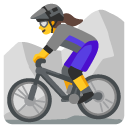
A woman riding a mountain bike, depicted in an active athletic posture on a bicycle designed for off-road terrain.
02What does 🚵♀️ mean on TikTok?
Active girl energy, fitness motivation, 'that girl' aesthetic, or comedic escape from responsibility.
03What does 🚵♀️ mean on WhatsApp?
Signals going for a bike ride, being outdoors, or expressing active energy in casual conversation.
04What does 🚵♀️ mean in Gen-Z slang?
Signals an outdoorsy, adventurous, independent woman who doesn't need anyone to keep up with her. Often used to express hustle, grind energy, or a 'leave me alone I'm thriving' vibe.
05Is the 🚵♀️ emoji safe to use?
Represents an active, sporty woman engaged in mountain biking; positive and empowering in virtually all standard contexts.
06What does 🚵♀️ mean in texting?
Evokes a sense of autonomy and physical liberation. The imagery of a woman conquering rough terrain taps into themes of resilience and self-sufficiency, resonating strongly with audiences valuing independence.
07What is the shortcode for 🚵♀️?
The shortcode for Woman Mountain Biking is :woman_mountain_biking:
08What does 🚵♀️ mean in dating?
Rarely used as a direct flirt; more often signals to a potential partner that the sender is active, outdoorsy, and not the type to sit still — a subtle 'keep up with me' energy.
Safety & usage
- Safe meaning
- Represents an active, sporty woman engaged in mountain biking; positive and empowering in virtually all standard contexts.
- Caution
- No known toxic or harmful uses; occasionally used sarcastically but never in a genuinely harmful context.
No significant warning notes. In rare cases could be used condescendingly toward women in sports discussions, but this is uncommon.
How it looks across platforms
Appearance varies by platform and device. Google Noto, Twemoji, and OpenMoji are open-source.