🤽🏿♀️
The Emoji
Woman Playing Water Polo: Dark Skin Tone
U+1F93D U+1F3FF U+200D U+2640 U+FE0F · :woman_playing_water_polo_dark_skin_tone:
Trend 18
Meaning layers
- interpretation
- Used to signal athleticism, hustle, or being in your element — often dropped as a flex for someone thriving in a competitive or aquatic environment. Also used ironically to describe chaotic multitasking ('me juggling five tasks at once').
- tiktok usage
- Appears in sport montages, Black athlete appreciation content, swim/water polo team videos, and 'girlboss in the water' energy edits.
- irony level
- 3 / 10
Platform meanings
- meaning
- Represents female athletic strength, Black excellence in sports, and aquatic energy. Used in sport POV videos and empowerment content.
- trend usage
- Appears in water polo team TikToks, Black athlete spotlights, and 'women in sports' appreciation trends.
- hashtags
- #WaterPolo#BlackGirlMagic#WomenInSports#AthleteTok#SwimLife
- virality score
- 28 / 100
Cultural meanings
🇺🇸
Western / Gen-Z
Used to celebrate intersectional representation — Black women in water sports — and fits neatly into 'Black girl magic' and female empowerment digital culture. Occasionally used ironically to describe someone 'swimming' through chaos.
🇵🇰
Pakistan & India
Water polo is a niche sport in South Asia, so this emoji is rarely used; when it appears, it is typically in urban, sports-literate communities or among those following international sports news.
🌍
Middle East
Water polo has limited cultural visibility here, so the emoji is mostly used literally by athletes or sports fans; the dark skin tone modifier is generally accepted without additional cultural weighting.
🌐
Global Neutral
Universally interpreted as a female athlete in a water sport; the dark skin tone is recognized as a representation choice promoting diversity in sports.
🇧🇩
Bangladesh
Rarely encountered; when seen, interpreted literally as a sports emoji by younger, internet-connected users; not embedded in local cultural expression.
🇱🇰
Sri Lanka
Similar to Bangladesh — niche usage limited to sports enthusiasts or those following global sporting events; not culturally integrated into everyday emoji communication.
🇨🇳
China
Water sports have growing traction in China, but water polo remains niche; this emoji may be used by athletes or Olympic followers, with less emphasis on the skin tone modifier culturally.
🇯🇵
Japan
Emoji culture is rich in Japan but water polo is a minor sport; this emoji would be used literally by sport club members or Olympic enthusiasts, likely without ironic or metaphorical usage.
🇰🇷
South Korea
Water polo is not a mainstream sport in South Korea; the emoji might appear in sports communities or international games discussions, with skin tone nuance understood in progressive online spaces.
🇹🇼
Taiwan
Used primarily by sports enthusiasts; Taiwan's progressive digital culture means the diversity representation of the dark skin tone is positively received and understood.
🇭🇰
Hong Kong
Hong Kong's cosmopolitan digital culture means this emoji is appreciated for its representation; used in sports contexts and diversity conversations with awareness of its skin tone significance.
🇵🇭
Philippines
Filipinos are highly active emoji users; while water polo is niche, this emoji could appear in sports content, and the dark skin tone is noted positively in conversations about diversity.
🇮🇩
Indonesia
Used by sports enthusiasts and those following international events; Indonesia's large Muslim-majority population sees female athletic representation positively in inclusive digital spaces.
🇹🇭
Thailand
Primarily used by sports enthusiasts or in international games contexts; Thailand's active social media culture means younger users may engage with it in empowerment-related content.
🇻🇳
Vietnam
Niche usage linked to sports communities or Olympic event coverage; younger Vietnamese internet users may use it in aspirational or motivational contexts.
🇲🇾
Malaysia
Used in sports contexts and diversity discussions; Malaysia's multicultural society means diverse skin tone representation is understood and appreciated by younger, digital-native users.
🇸🇦
Saudi Arabia
Interpretation is primarily literal; female athletic emoji representation is increasingly accepted as global sports culture expands digital reach, though usage remains within sports-specific contexts.
🇦🇪
UAE
The UAE's cosmopolitan digital culture embraces diversity representation; this emoji is used in sports discussions and can appear in conversations celebrating female athletes in international competitions.
🇪🇬
Egypt
Used by sports fans following international competitions; water polo has some regional traction, and the emoji is understood in sports contexts with the skin tone recognized as a diversity marker.
🇹🇷
Turkey
Turkey has an active water sports culture; this emoji is used in sports communities and Olympic conversations; dark skin tone representation is understood through a diversity lens.
🇮🇷
Iran
Used primarily in literal sports contexts by those following international athletics; female athlete representation through emoji is a nuanced topic in conservative digital spaces.
🇳🇬
Nigeria
Strongly resonant given Nigeria's pride in Black African identity; while water polo is not mainstream, the dark skin tone modifier adds cultural significance and the emoji is appreciated in sports and empowerment discussions.
🇿🇦
South Africa
Water polo has a notable following in South Africa; this emoji carries dual weight — literal sport usage and a powerful symbol of Black representation in a historically segregated sport space.
🇬🇧
UK & Ireland
Water polo has an established community in the UK; this emoji is used by athletes, coaches, and diversity advocates, with the dark skin tone recognized as meaningful representation in predominantly white aquatic sports.
🇫🇷
France
France has a strong water polo tradition; this emoji is used in sports communities and carries positive connotations of diversity and inclusion, resonating in conversations about representation in French sport.
🇩🇪
Germany
Used in sports communities and Olympic discussions; Germany's sports culture appreciates the representation, and the emoji fits into broader conversations about diversity in European athletics.
🇪🇸
Spain & Italy
Both countries have strong water polo traditions (especially Italy); the emoji is actively used by athletes, fans, and clubs, and the dark skin tone adds a layer of diversity dialogue in regional sports communities.
🇧🇷
Brazil
Brazil's love of sport and its diverse population makes this emoji well-received; used in athletic communities and in conversations about Afro-Brazilian visibility in sports beyond traditional favorites like football.
🇲🇽
Mexico
Used in sports contexts; Mexico's growing water polo community and celebration of diverse representation make this emoji positively received in athletic and youth digital spaces.
🌎
Latin America
Across Latin America, this emoji is used in sports communities and empowerment content; resonates with Afro-Latinx representation movements celebrating Black women in athletics.
🇦🇺
Australia & NZ
Australia and New Zealand have active water polo communities; this emoji is used by athletes and clubs, and the dark skin tone is meaningful in conversations about Indigenous and Black representation in predominantly white aquatic sports.
How its meaning shifted
- 2010
This emoji did not exist in 2010; water polo emoji and skin tone modifiers were not yet part of Unicode standards.
- 2015
Early versions of sport emoji were being introduced; skin tone modifiers were just beginning to roll out in Unicode 8.0 (2015), but sport-specific gendered emoji with skin tones were not yet widely available.
- 2020
By 2020, this emoji was available on major platforms; usage was primarily literal — athletes, coaches, and sports communities used it to represent water polo; representation conversations began growing around it.
- 2026
In 2026, this emoji has found its footing in both literal sports communities and broader representation discussions; it appears in Black athlete empowerment content, aquatic sports digital communities, and occasionally in metaphorical usage about resilience and keeping afloat.
See it on every platform
Compare with
Adjacent emojis
- Often confused with
- woman surfingperson rowing boatwoman swimming
- Can replace
- swimming womanathletic shoeflexed biceps
Share & embed
Frequently asked
01What does the 🤽🏿♀️ Woman Playing Water Polo: Dark Skin Tone emoji mean?
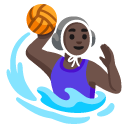
A woman playing water polo with dark skin tone, depicted as an athlete in a pool throwing or catching a water polo ball.
02What does 🤽🏿♀️ mean on TikTok?
Represents female athletic strength, Black excellence in sports, and aquatic energy. Used in sport POV videos and empowerment content.
03What does 🤽🏿♀️ mean on WhatsApp?
Sent by actual water polo players or coaches to represent their sport; also used casually to say 'I'm in the pool' or 'swimming through life's chaos.'
04What does 🤽🏿♀️ mean in Gen-Z slang?
Used to signal athleticism, hustle, or being in your element — often dropped as a flex for someone thriving in a competitive or aquatic environment. Also used ironically to describe chaotic multitasking ('me juggling five tasks at once').
05Is the 🤽🏿♀️ emoji safe to use?
A positive, empowering emoji representing a female water polo athlete with dark skin tone; promotes diversity, athletic achievement, and representation in sports.
06What does 🤽🏿♀️ mean in texting?
Evokes themes of physical power, determination, and representation. For many viewers, especially Black women, seeing a dark-skin-toned female athlete emoji triggers feelings of visibility and validation in spaces that historically excluded them.
07What is the shortcode for 🤽🏿♀️?
The shortcode for Woman Playing Water Polo: Dark Skin Tone is :woman_playing_water_polo_dark_skin_tone:
08What does 🤽🏿♀️ mean in dating?
Rarely used as a direct flirt, but can signal 'I'm athletic and confident' — sometimes placed in dating app bios to hint at an active, sporty lifestyle.
Safety & usage
- Safe meaning
- A positive, empowering emoji representing a female water polo athlete with dark skin tone; promotes diversity, athletic achievement, and representation in sports.
- Caution
- Extremely rare toxic usage; in theory could be used dismissively in conversations that mock niche sports, but this is not an established pattern.
No significant toxic usage patterns identified. The emoji is generally safe and positive across all major platforms and cultural contexts.
How it looks across platforms
Appearance varies by platform and device. Google Noto, Twemoji, and OpenMoji are open-source.