🤽🏽♀️
The Emoji
Woman Playing Water Polo: Medium Skin Tone
U+1F93D U+1F3FD U+200D U+2640 U+FE0F · :woman_playing_water_polo_medium_skin_tone:
Trend 22
Meaning layers
- interpretation
- Used to flex athleticism, water sports energy, or as a general 'I'm out here grinding in the pool' vibe. Sometimes used humorously to say 'I'm fighting for what I want.'
- tiktok usage
- Appears in sports highlight captions, fitness motivation posts, and ironically in texts about 'throwing things' metaphorically.
- irony level
- 4 / 10
Platform meanings
- meaning
- Signals athletic hustle, water sports content, or playful competitive energy.
- trend usage
- Used in swim and water polo team TikToks, sports motivation edits, and ironically in 'this is me surviving life' captions.
- hashtags
- #WaterPolo#WomenInSports#SwimLife#AthleteLife#PoolVibes
- virality score
- 28 / 100
Cultural meanings
🇺🇸
Western / Gen-Z
Used authentically by young athletes and ironically as 'me surviving everything being thrown at me'; resonates with female empowerment aesthetics.
🇵🇰
Pakistan & India
Rarely used due to limited water polo culture; when used, it signals elite or international athletic aspiration, especially among urban youth.
🌍
Middle East
Limited usage; in Gulf states with aquatic sports facilities, it may be used genuinely, though cultural modesty norms around women in sports can affect frequency.
🌐
Global Neutral
Universally understood as a female water polo player; used most literally across global audiences without cultural distortion.
🇧🇩
Bangladesh
Extremely niche; water polo is uncommon, so this emoji is largely unfamiliar to most users and rarely deployed organically.
🇱🇰
Sri Lanka
Rarely used; cricket and swimming dominate sports culture, making water polo emojis uncommon in everyday digital communication.
🇨🇳
China
Used during Olympic seasons when Chinese women's water polo teams compete; patriotic sports fans may deploy it to support national athletes.
🇯🇵
Japan
Appreciated for its detail and inclusivity; used by sports enthusiasts and during Olympic coverage, fitting Japan's precision-oriented sports culture.
🇰🇷
South Korea
Niche usage; more common during international sports events, where Korean athletes may receive support with this emoji on social platforms.
🇹🇼
Taiwan
Used in sports communities and Olympic fan circles; appreciated for its skin tone diversity representation.
🇭🇰
Hong Kong
Used genuinely in aquatic sports communities; the city's strong swimming culture makes water-related sports emojis more recognizable.
🇵🇭
Philippines
Occasionally used during Southeast Asian Games when water polo is featured; ties to national sports pride for some communities.
🇮🇩
Indonesia
Niche but growing; used in sports content on TikTok and Instagram among fitness-conscious youth in urban areas.
🇹🇭
Thailand
Relatively rare; used mainly by sports athletes or during international competitions, with Thai Olympic content driving occasional spikes.
🇻🇳
Vietnam
Uncommon in everyday use; appears mainly in sports media contexts and Olympic discussion threads.
🇲🇾
Malaysia
Used in multi-sport events coverage; relatively niche but understood in sports circles, particularly during SEA Games.
🇸🇦
Saudi Arabia
Emerging usage as women's sports participation grows following recent social reforms; used to celebrate female athletic participation and empowerment.
🇦🇪
UAE
Used in cosmopolitan, sports-forward contexts; the UAE's growing investment in women's sports makes this emoji relevant in elite circles and expat communities.
🇪🇬
Egypt
Niche usage; more common among sports fans during international events, with occasional use in women's empowerment contexts.
🇹🇷
Turkey
Used in sports media and among athletic communities; Turkey's growing interest in women's sports gives it moderate relevance.
🇮🇷
Iran
Very rare in public usage due to cultural and political restrictions on women in sports; used cautiously if at all, sometimes as a subtle symbol of support for female athletes.
🇳🇬
Nigeria
Largely unfamiliar as water polo is not widely played; occasionally used in pan-African sports discussions during international competitions.
🇿🇦
South Africa
Used in sports-active communities, particularly among those with access to aquatic facilities; resonates with diverse, empowerment-focused youth.
🇬🇧
UK & Ireland
Used genuinely among water polo clubs and university sports teams; also used humorously in British social media in 'treading water' metaphors.
🇫🇷
France
France's strong aquatic sports tradition makes this emoji relevant; used in sports contexts and during French Olympic team coverage.
🇩🇪
Germany
Used straightforwardly in sports and fitness communities; Germany's organized sports culture means it appears in club and team contexts.
🇪🇸
Spain & Italy
Spain and Italy have strong water polo traditions, making this one of the more culturally resonant sports emojis in the region; used enthusiastically by fans.
🇧🇷
Brazil
Used in sports communities and Olympic coverage; Brazil's passion for multi-sport events means this gets genuine play during international competitions.
🇲🇽
Mexico
Niche but used in Olympic fan content and women's sports advocacy posts, fitting Mexico's growing interest in female athletic representation.
🌎
Latin America
Generally niche across Latin America; used most during Olympics or Pan American Games, where women's water polo teams compete.
🇦🇺
Australia & NZ
Strong swimming and water sports culture makes this highly relatable; used genuinely by athletes and fans, especially during Commonwealth Games and Olympics.
How its meaning shifted
- 2010
This emoji did not exist yet; water sports representation in emoji was nonexistent, and skin tone modifiers had not been introduced.
- 2015
Introduced around this era as part of expanded sports and diversity emoji sets; used almost exclusively by actual water polo athletes and sports media.
- 2020
Gained modest traction during the Tokyo Olympics buildup; used more broadly for women's sports advocacy and inclusivity conversations online.
- 2026
Niche but stable; used by Gen Z athletes for authentic sports content, ironically for 'surviving chaos' metaphors, and in women's sports empowerment discourse across platforms.
See it on every platform
Adjacent emojis
- Often confused with
- woman rowing boatwoman surfingwater pistol
- Can replace
- woman swimmingwater waveflexed biceps
Share & embed
Frequently asked
01What does the 🤽🏽♀️ Woman Playing Water Polo: Medium Skin Tone emoji mean?
A woman with medium skin tone playing water polo, depicted in a pool throwing or holding a water polo ball.
02What does 🤽🏽♀️ mean on TikTok?
Signals athletic hustle, water sports content, or playful competitive energy.
03What does 🤽🏽♀️ mean on WhatsApp?
Sent in group chats by athletes or sports teams to hype up a game or practice session.
04What does 🤽🏽♀️ mean in Gen-Z slang?
Used to flex athleticism, water sports energy, or as a general 'I'm out here grinding in the pool' vibe. Sometimes used humorously to say 'I'm fighting for what I want.'
05Is the 🤽🏽♀️ emoji safe to use?
A woman playing water polo with medium skin tone — entirely sports-related and positive in standard usage.
06What does 🤽🏽♀️ mean in texting?
Evokes a sense of empowerment and physical capability; the medium skin tone adds personal relatability and identity expression for users of similar complexion.
07What is the shortcode for 🤽🏽♀️?
The shortcode for Woman Playing Water Polo: Medium Skin Tone is :woman_playing_water_polo_medium_skin_tone:
08What does 🤽🏽♀️ mean in dating?
Rare in flirting contexts; if used, signals an athletic, sporty personality or a flex that 'I stay active and competitive — come match my energy.'
Safety & usage
- Safe meaning
- A woman playing water polo with medium skin tone — entirely sports-related and positive in standard usage.
- Caution
- No known toxic or coded usage; not associated with hate groups, harassment patterns, or NSFW content.
No warnings needed. This emoji is considered safe across all standard usage contexts.
How it looks across platforms
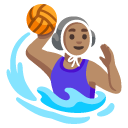
Appearance varies by platform and device. Google Noto, Twemoji, and OpenMoji are open-source.