🏃🏻♀️➡️
The Emoji
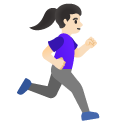
Woman Running Facing Right: Light Skin Tone
U+1F3C3 U+1F3FB U+200D U+2640 U+FE0F U+200D U+27A1 U+FE0F · :woman_running_facing_right_light_skin_tone:
Trend 68
Meaning layers
- interpretation
- Used to signal escaping a situation, sprinting away from responsibility, drama, or awkward encounters. The rightward direction adds a sense of urgency and deliberate fleeing.
- tiktok usage
- Appears in 'running away from my problems' trend videos, POV escape content, and speed-run life commentary. Often paired with chaotic background music.
- irony level
- 7 / 10
Platform meanings
- meaning
- Escape, urgency, running away from drama or responsibilities, hype for fitness content
- trend usage
- Used in captions for POV escape videos, 'running from my feelings' trending sounds, and workout motivation reels
- hashtags
- #runningaway#escapingproblems#girlrunning#fitnessmotivation#rungirlrun
- virality score
- 72 / 100
Cultural meanings
🇺🇸
Western / Gen-Z
The go-to emoji for 'running away from my problems' humor, escape memes, and relatable avoidance content. Highly ironic and self-aware usage.
🇵🇰
Pakistan & India
Used both literally for fitness and gym culture content and ironically to signal leaving awkward family situations or social obligations.
🌍
Middle East
Generally used literally for sports and fitness, though younger users adopt the ironic 'escape' usage in private chats and social media.
🌐
Global Neutral
Universally understood as representing a woman running, with the rightward direction often interpreted as moving forward or progressing.
🇧🇩
Bangladesh
Primarily used in fitness and health-related contexts; younger users are beginning to adopt the humorous escape usage from global meme culture.
🇱🇰
Sri Lanka
Seen in fitness content and used occasionally among youth for the comedic 'running away' meme, influenced by global social media trends.
🇨🇳
China
Used on platforms like WeChat and Weibo to represent exercise and healthy living; directional specificity is noted but less culturally loaded.
🇯🇵
Japan
Associated with taiso (exercise) culture and commuter running culture; the female figure is empowering in the context of women's sports participation.
🇰🇷
South Korea
Popular in fitness and idol fan communities; used humorously to express escaping stressful situations like exams or K-pop drama.
🇹🇼
Taiwan
Used in workout and health content; also adopted for humorous escape memes among younger, internet-savvy users.
🇭🇰
Hong Kong
Carries a subtle layer of meaning around 'leaving' given socio-political sensitivities; mostly used in fitness and neutral movement contexts.
🇵🇭
Philippines
Enthusiastically used in fitness communities and humorously in 'running from drama' meme culture, heavily influenced by global TikTok trends.
🇮🇩
Indonesia
Common in fitness content and used by younger users to signal fleeing uncomfortable social or family situations in group chats.
🇹🇭
Thailand
Used in sports and health contexts; also appears in light humor about escaping responsibilities, especially among college-aged users.
🇻🇳
Vietnam
Primarily literal for running and exercise; meme adoption of the escape usage is growing among Gen Z on TikTok and Facebook.
🇲🇾
Malaysia
Dual usage: literal fitness content and ironic 'escape' meme usage, the latter especially popular in bilingual social media posts.
🇸🇦
Saudi Arabia
Used in women's fitness content, which has grown significantly since 2018 reforms; also used by youth for escape humor in private digital spaces.
🇦🇪
UAE
Common in multicultural fitness and wellness content; international expat communities use it with full Western ironic meaning.
🇪🇬
Egypt
Mostly literal for sports; younger Egyptians use it in escape humor particularly on Twitter/X and TikTok.
🇹🇷
Turkey
Used in fitness content and increasingly in meme culture to signal escaping awkward or frustrating situations.
🇮🇷
Iran
Used primarily in private messaging for fitness or escape humor; the female depiction resonates especially with young women as a symbol of freedom.
🇳🇬
Nigeria
Popularly used in Afrobeat fitness communities and in Nollywood meme culture to signal dramatic exits or escaping drama.
🇿🇦
South Africa
Used in running communities (marathons are popular) and in humorous social media posts about escaping load-shedding or daily stress.
🇬🇧
UK & Ireland
Heavily ironic usage, often paired with self-deprecating humor about running away from British weather, responsibilities, or social awkwardness.
🇫🇷
France
Used in fitness contexts and with a certain joie de vivre — sometimes paired with liberation themes, especially among younger French women.
🇩🇪
Germany
Primarily used literally in fitness and sport contexts; humorous escape usage is present but less prevalent than in Anglophone cultures.
🇪🇸
Spain & Italy
Used for fitness and dramatically to signal escaping family drama or social obligations, blending literal and comedic meanings.
🇧🇷
Brazil
Enthusiastically used in fitness culture given Brazil's strong running community; also popular in humorous 'saindo dessa' (getting out of here) meme formats.
🇲🇽
Mexico
Used for fitness content and with sharp humor to signal leaving toxic situations, particularly in relatable women's humor accounts.
🌎
Latin America
Broadly used across Latin American countries for fitness content and the universal 'running from problems' meme, adapted to local humor styles.
🇦🇺
Australia & NZ
Used for outdoor running culture and ironically for escaping 'Australian problems' like extreme heat, wildlife, or social obligations.
How its meaning shifted
- 2010
Directional and skin tone emoji modifiers did not exist yet; basic running figure emoji were just emerging in the Unicode standard.
- 2015
Gender and skin tone modifiers were introduced; the concept of a woman running with skin tone was new and used primarily for literal fitness representation.
- 2020
The directional variant began gaining traction as platforms implemented it; used heavily in pandemic-era 'running from 2020' meme content.
- 2026
Fully established in ironic meme culture and fitness content; the rightward facing direction is recognized as a deliberate stylistic and comedic choice across all major platforms.
See it on every platform
Compare with
Adjacent emojis
Share & embed
Frequently asked
01What does the 🏃🏻♀️➡️ Woman Running Facing Right: Light Skin Tone emoji mean?
A woman with light skin tone running and facing to the right, indicating forward motion or movement in a rightward direction.
02What does 🏃🏻♀️➡️ mean on TikTok?
Escape, urgency, running away from drama or responsibilities, hype for fitness content
03What does 🏃🏻♀️➡️ mean on WhatsApp?
I'm leaving / I'm done with this conversation or situation
04What does 🏃🏻♀️➡️ mean in Gen-Z slang?
Used to signal escaping a situation, sprinting away from responsibility, drama, or awkward encounters. The rightward direction adds a sense of urgency and deliberate fleeing.
05Is the 🏃🏻♀️➡️ emoji safe to use?
A woman running to the right; used for fitness, movement, progress, humor, and escape metaphors in a completely benign context.
06What does 🏃🏻♀️➡️ mean in texting?
Running symbolizes both escape and empowerment depending on context. For many users, the rightward direction subconsciously implies progress and forward-thinking, while the female figure adds a layer of relatable feminine empowerment or comedic self-awareness.
07What is the shortcode for 🏃🏻♀️➡️?
The shortcode for Woman Running Facing Right: Light Skin Tone is :woman_running_facing_right_light_skin_tone:
08What does 🏃🏻♀️➡️ mean in dating?
Rarely used flirtatiously; more likely signals running toward or away from someone. Could be playfully used as 'I'm sprinting to meet you' energy.
Safety & usage
- Safe meaning
- A woman running to the right; used for fitness, movement, progress, humor, and escape metaphors in a completely benign context.
- Caution
- Extremely rare, but could theoretically be used in harassment contexts to tell someone to 'run' as a threat, though this is not a common usage.
No significant safety concerns. The emoji is overwhelmingly used positively or humorously. The female-specific and light-skin-tone modifiers may occasionally attract commentary about representation, but this is not a safety issue.
How it looks across platforms
Appearance varies by platform and device. Google Noto, Twemoji, and OpenMoji are open-source.