👩🏿🎤
The Emoji
Woman Singer: Dark Skin Tone
U+1F469 U+1F3FF U+200D U+1F3A4 · :woman_singer_dark_skin_tone:
Trend 62
Meaning layers
- interpretation
- Used to express main-character energy, diva confidence, or to hype up someone with incredible talent or stage presence. Often dropped when someone is serving looks or vocals.
- tiktok usage
- Appears in comment sections under impressive vocal or performance videos, often paired with fire or sparkle emojis to signal awe or admiration.
- irony level
- 2 / 10
Platform meanings
- meaning
- Signals raw talent, performance energy, or the moment someone is absolutely eating their role or look.
- trend usage
- Used in duet and reaction videos praising vocalists, in 'POV: you're the main character' trends, and under Black women artists' content as a celebratory marker.
- hashtags
- #blackgirlmagic#singercheck#maincharacter#darkskingirls#vocalscheck
- virality score
- 68 / 100
Cultural meanings
🇺🇸
Western / Gen-Z
A widely celebrated emoji representing confidence, artistry, and Black female empowerment; used freely to hype performers and signal main-character energy.
🇵🇰
Pakistan & India
Primarily used by urban, music-savvy youth to reference singers or Bollywood/indie artists; less common in conservative digital spaces but gaining traction among Gen Z.
🌍
Middle East
Used mainly in urban music communities and among younger audiences who follow international pop and R&B; the dark skin tone is sometimes less specifically noted culturally.
🌐
Global Neutral
Universally understood as representing a female singer or performer; the dark skin tone is recognized as an intentional representation of diversity.
🇧🇩
Bangladesh
Used occasionally by music enthusiasts and urban youth; the dark skin tone representation is appreciated by those advocating for colorism awareness in South Asian contexts.
🇱🇰
Sri Lanka
Appears in music fan communities and among youth who follow international artists; less common in traditional or older demographic digital communication.
🇨🇳
China
Used in music-related content and by fans of international artists; skin tone diversity in emoji is less culturally emphasized but the performer meaning is clear.
🇯🇵
Japan
Found in music fan accounts and idol community discussions; the dark skin tone specificity may not always be the focus, but the singer identity is universally recognized.
🇰🇷
South Korea
Popular in K-pop adjacent fan communities celebrating global diversity and in posts about international music collaborations or artists.
🇹🇼
Taiwan
Used among music fans and entertainment communities, often to celebrate international female artists or to express bold, performance-driven energy.
🇭🇰
Hong Kong
Appears in music and entertainment circles; appreciated in cosmopolitan digital spaces for its representation of diverse performers.
🇵🇭
Philippines
Widely used by music lovers and performers; Filipinos have a strong singing culture, making this emoji popular in talent show communities and performance-related content.
🇮🇩
Indonesia
Used by music enthusiasts and urban youth; the emoji resonates in communities that celebrate diverse talent and international music scenes.
🇹🇭
Thailand
Appears in entertainment and music fan communities; the dark skin tone may intersect with local conversations about colorism and representation among Thai youth.
🇻🇳
Vietnam
Used in music and pop culture communities; resonates with younger audiences who follow international music and appreciate diverse representation.
🇲🇾
Malaysia
Common in diverse urban music communities; appreciated both for its performer meaning and as a symbol of multicultural representation in a diverse nation.
🇸🇦
Saudi Arabia
Used primarily in private music-appreciating communities and among youth; less visible in public digital spaces due to conservative norms but present in youth culture.
🇦🇪
UAE
Popular in the cosmopolitan, multicultural digital landscape of UAE; used freely in music and entertainment communities across diverse expatriate and local populations.
🇪🇬
Egypt
Used in music fan communities and among youth celebrating Arabic and international female performers; resonates in R&B and soul appreciation circles.
🇹🇷
Turkey
Found in music fan communities and among youth who follow international artists; used to express admiration for bold, talented female performers.
🇮🇷
Iran
Used discreetly within youth and music communities on encrypted or less-monitored platforms; represents artistic freedom and appreciation for global music.
🇳🇬
Nigeria
Highly resonant and celebrated, strongly associated with Afrobeats culture and iconic Nigerian female artists; used proudly as a symbol of Black excellence and talent.
🇿🇦
South Africa
Widely embraced as a symbol of representation and talent, closely tied to local music scenes like Amapiano and the celebration of Black South African female artists.
🇬🇧
UK & Ireland
Used freely in music communities and Gen Z spaces; particularly resonant in discussions about grime, R&B, and the celebration of Black British female artists.
🇫🇷
France
Appears in music fan communities and discussions about African diaspora artists; resonates in the multicultural urban music scenes of Paris and other cities.
🇩🇪
Germany
Used in music appreciation communities and among younger diverse populations; associated with international music culture and representation conversations.
🇪🇸
Spain & Italy
Found in music fan communities; associated with global pop and R&B culture, appreciated for its representation though less culturally specific in context.
🇧🇷
Brazil
Strongly resonant given Brazil's rich musical heritage; used to celebrate Black Brazilian female artists and singers in samba, funk, and MPB genres, often with pride.
🇲🇽
Mexico
Used in music communities and among fans of international and Latin artists; appreciated for its representation and associated with confident, powerful female performers.
🌎
Latin America
Broadly used across Latin America in music fan communities; resonates in regions with significant Afro-Latin populations who see it as a symbol of cultural pride.
🇦🇺
Australia & NZ
Used freely in diverse music communities; appreciated for its representation and commonly seen in discussions celebrating Indigenous and Black female performers.
How its meaning shifted
- 2010
This emoji did not exist yet; representation in emoji was extremely limited and skin tone modifiers had not been introduced.
- 2015
Skin tone modifiers were newly introduced in Unicode 8.0; the dark skin tone singer emoji emerged as a landmark moment in emoji diversity advocacy.
- 2020
Gained significant cultural momentum during the global racial justice movements; became a powerful symbol of Black female representation, empowerment, and artistic identity.
- 2026
A well-established icon in digital culture representing Black female artistry, confidence, and main-character energy; commonly used across all major platforms without needing explanation.
See it on every platform
Adjacent emojis
Share & embed
Frequently asked
01What does the 👩🏿🎤 Woman Singer: Dark Skin Tone emoji mean?
A woman with dark skin tone depicted as a singer or rock star, featuring a microphone and typically styled hair.
02What does 👩🏿🎤 mean on TikTok?
Signals raw talent, performance energy, or the moment someone is absolutely eating their role or look.
03What does 👩🏿🎤 mean on WhatsApp?
Sent to hype up a friend who just did something impressive, bold, or artistic.
04What does 👩🏿🎤 mean in Gen-Z slang?
Used to express main-character energy, diva confidence, or to hype up someone with incredible talent or stage presence. Often dropped when someone is serving looks or vocals.
05Is the 👩🏿🎤 emoji safe to use?
Represents a female singer or performer of dark skin tone; a positive symbol of artistic expression, talent, and representation.
06What does 👩🏿🎤 mean in texting?
The emoji activates feelings of self-expression and creative identity. For people of darker skin tones, it carries added psychological weight as a symbol of representation and visibility in digital spaces.
07What is the shortcode for 👩🏿🎤?
The shortcode for Woman Singer: Dark Skin Tone is :woman_singer_dark_skin_tone:
08What does 👩🏿🎤 mean in dating?
Sent by someone showing off their confidence or artsy side, often used to signal a bold, independent personality rather than direct flirting.
Safety & usage
- Safe meaning
- Represents a female singer or performer of dark skin tone; a positive symbol of artistic expression, talent, and representation.
- Caution
- Rarely weaponized; occasionally used dismissively to stereotype someone as dramatic or 'extra' in culturally insensitive ways.
The skin tone specificity makes misuse particularly sensitive; using this emoji to mock or stereotype Black women performers is considered offensive and harmful.
How it looks across platforms
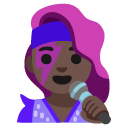


Appearance varies by platform and device. Google Noto, Twemoji, and OpenMoji are open-source.