💃🏿
The Emoji
Woman Dancing: Dark Skin Tone
U+1F483 U+1F3FF · :woman_dancing_dark_skin_tone:
Trend 78
Meaning layers
- interpretation
- Used to express unbothered confidence, hype energy, living your best life, or celebrating a win — often tied to Black culture's celebration of joy and self-expression.
- tiktok usage
- Appears in videos about confidence, self-love, going out, or doing something iconic. Often paired with trending audios about thriving.
- irony level
- 2 / 10
Platform meanings
- meaning
- Symbol of hype, going out, confidence, and living your best life — heavily associated with Black girl magic energy and celebration culture.
- trend usage
- Used in 'get ready with me' videos, night-out content, confidence-boosting audios, and viral dance challenge posts.
- hashtags
- #BlackGirlMagic#DancingQueen#LivingMyBestLife#HypeUp#NightOut
- virality score
- 82 / 100
Cultural meanings
🇺🇸
Western / Gen-Z
A powerful symbol of Black girl joy and unbothered confidence; heavily associated with Black culture's celebration of self and used to signal hype, nightlife, and thriving.
🇵🇰
Pakistan & India
Generally understood as a woman dancing joyfully, used to express excitement about events like weddings, parties, or Bollywood-style celebrations, though the dark skin tone modifier may be less consciously noted.
🌍
Middle East
Interpreted as a dancing woman, used cautiously in conservative spaces but freely in younger, urban social circles to signal fun, parties, or celebratory events.
🌐
Global Neutral
Universally recognized as a symbol of dance, joy, and celebration — the dark skin tone adds inclusive representation but the core message is festive energy.
🇧🇩
Bangladesh
Used to express festive moods, particularly around cultural celebrations, weddings, and parties; skin tone modifiers are less commonly considered in usage.
🇱🇰
Sri Lanka
Associated with celebration and dance, often used around festivals and parties; users may not consciously select skin tone variants but the meaning remains celebratory.
🇨🇳
China
The dancing woman emoji is associated with nightlife, parties, and entertainment; skin tone nuance is largely not discussed in mainstream Chinese social platforms.
🇯🇵
Japan
Used to express lively, festive energy; Japanese users tend to use it in party or event contexts, with less focus on the skin tone aspect and more on the celebratory gesture.
🇰🇷
South Korea
Popular in contexts of fun, nights out, and K-pop fan culture when celebrating artists or events; the dark skin tone may be specifically chosen to honor Black artists or culture by fans.
🇹🇼
Taiwan
Used for celebrations and festive moods, particularly in party or music-related contexts; skin tone representation is understood but not always the primary focus.
🇭🇰
Hong Kong
Associated with nightlife, entertainment, and celebratory moments; urban youth may be more aware of the skin tone representation aspect.
🇵🇭
Philippines
Widely used to express excitement, going out, or festive energy; often placed in OFW community posts celebrating milestones or fun moments abroad.
🇮🇩
Indonesia
Used in celebratory and party contexts; younger users are increasingly aware of the emoji's cultural representation significance, especially with growing awareness of diversity in media.
🇹🇭
Thailand
Associated with dance, clubs, and festive fun; used in nightlife and entertainment contexts with little specific cultural commentary on the skin tone.
🇻🇳
Vietnam
Used to signal fun, excitement, and nightlife energy; users are generally aware of skin tone modifiers but selection is often aesthetic rather than identity-driven.
🇲🇾
Malaysia
Used across ethnic communities to express joy and celebration; in the context of Malaysia's diverse society, the dark skin tone may resonate more specifically with the Indian-Malaysian community.
🇸🇦
Saudi Arabia
Used carefully in social contexts — in private or younger circles it signals fun and excitement, but public use may avoid dance-related imagery due to conservative cultural norms.
🇦🇪
UAE
Popular among the cosmopolitan and expat-heavy population to express celebration and nightlife; the dark skin tone is appreciated in the diverse UAE social landscape.
🇪🇬
Egypt
Used to express festive, celebratory energy especially around music and dance events; younger Egyptians use it freely to signal fun and good times.
🇹🇷
Turkey
Widely used to signal nightlife, dancing, and celebration; Turkish youth culture embraces it as a hype emoji for going out or celebrating wins.
🇮🇷
Iran
Used in private digital spaces to signal fun and celebratory moods; due to cultural restrictions, public display of dance is sensitive, making this emoji more relevant in private chats.
🇳🇬
Nigeria
Carries deep cultural resonance as a symbol of Afrocentric joy, dance culture, and celebration; the dark skin tone makes it particularly popular and personally affirming for Nigerian users.
🇿🇦
South Africa
Embraced as a symbol of ubuntu joy, celebration, and Afrocentric pride; the dark skin tone makes it a preferred choice for South African users expressing festive energy.
🇬🇧
UK & Ireland
Used to signal excitement, nights out, and good vibes; within Black British communities it carries the same 'unbothered and thriving' energy as in the US.
🇫🇷
France
Used in party and nightlife contexts; within France's Afro-Caribbean communities it carries cultural significance of Black joy and celebration.
🇩🇪
Germany
Generally interpreted as a party/dancing emoji; used in celebratory contexts with little specific cultural commentary, though diversity-conscious users appreciate the representation.
🇪🇸
Spain & Italy
Associated with dance, fiestas, and lively celebrations; in Spain it may draw subtle associations with flamenco energy, though the cultural context of the emoji is globally understood.
🇧🇷
Brazil
Extremely popular in a country with rich African heritage and dance culture — used to express samba energy, Carnival vibes, and Afro-Brazilian celebration and pride.
🇲🇽
Mexico
Used to signal fun, parties, and dancing; within Afro-Mexican communities it carries added cultural significance, though mainstream use focuses on the festive energy.
🌎
Latin America
Broadly used to express joy, dancing, and party energy across Latin America; in countries with significant Afro-descendant populations it carries added cultural resonance.
🇦🇺
Australia & NZ
Used in celebratory and nightlife contexts; within Aboriginal and Pacific Islander communities the dark skin tone adds a layer of personal representation and cultural pride.
How its meaning shifted
- 2010
The base dancing woman emoji existed but skin tone modifiers had not yet been introduced; representation was limited to a default yellow figure.
- 2015
Unicode 8.0 introduced skin tone modifiers including the dark skin tone, making this specific variant available; early adoption was modest and focused on representation advocacy.
- 2020
Usage surged significantly as conversations around racial representation, Black Lives Matter, and social media diversity pushed users toward intentionally selecting darker skin tone emojis as acts of cultural affirmation.
- 2026
Firmly embedded in digital language as a symbol of Black joy, feminine confidence, and celebration — the dark skin tone variant is the culturally preferred choice in Black communities globally and is recognized broadly as carrying that specific cultural energy.
See it on every platform
Compare with
Adjacent emojis
Share & embed
Frequently asked
01What does the 💃🏿 Woman Dancing: Dark Skin Tone emoji mean?
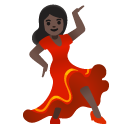
A woman dancing with dark skin tone, depicted in a red dress with one arm raised, representing joy, celebration, and movement.
02What does 💃🏿 mean on TikTok?
Symbol of hype, going out, confidence, and living your best life — heavily associated with Black girl magic energy and celebration culture.
03What does 💃🏿 mean on WhatsApp?
Expresses excitement, hype, or that someone is in a celebratory mood — often used before or after a fun event.
04What does 💃🏿 mean in Gen-Z slang?
Used to express unbothered confidence, hype energy, living your best life, or celebrating a win — often tied to Black culture's celebration of joy and self-expression.
05Is the 💃🏿 emoji safe to use?
A joyful, celebratory emoji representing dance, confidence, and festive energy — universally positive in most contexts.
06What does 💃🏿 mean in texting?
The dancing figure psychologically signals a release of inhibition and full embodiment of present joy. For Black users, it carries added cultural weight as a symbol of unapologetic self-expression and pride.
07What is the shortcode for 💃🏿?
The shortcode for Woman Dancing: Dark Skin Tone is :woman_dancing_dark_skin_tone:
08What does 💃🏿 mean in dating?
Sent when someone feels flirtatious or playful, often suggesting 'I'm having a great time' or subtly signaling interest in going out together.
Safety & usage
- Safe meaning
- A joyful, celebratory emoji representing dance, confidence, and festive energy — universally positive in most contexts.
- Caution
- Rarely weaponized negatively; in some edge cases could be used mockingly to belittle someone for being 'too carefree' or dismissively in serious conversations.
The dark skin tone modifier makes this emoji culturally significant within Black communities — non-Black users should be mindful of context when using specifically this variant, as its use in mocking or trivializing contexts could be seen as culturally insensitive.
How it looks across platforms


Appearance varies by platform and device. Google Noto, Twemoji, and OpenMoji are open-source.